...
...
Next Story

Open defecation along Ganga in Uttar Pradesh to be passé soon

One of the top assignments that the panchayati raj department had been given by the new government three months ago was to end open defecation along the bank of the Ganga by building household toilets in all the villages.

Published on: Jun 17, 2017, 16:02:29 IST
Hindustan Times, Lucknow | By , LUCKNOW
Prefer HTon Google
Advertisement

The practice of open defecation along the Ganga in Uttar Pradesh is all set to stop as the government has special plans for it. By the time the Yogi Adityanath government completes 100 days in office on June 26, all the 1627 villages spreading in 25 districts along the river will become open defecation free (ODF).
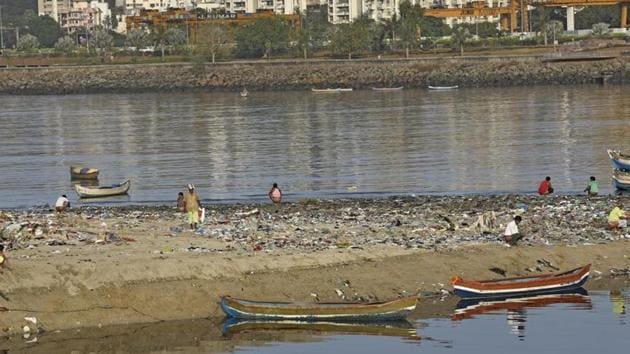
Villages spreading in 25 districts along the river will become open defecation free (HT File Photo)

One of the top assignments that the panchayati raj department had been given by the new government three months ago was to end open defecation along the bank of the Ganga by building household toilets in all the villages there. The authorities now claim they will meet the deadline.

Read more: Plea in NGT against BJP leader for polluting Saryu river

“Ninety-seven percent villages falling in 19 of the 25 districts along the Ganga have already achieved the ODF status,” additional chief secretary, panchayati raj, Chanchal Tiwari told HT.

The remaining 150 villages in the 6 districts, he added, would also join the club within 10 days or so.

“Like Allahabad has more than 100 villages along the Ganga,” he said.

Director, panchayati raj, Vijay Kiran Anand claimed there was a foolproof system involving geotagging to verify the officials’ information on toilet construction in a village under the centre’s rural sanitation mission.

Read more:Rajasthan officials ‘photograph women defecating in public’, lynch man who objected

“We also see to it that people actually use household toilets once they are ready and functional,” said Anand.

When the Modi government launched the Swachh Bharat Abhiyan in October 2014, eradicating open defecation by villages and towns situated along the Ganga was one of the top priorities. Apart from UP, the Ganga also flows through Uttarakhand, Jharkhand, Bihar and West Bengal.

While the authorities may pat their own back for achieving the ODF status for the villages along the Ganga, UP’s overall status with regard to the ODF is very poor. With only a little more than 48% individual household latrine (IHHL) coverage so far, UP ranks among the five lowest ranking states after Odisha, Jammu & Kashmir, Bihar, according to the information available on the mission website.

 
ABOUT THE AUTHOR
Brajendra K Parashar

Brajendra K Parashar is a Senior Journalist with the Hindustan Times, based in Lucknow, with nearly three decades of experience covering governance, public policy, politics and development in Uttar Pradesh. Over the years, he has reported extensively on key sectors, including energy and renewable power, mobility and transport, road safety, agriculture and allied sectors and issues related to farmers, rural development, taxation under the Goods and Services Tax (GST) and public administration. A seasoned political correspondent, Parashar closely tracks the Bharatiya Janata Party (BJP) and has covered every major election in Uttar Pradesh right from three-tier panchayat elections and urban local body polls to Assembly and Lok Sabha elections. He also reports regularly on the proceedings of the Uttar Pradesh Legislature, bureaucracy, governance, policy decisions and administrative developments with focus on their impact on public life. His reporting is known for its strong analytical approach, extensive use of official data. His areas of interests include investigative journalism, long-form political and policy analysis, data-driven reporting, elections and institutional reforms. Parashar holds a postgraduate degree in Political Science with First Division from Aligarh Muslim University (AMU), followed by a Diploma in Journalism and Mass Communication from the same university. His inclination towards journalism began during his student days, when he regularly contributed letters to editors and articles to newspapers and magazines. In the mid-1990S, his essay, “Should India Switch Over to the Presidential Form Of Government?”, published in Politics India magazine edited by noted constitutional expert Subhash C Kashyap, was adjudged the best entry in a national competition. His work has received professional recognition, including the Hindustan Times Journalist of the Month Award for an impactful series on drinking water issues during the 2010 Lok Sabha election campaign. Originally from Kasganj in western Uttar Pradesh, Parashar is currently based in Lucknow where continues to report on politics, governance and public policy.

SHARE THIS ARTICLE ON
Notifications

Get breaking alerts directly from the newsroom

Notifications are on!You'll be notified when news breaks