Should Uttar Pradesh emulate its neighbouring state Rajasthan by fixing minimum educational qualification for contesting panchayat polls, the cradle of democracy?
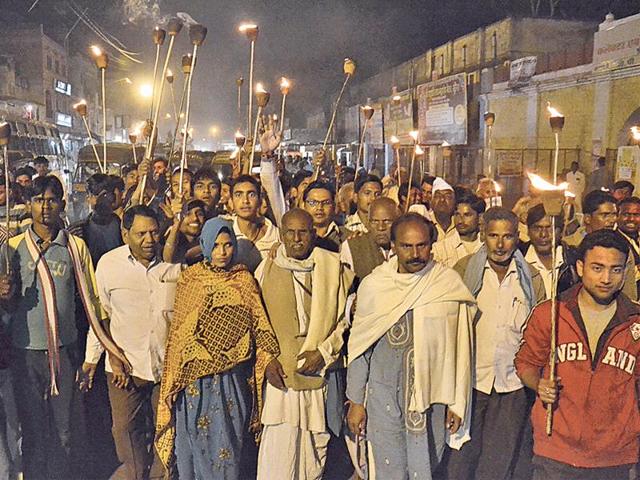
Well, this may be a subject of heated debate with the cogent arguments for and against the proposition as happened in Rajasthan where the governor recently unleashed a debate by promulgating an ordinance just a few weeks before the panchayat polls.
The ordinance has made it mandatory for contesting zila panchayat and panchayat samiti polls to be class 10 pass and those contesting sarpanch (pradhan) election to be class 8 pass.
Regardless of the merits and the demerits of any such move here, the fact remains that more than 45% the existing pradhans would have been disqualified from contesting panchayat election in 2010 had they been required to be class 8 pass.
As many as 3,000 of the sitting pradhans in UP are unlettered and give thumb impressions when it comes to signing a cheque or any other paper while another 13,475 pradhans are just literate. In other words, they can only struggle to sign a document without being aware of the content.
The information available with the state election commission here, about the educational background of the panchayat representatives elected in the 2010 elections reveal that only 28,500 out of a total around 51,000 pradhans are 8th pass or have qualification above that.
{{/usCountry}}The information available with the state election commission here, about the educational background of the panchayat representatives elected in the 2010 elections reveal that only 28,500 out of a total around 51,000 pradhans are 8th pass or have qualification above that.
{{/usCountry}}In some districts, almost half the pradhans are illiterate. For example, Badaun has 233 illiterate pradhans, Hardoi and Bahraich have 117 and 116 unlettered pradhans, respectively, who supposedly put their thumb impressions on the dotted lines.
The situation is no better at the kshetra panchayat and the zila panchayat level either.
The first panchayat elections (after the Constitutional amendment) in 1995 threw more than 22 .55% illiterate representatives at the grass-root level and the number of illiterate representatives surprisingly only grew to 23.95 % 10 years later in 2005-06 elections even though the overall literacy rate might have gone up in a decade.
The next village panchayat elections in the state are due in July-August this year only and the state is unlikely to get a cue from Rajasthan. Sources said the Centre had in the past held a few meetings with the states to know whether they deemed it desirable or not to fix a minimum educational qualification for the panchayat elections.
“But we have always opposed the idea on the ground that fixation of the educational qualification will deprive the poor people of their right to be elected,” revealed a panchayati raj department official. He argued when there was no minimum educational qualification fixed for the assembly and parliamentary elections, there was no logic for doing it for the grass-root elections.
“However, fixing educational qualifications for panchayat polls may certainly give a push to the literacy level in villages which in turn may produce educated MLAs and MPs too,” admitted another official. He said with the educated pradhans, the block functionaries will also find it difficult to make them sign checques on the dotted lines to siphon off funds.