...
...
Next Story

UP is unlikely to experience winter load-shedding

The Load Generation Balance Report (LGBR) or the power demand forecast report released by the Central Electricity Authority (CEA) recently shows UP to have a peak demand-supply deficit from 0.2% in April to 7.6% in May this year.

Updated on: Aug 18, 2020, 09:20:01 IST
Hindustan Times, Lucknow | By
Prefer HTon Google
Advertisement

Uttar Pradesh residents are unlikely to experience winter load-shedding this year with the state tipped to have substantial surplus electricity, when compared to the expected demand between October 2020 and March 2021. On the annual basis, though, it may have a marginal peak demand-supply gap.
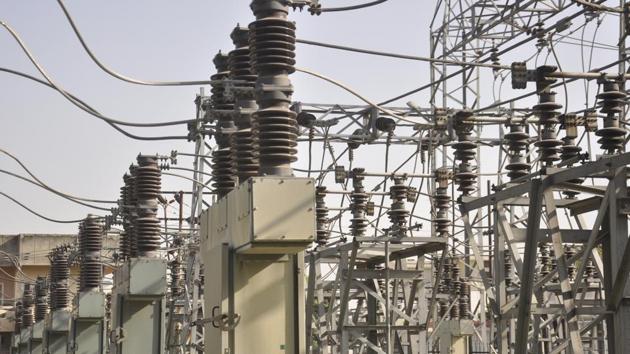
The state, according to the report, is expected to have a power surplus of 25% in October, 43.2% in November, 51% in December, 34.5% in January 2021, 36.8% in February and 36.7% in March, the last month of the current financial year. (Sakib Ali/Hindustan Times)

The Load Generation Balance Report (LGBR) or the power demand forecast report released by the Central Electricity Authority (CEA) recently shows UP to have a peak demand-supply deficit from 0.2% in April to 7.6% in May this year. But the report forecasts that the state will have surplus power from October onwards.

The state, according to the report, is expected to have a power surplus of 25% in October, 43.2% in November, 51% in December, 34.5% in January 2021, 36.8% in February and 36.7% in March, the last month of the current financial year.

Overall, UP’s peak power requirement during the current financial year has been anticipated to be 24,220 MW against the expected 23,440 MW demand, the peak shortfall being of 780 MW which is 3.2% of the requirement. The country, as a whole, is expected to have a peak surplus of 18,160 MW or 9.1%.

1 State/UT each will have ‘Nil’ surplus/deficit in Energy and Peak,” the report says, adding “All other states/UTs in the country are likely to have demand-supply gaps of varying degrees both for energy and peak.”

Among the Northern states/UTs Chandigarh, Delhi, Haryana, Punjab apart from UP may have peak demand-supply gap to the tune of 20%, 9.0%, 0.8%, 11.2% and 3.2%, respectively, while three other states—Himachal Pradesh, Rajasthan and Uttarakhand are expected to have extra power vis-à-vis their demand, by 82.8%,21.9% and 22.7%.

UP Rajya Vidyut Upbhokta Parishad chairman and state advisory committee member Avadhesh Kumar Verma said it was encouraging to see that UP is expected to have surplus power in winter and only a marginal deficit in summer. “In UP, availability of power may no longer be an issue ,” he pointed out.

 
ABOUT THE AUTHOR
Brajendra K Parashar

Brajendra K Parashar is a Senior Journalist with the Hindustan Times, based in Lucknow, with nearly three decades of experience covering governance, public policy, politics and development in Uttar Pradesh. Over the years, he has reported extensively on key sectors, including energy and renewable power, mobility and transport, road safety, agriculture and allied sectors and issues related to farmers, rural development, taxation under the Goods and Services Tax (GST) and public administration. A seasoned political correspondent, Parashar closely tracks the Bharatiya Janata Party (BJP) and has covered every major election in Uttar Pradesh right from three-tier panchayat elections and urban local body polls to Assembly and Lok Sabha elections. He also reports regularly on the proceedings of the Uttar Pradesh Legislature, bureaucracy, governance, policy decisions and administrative developments with focus on their impact on public life. His reporting is known for its strong analytical approach, extensive use of official data. His areas of interests include investigative journalism, long-form political and policy analysis, data-driven reporting, elections and institutional reforms. Parashar holds a postgraduate degree in Political Science with First Division from Aligarh Muslim University (AMU), followed by a Diploma in Journalism and Mass Communication from the same university. His inclination towards journalism began during his student days, when he regularly contributed letters to editors and articles to newspapers and magazines. In the mid-1990S, his essay, “Should India Switch Over to the Presidential Form Of Government?”, published in Politics India magazine edited by noted constitutional expert Subhash C Kashyap, was adjudged the best entry in a national competition. His work has received professional recognition, including the Hindustan Times Journalist of the Month Award for an impactful series on drinking water issues during the 2010 Lok Sabha election campaign. Originally from Kasganj in western Uttar Pradesh, Parashar is currently based in Lucknow where continues to report on politics, governance and public policy.

SHARE THIS ARTICLE ON
Notifications

Get breaking alerts directly from the newsroom

Notifications are on!You'll be notified when news breaks