In the past two years, 25 leopard cubs found lost in forests in Pune’s Junnar taluka have been reunited with their mothers.
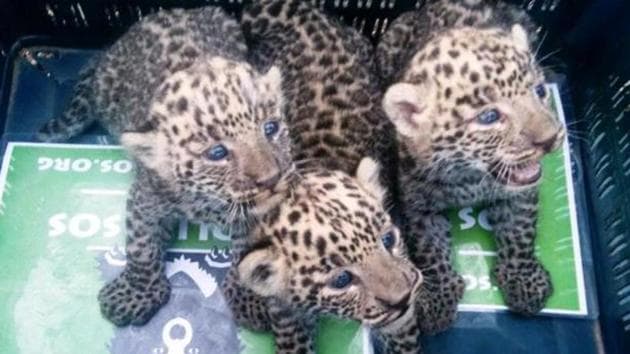
Earlier, the forest department used to release rescued cubs in the wild. Realising that abandoned cubs can’t survive in the environment, they started to track down their mothers.
The state forest department, with help of veterinarians from Mandikdoh Leopard Rescue Centre (MLRC) and NGO Wildlife SOS, reunited 18 lost cubs in Junnar, Ambegaon, Khed and Shirur in 2016 and the rest this year.
Members of the rescue centre said cubs get lost when their mothers go hunting leaving them in sugarcane or banana plantation.
“The reunion plays a significant role in avoiding man-animal conflict. When leopards are unable to locate their cubs, it is natural for them to turn hostile, aggressive and defensive on seeing humans in close proximity. This poses an immediate threat to farmers in the area,” said Dr Ajay Deshmukh, senior veterinarian, MLRC.
Deshmukh said returning the cubs was important to conserve leopards. “Captive leopards develop behavioural issues such as aggression and sometimes depression,” he said.
Forest officials said they don’t animals from the spot where they are found abandoned to make it easier for their mother to find them. A medical test is done to check if they are healthy. “We sent teams across a kilometre radius from where the cub is found to trace the mother’s pugmarks. The area is completely cordoned off. Dim lights are put up at a distance. We ensure there is absolute silence near the spot. In some cases, we have waited for the mother for six to seven hours. The experience can be exasperating,” said Deshmukh.
{{/usCountry}}Forest officials said they don’t animals from the spot where they are found abandoned to make it easier for their mother to find them. A medical test is done to check if they are healthy. “We sent teams across a kilometre radius from where the cub is found to trace the mother’s pugmarks. The area is completely cordoned off. Dim lights are put up at a distance. We ensure there is absolute silence near the spot. In some cases, we have waited for the mother for six to seven hours. The experience can be exasperating,” said Deshmukh.
{{/usCountry}}“However, the sudden appearance of the mother, slowly and carefully moving towards her cubs, seeing whether they are safe and finally carrying them in her mouth makes it satisfying and emotional,” he said.
Forest officers said loss of forest cover has led to an increase in such cases. “Crops act as safe zones for the big cats as cubs cannot be easily spotted, while parents hunt for dogs, goats and other livestock,” said SR Unde, forest guard.
Stay updated with all the Breaking News and Latest News from Mumbai. Click here for comprehensive coverage of top Cities including Bengaluru, Delhi, Hyderabad, and more across India along with Stay informed on the latest happenings in World News.
Stay updated with all the Breaking News and Latest News from Mumbai. Click here for comprehensive coverage of top Cities including Bengaluru, Delhi, Hyderabad, and more across India along with Stay informed on the latest happenings in World News.