Most premature deaths in Mumbai and Delhi over two decades were caused by stroke (a medical condition that occurs when blood supply to the brain is cut off), due to inhalation of ultrafine suspended particles, revealed a study by the Indian Institute of Technology – Bombay (IITB).
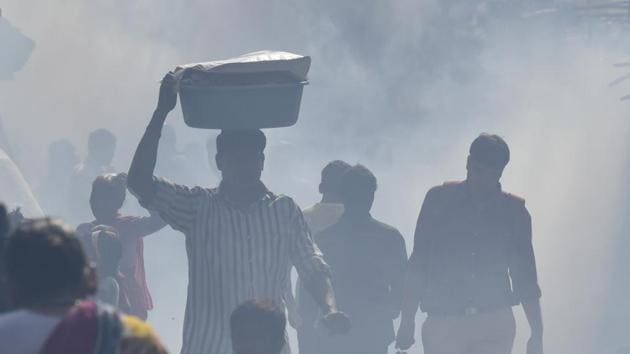
The three-member IITB team attributed 35.3% premature deaths to cerebrovascular disease – arteries supplying blood to the brain is affected – as a result of being exposed to high levels of particulate matter of size less than 2.5 microns in diameter (PM2.5) between 1991 and 2015. Additionally, premature deaths due to ischemic heart disease (it falls under the group of cardiovascular diseases) and chronic obstructive pulmonary disease (COPD) stood at 33.3% and 22.9% during the same period.
A dangerous pollutant, PM2.5 can lodge deep into the lungs and cardiovascular system, giving rise to a host of problems from damage to lung tissue, sneezing, asthma attacks, migraines, headaches to even cancer and heart attacks. The elderly, children, and those with chronic lung disease, influenza, or asthma, are especially sensitive to the effects of PM2.5.
As compared to Mumbai, Delhi recorded more PM2.5 premature deaths – from an estimated 7,481 in 1991 to 14,844 in 2015. In Mumbai, 13,196 residents were killed in 2015 as against 8,678 in 1991.
{{/usCountry}}As compared to Mumbai, Delhi recorded more PM2.5 premature deaths – from an estimated 7,481 in 1991 to 14,844 in 2015. In Mumbai, 13,196 residents were killed in 2015 as against 8,678 in 1991.
{{/usCountry}}Taking Rs46 for a dollar as US-India currency exchange rate in 2005, the average economic cost due to premature deaths attributed to PM2.5 in Mumbai was US$ 1127.2 (Rs 5,184 crores) and it was US$ 1129.2 million (Rs 5,193 crores) in Delhi.
The sources of PM2.5 include vehicle exhaust, solid waste burning, emissions from power plants, wood burning, industrial processes and diesel vehicles.
“A new wave of pollution control initiatives is needed to stem the crippling levels of air pollution. At present, proper air quality management is required to reduce air pollution urgently and effectively, especially for PM10 and PM2.5 pollutants,” said Kamal Jyoti Maji, lead investigator, Centre for Environmental Science and Engineering, IITB.
Previous studies on PM2.5 emissions and health impacts have called for a long-term epidemiological study for India because of the presence of high outdoor PM2.5 concentration in India and its subcontinent countries. Even the Global Burden Disease study by the World Health Organisation estimated 0.695 million premature deaths due to outdoor PM2.5.
READ MORE
Air pollution causes 95% premature deaths in Mumbai and Delhi: Study
Stay updated with all the Breaking News and Latest News from Mumbai. Click here for comprehensive coverage of top Cities including Bengaluru, Delhi, Hyderabad, and more across India along with Stay informed on the latest happenings in World News.
Stay updated with all the Breaking News and Latest News from Mumbai. Click here for comprehensive coverage of top Cities including Bengaluru, Delhi, Hyderabad, and more across India along with Stay informed on the latest happenings in World News.