While watching the riveting cricket World Cup final at Lord’s, I had one eye on my laptop to see live streaming of the epic Wimbledon men’s final between Roger Federer and Novak Djokovic. Technology can be invasive and has its downside. Thank god, however, for a facility which allows you to savour an event in another place simultaneously!
This was a truly heady Sunday dominated by sport. Brexit, the economy, demand for jobs et al – matters that had occupied the minds and passions of people in England for several months --were relegated to also-rans leading up to the climax at Lord’s and Wimbledon. Frequent visitors will ask what is unusual about this. Summer (in this part of the world) is when sports action shifts to Europe, particularly England. Which brings me to the issue I want to highlight: how a country becomes a bastion for sport.
Apart from an extensive annual itinerary for cricket, England hosts a tennis ‘Slam’, All England Championships (Badminton), British Open (squash and golf), F1 Grand Prix race (Silverstone), FA Cup and Premiership League (Football) – all of which have a global following – and sundry other events. A great deal of this is rooted in history. Most sports mentioned above were born, nurtured and spread through the world when England was a great colonial power. Not unexpectedly, the country appropriated major tournaments (like Wimbledon) and in some cases, also the authority to control the sport: for instance, MCC is still custodian of the laws of cricket. But even after its political might diminished and its economy has not exactly kept pace with those like China and India, England has retained its position as the epicentre for sports. That is largely because of reverence for tradition and legacy, as well as the pride and passion of its people.
Sport provides a country with a sense of achievement that is perhaps unmatched in any other endeavour. This does not necessarily have to do with winning (England won their first cricket World Cup only this time and haven’t won the World Cup football since 1966) but in having an ethos that sees sport as paramount to national identity. Most countries that view sport similarly, play host or desire to have an event that turns the attention of the world on them: Australia, America, most European nations, China, Japan and Korea, Canada, South Africa, and several countries in the Middle East post the oil boom.
{{/usCountry}}Sport provides a country with a sense of achievement that is perhaps unmatched in any other endeavour. This does not necessarily have to do with winning (England won their first cricket World Cup only this time and haven’t won the World Cup football since 1966) but in having an ethos that sees sport as paramount to national identity. Most countries that view sport similarly, play host or desire to have an event that turns the attention of the world on them: Australia, America, most European nations, China, Japan and Korea, Canada, South Africa, and several countries in the Middle East post the oil boom.
{{/usCountry}}Where does India figure in this? Disappointingly low. Hosting major sports events is not cheap, and India, with poor infrastructure and financial resources, lagged behind for the first half century after Independence. That this should still be the case after Liberalisation and impressive economic growth in the past quarter of a century, however, is a travesty.
The experience with F1 bombed, the international tennis establishment is disenchanted with having tournaments here, in track and field – with the exception of the Asian meet in Odisha recently – India is not mainstream. Even in shooting and wrestling where India dominates, the marquee event is elusive. One can go on and on.
Why this is so can only be explained as apathy toward sports, from the government downwards to various sports federations, sponsors, to the individual. Without the imagination and rigour needed for long-term sustenance and enhancement, excellence is impossible. Such disregard impacts a city’s profile too. Take Mumbai: Apart from the marathon, there is no major international sports event identified exclusively with it. In the 1990s, there was a men’s international squash prize money tournament that attracted the best in the world that sadly lapsed.
Why, even a stellar local tournament like the Rovers Cup stands suspended since the past decade odd, for lack of spectator and sponsor support. And Mumbai is regarded as among the most sports-loving city in the country (losing ground rapidly), which pretty much tells us what the scene for the rest of the country is.
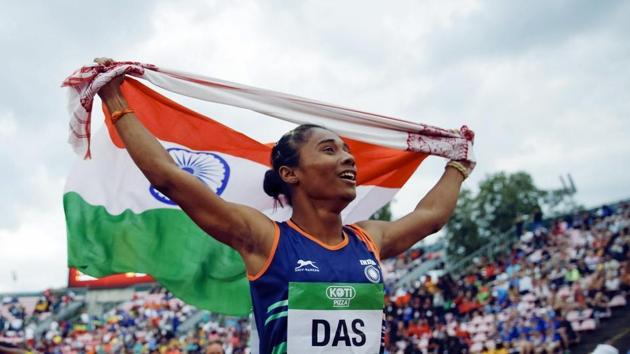
Happily, there is a silver lining to the cloud. The past couple of decades have shown a rising appetite for sports in India. Sports properties like the IPL and Kabbadi Premier League have attracted global attention. Young athletes like Hima Das, Dutee Chand, P V Sindhu, and Mohamed Anas have shown the talent that exists in India.
So what can be done to improve the situation? Essentially there has to be a commitment towards sport that goes beyond just fandom. Compelling facilities from state/civic authorities, federations, states and the central government is only half the deal. The other half is to play.
This has to start at the basic level, with the individual, and stretch upwards through family and community, which will bring in its wake sponsors, broadcasters et al to the table. Are we game?
Stay updated with all the Breaking News and Latest News from Mumbai. Click here for comprehensive coverage of top Cities including Bengaluru, Delhi, Hyderabad, and more across India along with Stay informed on the latest happenings in World News.
Stay updated with all the Breaking News and Latest News from Mumbai. Click here for comprehensive coverage of top Cities including Bengaluru, Delhi, Hyderabad, and more across India along with Stay informed on the latest happenings in World News.