In a first for the country, helicopters will be used to drop mangrove seeds to restore wetlands and mudflats which are inaccessible by foot in and around Mumbai.
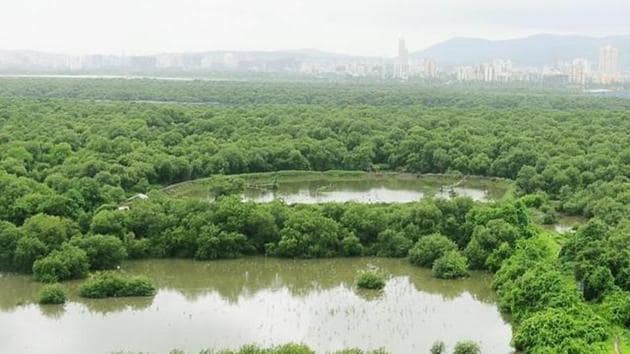
Last week, the state mangrove cell submitted a proposal to the state government, seeking permission to carry out a pilot project using 20 tonnes of Avicennia marina (grey mangrove), the most common mangrove species in Mumbai, and Aveicennia officinalis (Indian mangrove) at various areas in the suburbs.
While aerial broadcasting of seeds has been done in terrestrial areas, this is the first time it will be tested for restoration of mangrove areas. Mangroves grow quickly and can be a foot tall within a year. They are suited for salt marsh growth and are capable of releasing salt through their leaves if necessary.
Mangrove cell officials said the method would be cost-effective, fast and can be repeated instead of entering mangrove patches with seeds only once a year. “We realised that aerial broadcasting for mangroves will be a good idea because the seeds will be spread across different areas instead of being concentrated in one. Since it is marshy land, it will not get washed away, leading to germination,” said N Vasudevan, additional principal chief conservator of forest, state mangrove cell.
He added that aerial broadcasting is an activity to restore degraded plantation patches in many parts of the world. “It is a much more economical option than regular plantation. In terrestrial areas, the success rate is not high as seeds aggregate in one place or fall on rocky patches. We expect to have much better success rate in marsh lands as these seeds have partly germinated (crypto vivipary – external germination of seeds),” said Vasudevan.
{{/usCountry}}He added that aerial broadcasting is an activity to restore degraded plantation patches in many parts of the world. “It is a much more economical option than regular plantation. In terrestrial areas, the success rate is not high as seeds aggregate in one place or fall on rocky patches. We expect to have much better success rate in marsh lands as these seeds have partly germinated (crypto vivipary – external germination of seeds),” said Vasudevan.
{{/usCountry}}The cell has identified a 250 hectare mangrove patch within the 615 hectares that has been set aside for mangrove restoration under the proposed Navi Mumbai airport project. Aerial broadcasting in the area will require the City and Industrial Development Corporation’s (Cidco) permission.
“Dense mangrove patches at Thane creek, some areas in the eastern suburbs, vast tracts across Palghar district, all the way up to Dahanu wetlands and degenerated mangrove patches at Mumbai, Navi Mumbai and Thane have been identified for the project,” said Vasudevan. “The aerial broadcasting will be tried out at patches measuring 200 hectare or more.”
The cost of carrying out plantations by entering mangrove areas is Rs2 lakh a hectare, which amounts to Rs2 crore.
Hiring a helicopter and spraying seeds through multiple runs will cost Rs20 lakh, said officials.
Stay updated with all the Breaking News and Latest News from Mumbai. Click here for comprehensive coverage of top Cities including Bengaluru, Delhi, Hyderabad, and more across India along with Stay informed on the latest happenings in World News.
Stay updated with all the Breaking News and Latest News from Mumbai. Click here for comprehensive coverage of top Cities including Bengaluru, Delhi, Hyderabad, and more across India along with Stay informed on the latest happenings in World News.