Leopards at the Sanjay Gandhi National Park (SGNP) in Mumbai have been put on a fitness regimen after many of them were found falling prey to lifestyle illnesses, just like people living in cities.
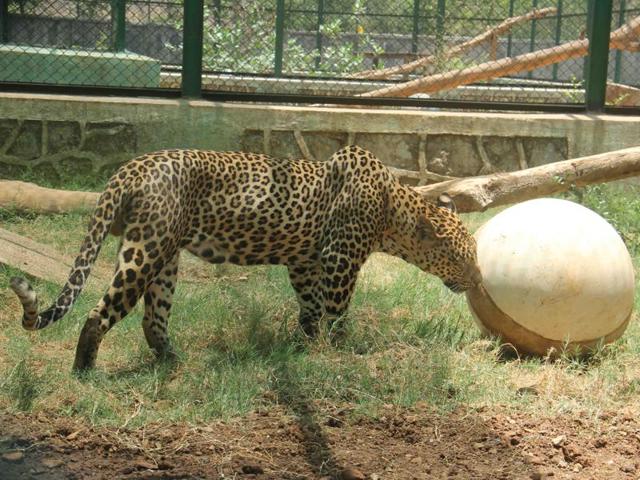
Department officials have ensured the big cats, 15 in all, follow the keys to a healthy life — diet and exercise. They have been put on a green, leafy diet in the past year and been given medicine balls to play with.
The result: There have been no ailments in a year and their weight has remained in check.
On the new menu is an assortment of plants, including shrubs, palatable grasses and medicinal plants such as lemon grass, spear grass, basil, dhub, bhama, durva and bermuda grasses, to accompany the beef that the leopards are accustomed to eating. This, the forest department claimed, has been helping leopards with their digestion.
“Just consuming beef can lead to high acidity. To control that, we are feeding them plants to aid digestion,” said Shailesh Deore, range forest officer, SGNP. “Initially they were reluctant owing to the change in taste, but over time they got used to it. There has not been a single case of digestion-related ailments for any of the leopards in a year.”
{{/usCountry}}“Just consuming beef can lead to high acidity. To control that, we are feeding them plants to aid digestion,” said Shailesh Deore, range forest officer, SGNP. “Initially they were reluctant owing to the change in taste, but over time they got used to it. There has not been a single case of digestion-related ailments for any of the leopards in a year.”
{{/usCountry}}Eight female and seven male leopards live at the SNGP rescue centre, which is inaccessible to the public. Each enclosure is 20-by-30-metre as opposed to the 10-by-15-foot cages in the older, smaller rescue centre.
In captivity, stress often affects leopards because of the unavailability of a natural environment, forest department officials said. To counter this, the leopards were given wooden medicine balls to play with and artificial waterholes were constructed to create a stress-free environment.
“While the artificial waterholes in every leopard enclosure were made using stones from river beds to create a natural feel, the cats play with balls to increase physical exercise and to unwind mentally,” said Vikas Gupta, chief conservator of forest, SGNP. “After the leopards were moved to the new rescue centre nearly 18 months ago, the change from being confined to small cells has helped tremendously.”
Forest officers have kept 15-foot wooden logs inside each enclosure to mimic a natural environment. “Wild cats are used to climbing trees and like sitting atop high branches in their natural habitat. We tried to replicate this for them using worn out branches and putting them together,” said Shailesh Pethe, a veterinarian, SGNP.
Pethe said the leopards’ weight is now within the prescribed limits. “While the males averaged a maximum and minimum of 65kg and 55kg respectively, the females weighed in at 45kg to 50kg, which is the right weight for their age bracket,” he said.
Pethe said leopards generally go through a lot of emotional distress when in captivity and sometimes it leads to some amount of self-mutilation.
“Our idea was to change the dreary circumstances in which leopards were living in small jail cells to a much more animal-friendly environment. There has not been a single death in the past one year and neither any case of serious diseases. We have been spraying water on their body twice a day and their drinking water is changed every three hours,” he said.
“Ten years ago, the condition that the leopards were living in was really bad. The changes made by the forest department are welcome and it is good to know that they are thinking about specific things that have made a huge difference in the lifestyle of these big cats,” said Dr Vidya Athreya, an ecologist, who has been instrumental in facilitating the co-existence of leopards and people in Mumbai. “Leopards do consume a certain amount of vegetation in the wild and the weights that have been mentioned indicate the progress made by the department.”
Stay updated with all the Breaking News and Latest News from Mumbai. Click here for comprehensive coverage of top Cities including Bengaluru, Delhi, Hyderabad, and more across India along with Stay informed on the latest happenings in World News.
Stay updated with all the Breaking News and Latest News from Mumbai. Click here for comprehensive coverage of top Cities including Bengaluru, Delhi, Hyderabad, and more across India along with Stay informed on the latest happenings in World News.