India's Infosys does not expect a material impact from the US government's suspension of its participation in the Permanent Labor Certification (PERM) program, the company said, following an immigration enforcement action targeting eight major technology and IT firms.
The Indian IT major said it welcomed the opportunity to engage with US authorities over the suspension, which affects a key stage in the employment-based green card process.
“We welcome the opportunity to work with the Department of Labor and related government agencies to answer any questions they may have,” Infosys said in an exchange filing, according to Reuters.
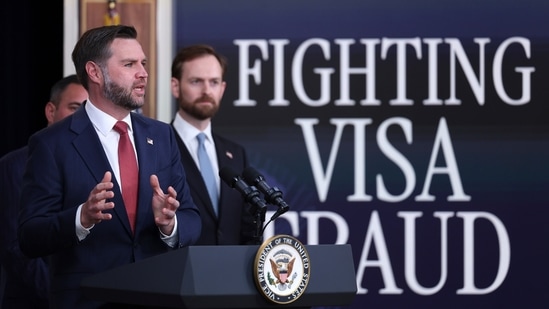
The company's response came two days after the US government announced the suspension of several major technology companies from the PERM program. The move is part of the Trump administration's wider scrutiny of employment-based immigration and employers' reliance on foreign workers.
Why did the US suspend Infosys and other tech firms?
On October 8, the Trump administration announced action against eight technology and IT companies, including Microsoft, Adobe, Infosys, Tata Consultancy Services (TCS), Wipro, HCL Technologies, Cognizant and Capgemini, according to Reuters.
{{/usCountry}}On October 8, the Trump administration announced action against eight technology and IT companies, including Microsoft, Adobe, Infosys, Tata Consultancy Services (TCS), Wipro, HCL Technologies, Cognizant and Capgemini, according to Reuters.
{{/usCountry}}US officials alleged that employers had misused the PERM process to replace American workers with lower-cost foreign labor. The action involved stopping new applications and halting the processing of pending labor certification applications associated with the affected companies.
The allegations do not, by themselves, establish that every company or employee involved violated immigration law.
PERM is administered by the US Department of Labor and is generally required when employers sponsor foreign workers for certain employment-based green cards. The process requires employers to meet labor market testing requirements and demonstrate that hiring a foreign worker will not adversely affect similarly employed US workers' wages and working conditions.
PERM certification is an important step in several employment-based green card categories, but it does not itself grant permanent residency.
What does the suspension mean for Indian IT professionals?
Infosys' statement that it does not expect a material impact does not mean the suspension has been lifted or that every affected employee's green card application will proceed without disruption.
The implications for Indian professionals will depend on the scope of the government's action, the status of individual applications and any subsequent decisions by US authorities.
The distinction between the H-1B visa and the PERM process is particularly important. The H-1B program allows eligible US employers to hire foreign professionals in specialized occupations, while PERM is a separate labor certification process used in many employment-based green card applications.
The October 8 action concerns the PERM program; it is not, by itself, a blanket ban on H-1B visas held by employees of the affected companies.
However, employees whose green card sponsorship depends on PERM certification could face uncertainty while the suspension remains in place. The potential consequences will vary according to each worker's immigration stage and circumstances.
Infosys has said it is prepared to work with the Department of Labor and other government agencies to address their questions.