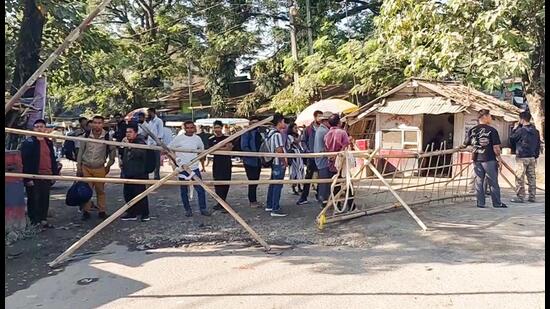
The sudden spurt of violence in the agitation opposing the proposed 11,200-MW Siang Upper Multipurpose Project (SUMP) in Arunachal Pradesh should be a matter of national concern for both strategic and environmental reasons. Authorities should note that a second flashpoint in a northeastern state — after three years of strife in Manipur — is undesirable. But embedded in the agitation are legitimate grievances of local residents — who fear ecological destruction — that deserve a patient and fair hearing.
At
The sudden spurt of violence in the agitation opposing the proposed 11,200-MW Siang Upper Multipurpose Project (SUMP) in Arunachal Pradesh should be a matter of national concern for both strategic and environmental reasons. Authorities should note that a second flashpoint in a northeastern state — after three years of strife in Manipur — is undesirable. But embedded in the agitation are legitimate grievances of local residents — who fear ecological destruction — that deserve a patient and fair hearing.
At the heart of the dispute is the Siang — known as the Yarlung Tsangpo in China, before it meets other tributaries to form the Brahmaputra in Assam — that has sustained generations of communities in Arunachal Pradesh. For the government, SUMP is a strategic hedge against China’s substantially larger 60,000 MW Medog hydropower project, which raises downstream concerns of changes in river flow, potential diversions and sudden releases of water. In theory, SUMP could help moderate such fluctuations. But protesters believe the preliminary surveys are only an eyewash and that the government is determined to sacrifice their way of life in the Siang valley by displacing them from their ancestral land.
Three things are of note. One, intensifying street protests over the sensitive issue should alert the government of the balance it needs to strike between environmental-community concerns and strategic imperatives. As the tragedy in Nepal earlier this year showed, in a fragile ecosystem, no separation is possible between humanity and ecology. Chief minister Pema Khandu’s calls for dialogue are welcome in this context. But the government must do more to engage with complaints that village chiefs and local laws were muzzled to give the project a smooth landing. Two, rules for environmental clearances are important because they give the local communities a stake in decisions that directly affect their lives. Unfortunately, in recent decades, green rules are observed more in the breach as the balance between ecology and business tilts in favour of the latter. This is why many communities now see preliminary surveys as a ruse and many officials see green rules as irritants in fulfilling strategic or economic imperatives. The government has to restore public faith in green processes. And finally, the administration should learn from the missteps in Manipur, proactively defuse the tensions in Arunachal Pradesh, and bring local communities to devise a compromise that’s acceptable and equitable.
One Subscription.
Get 360° coverage—from daily headlines
to 100 year archives.
Archives
HT App & Website