
 E-Paper



How many tigers can India’s forests sustain?
India’s big cat numbers are rising. But one in every three lives outside reserves, leading to human-animal conflicts. Give a thought to not just tigers outside protected areas, but also to many species fighting to survive in an altered world

 Prefer HTon Google


Two newsworthy events will occur this year. First, India is projected to surpass China as the world’s most populous country. Imagine a nation with 2% of the earth’s land area, home to 1.45 billion people or 18% of the world’s human population. Going by population density, India is three times more crowded than China. Second, India’s most successful wildlife conservation venture, Project Tiger, will turn 50 this April, a milestone to be celebrated with another record estimate of tiger numbers. The 2022 tiger census figures are expected to be released later this year, and a number over the 3,000 mark is very much on the cards. Project Tiger was launched on April 1, 1973. The National Tiger Conservation Authority (NTCA) reported 2,967 tigers in 2018, compared to 2,226 in 2014. A whopping 33% jump drew considerable media attention. This also made it to the Guinness Book of World Records for being the world’s largest wildlife survey. Since 2006, when the tiger census process was overhauled with scientific rigour and camera-trap technology, the once-in-four-years tiger census numbers have only increased. NTCA estimated 1,411 tigers in India in 2006, which rose to 1,706 in 2010. While these numbers augur well for successful conservation efforts, there is also a downside. Tigers are solitary animals and need space. Tigers (and wildlife in general) also don’t understand human-drawn boundaries or maps — national parks, wildlife sanctuaries or tiger reserves. Last month, in Assam, a tiger made headlines when it walked 120 km downstream as the Brahmaputra flows, from Orang National Park to Guwahati’s Umananda Island. Orang, with a small core area of 79 sq km, is struggling to cope with its rising big cat population and incidents of tigers moving in and out of surrounding human habitation are an everyday affair. Even larger protected areas, such as Valmiki Tiger Reserve in Bihar’s West Champaran region, face similar challenges. A decade ago, Valmiki Tiger Reserve had fallen off the tiger conservation map, but due to the efforts of Bihar’s forest department and other non-profit conservation organisations, it is now one of the best-performing tiger reserves in India. In 2021, it was one of the 14 tiger reserves in the country to receive the Conservation Assured Tiger Standards (CATS) accreditation, an international recognition for best practices and standards in tiger conservation. But this success is also a cause of worry for both the forest department and the local community. Last October, a three-year-old male tiger, blamed for the death of nine people, was gunned down after a shoot-at-sight order. On January 10, another incident of a minor girl being attacked by a tiger was reported from the area.
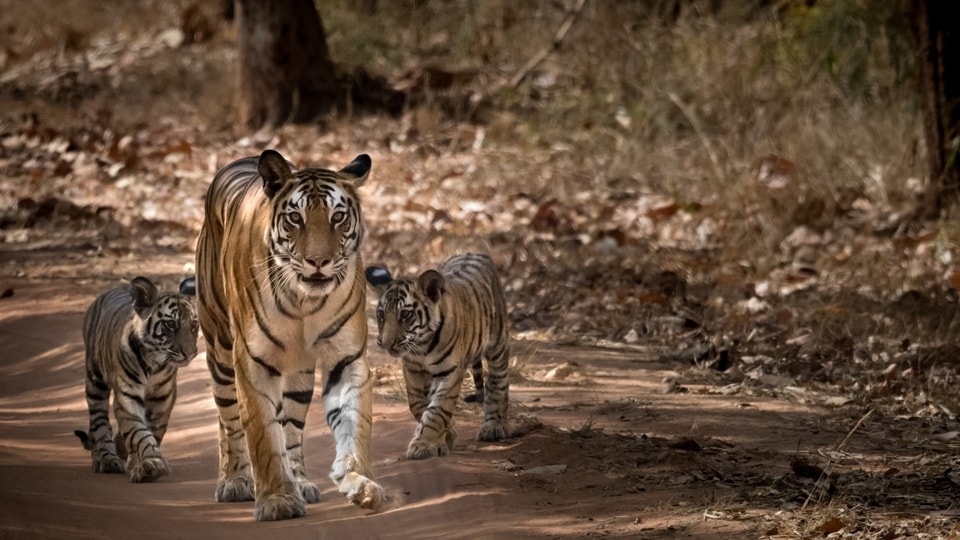
Such unfortunate incidents from across the country are turning people against tigers, and undoing all the good conservation work of protecting the national animal. While increasing numbers sets the benchmark for conservation success, the devil is in the detail. By NTCA’s own estimation, nearly one in every three tigers in India lives outside reserves (Status of Tigers, Co-predators and Prey in India — 2018). India is the largest tiger range country with 70% of the global tiger population, but 30% of India’s tiger population (around 1000+ tigers) reside outside protected reserves; this number has gone up even as the number of tiger reserves has increased, from nine in 1973 to 53 in 2022.
These 1,000-plus tigers are often referred to as India’s “poor” or “homeless” tigers. The 53 reserves may have around 75,000 sq km, but most of these human-drawn regions are either small or comprise fragmented forest patches, surrounded by a sea of humanity. Tiger reserves are imagined to be inviolate spaces for tigers and wildlife, but there are village settlements (with thousands of people and livestock) in many of them, along with roads and railway lines. Buxa Tiger Reserve in West Bengal is a classic example.
Research data indicates that in a core area, tigresses require an inviolate space of 800-1,200 sq km to breed a viable population of 80-100 tigers. In a densely populated country such as ours, however, pristine wilderness is wishful thinking. And, forest corridors linking two or more protected areas remain contested spaces between humans and wildlife. The lives of India’s indigenous and marginalised communities are culturally, socially, and economically tied to these tiger forests. In Madhya Pradesh’s Bandhavgarh Tiger Reserve, people living in and around the tiger reserve now have to additionally deal with wild elephants migrating from neighbouring Chhattisgarh. For several generations, people in Umaria district (Bandhavgarh) never encountered elephants, but now, human-tiger and human-elephant conflict pose a major conservation challenge.
A plateau or dip in tiger numbers is a near impossibility in a society where only growing numbers are a measure of success. We are incapable of acknowledging the limits to what nature can give and sustain. While several scientific reports point to shrinking spaces for wildlife, we remain hungry for more numbers, especially for charismatic species such as tigers, lions, elephants, or rhinos. As more areas undergo rapid urbanisation, give a thought to not just tigers living in the fringes of our cities, in degraded forests, farmlands or estates, but also to many species fighting to survive in an altered world.
Ananda Banerjee is an author, artist and wildlife conservationistThe views expressed are personal


