
 E-Paper



Keeping up with UP | Question mark on whether SP and BSP’s ambition match ability in MP, Rajasthan
In both states, the Congress and BJP are major players. Will the SP and BSP emerge as kingmakers in MP and Rajasthan or end up as paupers?

 Prefer HTon Google


Two former chief ministers of Madhya Pradesh (MP) and Uttar Pradesh (UP), Kamal Nath (the Congress) and Akhilesh Yadav (Samajwadi Party) had a heated exchange of words recently over ticket distribution for the 230-member assembly elections in MP, the results of which will be announced on December 3.
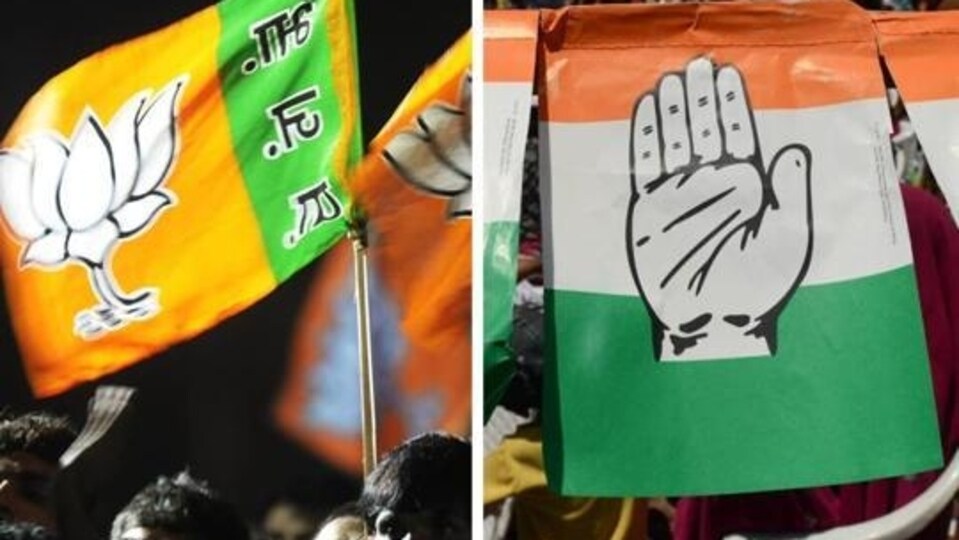
Though the Congress is in a direct fight with the Bharatiya Janata Party (BJP), the Samajwadi Party wanted its share in the seats as a partner in INDIA (Indian National Developmental Inclusive Alliance). Talks failed and the SP contested about 70 odd seats in MP.
However, the history behind the bitterness goes back to the 2018 assembly elections when the Congress with 114 seats was two short of the majority mark. Yet, Kamal Nath managed to form the government with the support of two BSP, one SP and four independent MLAs.
Both the SP and the BSP leadership subsequently bargained for a berth in the council of ministers but Kamal Nath refused to oblige. It is another matter that in March 2020, the BJP with the help of defectors toppled his government.
The story of the two politically vulnerable UP parties- SP and BSP- is no different in Rajasthan.
Both states operate as two-party entities where the Congress and BJP are the major players. In a hung house smaller parties play a significant role, but they often struggle to share power. Instead, their newly elected legislators tend to switch loyalties.
Why do the SP and BSP contest elections in states where they are smaller parties? There are several reasons.
Both parties have sizeable base votes – Yadavs (SP) and Jatavs (BSP)- in the constituencies located on the borders of UP with MP and Rajasthan.
Second, a two-party contest leaves room for the expansion of a third force.
Third, while BSP is a national party, SP is struggling to acquire that status.
The Election Commission of India (ECI) has laid down conditions for the recognition of a national party that allows them to contest general elections in the country on the same symbol. One condition is polling 6% votes in four states.
Thus, while they have not been accepted as pre-poll partners in either of the two states, they always aspire to be kingmakers in a hung house. But their dreams have often been shattered as they have ended up losing their newly elected flock to the winning party.
A major challenge even now as a closely fought contest in both the states may end up as cliffhanger.
Addressing public rallies in Madhya Pradesh, Dimple Yadav, Mainpuri MP and wife of SP’s national president Akhilesh Yadav, had said, “ I assure you that if any government is formed in the state with our support, we will strive hard for the development of the area.”
Past performance
The SP had won one seat in 2008 in Rajasthan. It polled 7.56 % votes in the 2018 elections but failed to open its account. The party is contesting five seats in Rajasthan but its stakes are higher in MP.
The fate of BSP is no different. It won six seats in Rajasthan in the 2018 elections only to boost the Congress’ tally from 100 to 106 in a house of 200. Just a few months later, all six MLAs had walked to the then Speaker CP Joshi, announcing their legislature party’s merger with the Congress in 2019, before which they were extending outside support to the Congress government that was initially one short of the majority mark.
The BSP national president Mayawati was livid and petitioned both the ECI and the high court. In fact, her party had suffered a similar jolt in 2008 when all the six MLAs had merged with the Congress, which was five short of the majority mark.
On both occasions, the MLAs claimed they wanted to give political stability to the government for the development of the state and they indeed did so as the Gehlot government completed both terms.
High ambition in 2023
Once again, both parties have entered the electoral arena with high ambitions.
The BSP is contesting all the 200 seats in Rajasthan and 170 of the 230 seats in MP where it has allied with the Gondwana Gantantra Party (GGP). Mayawati addressed about nine election rallies here, unlike in 2018 when she restricted it to two.
Dalits form 15 % and tribals 21 % of the state's population. It’s an experiment and the SC/ST combine may prove to be a game-changer.
The GGP was formed in 1991 but has not been able to make much political headway despite demanding a separate state of Gonwara.
The BSP had won seven seats in 2008 (8.9 % votes), four in 2013 (6.2% votes) and 2 (5% votes) in 2018 MP. It is considered to be an electoral factor in about 58 constituencies.
In Rajasthan, the party had won six seats each in 2008 and 2018, polling 7.6 % and 4% respectively.
Will they be kingmakers this time? Whatever it may be, with the general elections round the corner, their performance is bound to up their bargaining power.
From her perch in Lucknow, HT’s senior journalist Sunita Aron highlights important issues related to Uttar Pradesh


