
 E-Paper



Photos| 100 years of the end of WW1: A pictorial salute to India’s forgotten war heroes
While most in India are quite aware of the sacrifices made by millions of known and unknown Indians in the battle for independence, WW1 remains a far forgotten story. The grand total of the British and Indian officers, other ranks and non-combatants sent on service overseas from India was 1.38 million, including 285,037 British and 1,096,013 Indian personnel.
Updated on: Nov 13, 2018 3:23 PM IST

Share via


Copy link

1/8
 View Photos in a new improved layout
Updated on Nov 13, 2018 3:23 PM
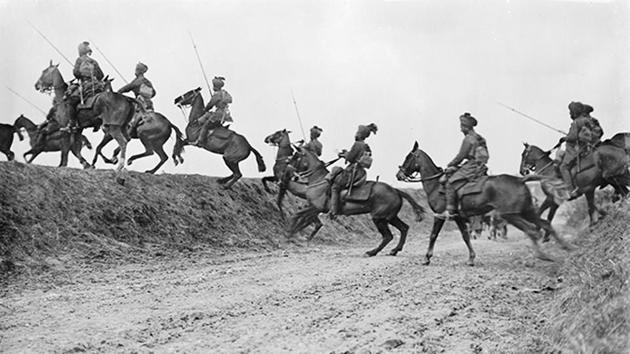
The 9th Hodson’s Horse (Bengal Lancers) cavalry regiment of the Indian Army march forward during the Battle of Arras near Vraignes in 1917. With more soldiers than Australia, Canada, New Zealand and South Africa combined, India’s contribution to WW1 cannot be undermined, even though a large part of this history has been forgotten, despite being scripted in various historical documents. (Imperial War Museums)
2/8
 View Photos in a new improved layout
Updated on Nov 13, 2018 3:23 PM
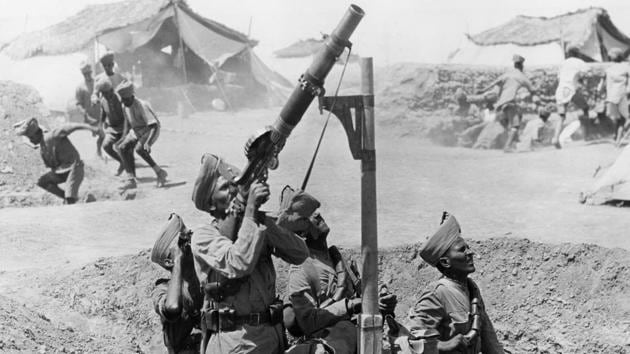
Indian troops during WW1 use a pole mounted Lewis gun against a German aircraft in Palestine in 1918 as others dive for cover. By the end of 1914, seven expeditionary forces had been sent from India to various theatres of the war. These included two infantry divisions, eight infantry brigades and one mixed force with three infantry battalions, two cavalry divisions, one cavalry brigade and the attendant administrative services, as well as four field artillery brigades in excess of the normal allotment to France. (Pictorial Press / Alamy Stock Photo)
3/8
 View Photos in a new improved layout
Updated on Nov 13, 2018 3:23 PM
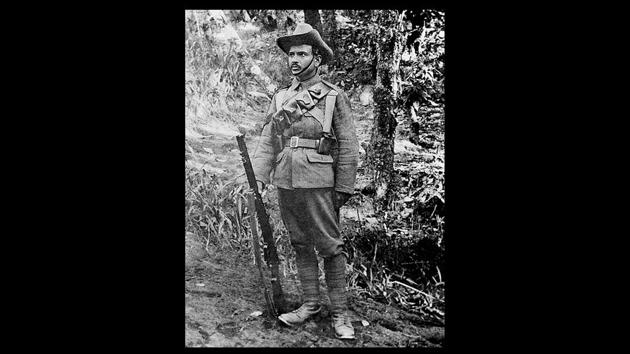
Darwan Singh Negi of the 39th Garhwal Rifles, who fought in the trenches in the Battle of Festubert, as seen in his regimental uniform in France. He was the first Indian to receive the Victoria Cross (VC) for his bravery in World War I in 1914. In addition, six British officers of the Indian Army also won the highest award of gallantry, the VC. These awards etched the gallantry and courage of our soldiers as precious historic moments in military history, and continue to inspire the forces till this date. (Picture Courtesy: Personal Family Albums)
4/8
 View Photos in a new improved layout
Updated on Nov 13, 2018 3:23 PM
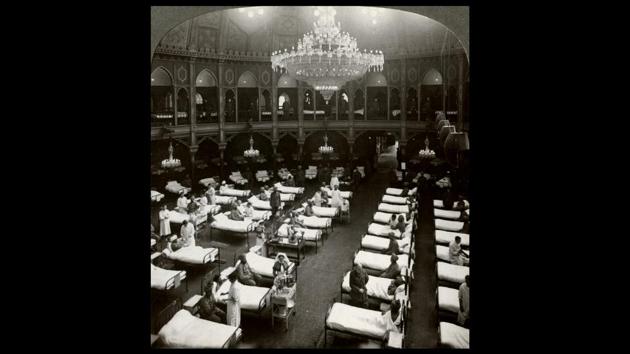
The makeshift hospital in the Brighton dome,treating injured soldiers. Of the 1.4 million men that were engaged in the WW1, most of who were recruited from impoverished peasant families and dispatched to strange foreign lands without any training to take on the best fighting machine in the world- the German army; 74,000 lost their lives between 1914 and 1921, while 64, 350 were wounded till 1919. (The Print Collector / Alamy Stock Photo)
5/8
 View Photos in a new improved layout
Updated on Nov 13, 2018 3:23 PM
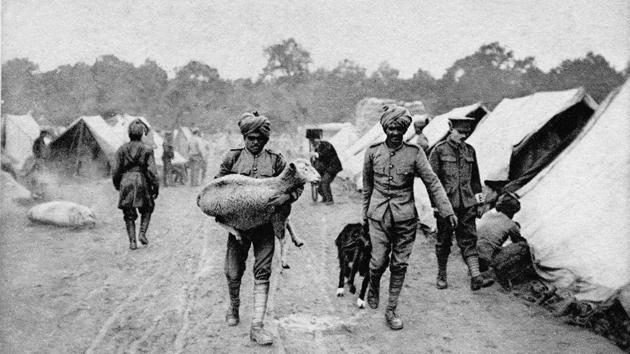
An Indian encampment in France, where two soldiers of the British Indian Army carry a sheep and a goat for sacrifice. The Western front saw some of the heaviest fighting in the war and a high number of casualties. (Lebrecht Music and Arts / Alamy Stock Photo)
6/8
 View Photos in a new improved layout
Updated on Nov 13, 2018 3:23 PM
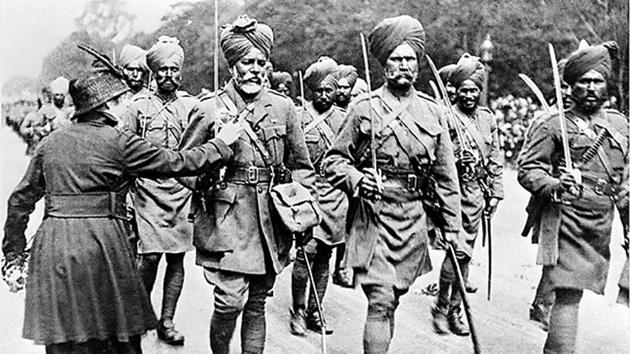
During a march past of Indian troops, a woman pins flowers on to the tunic of one of the soldiers. One of the most shocking facts of the war was that Indian soldiers did not receive their warm woollen greatcoats till November. They left India in their cotton khakis and entered the trenches in the cold October months in the same uniform. (Imperial War Museums)
7/8
 View Photos in a new improved layout
Updated on Nov 13, 2018 3:23 PM
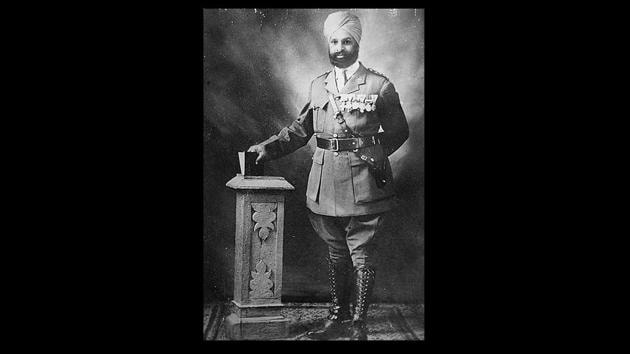
Subedar Major Thakur Singh of the 47th Sikh regiment. He held the rank of Jemadar in March 1901 and by the end of WW1, his title was Subadar Major Thakur Singh Bahadur. Bahadur was an honorary title used by soldiers who got the Order of British India. M.C. or the Military Cross, which was instituted by King George in 1914 to recognise the contribution of junior officers during wartime. Singh retired from active service only to be called back to the service at the break of WW2. (Picture Courtesy: Personal Family Albums)
8/8
 View Photos in a new improved layout
Updated on Nov 13, 2018 3:23 PM


