
 E-Paper



Photos: Climate change, Ladakh nomads and the future of pashmina wool
Pashmina, a highly coveted cashmere wool, comes from the fine undercoat of a breed of Himalayan goat found in India, Nepal, Tibet and Central Asia. But the pashmina from Changtang in the union territory of Ladakh is seen by purists as the best. For centuries the Changpa nomads have tended these shaggy goats that provide silky-soft, super-expensive pashmina wool. But now many are rethinking their way of life, in part because of climate change.
Updated on: Jan 25, 2020 10:20 PM IST


Share via


Copy link

1/8
 View Photos in a new improved layout
Updated on Jan 25, 2020 10:20 PM
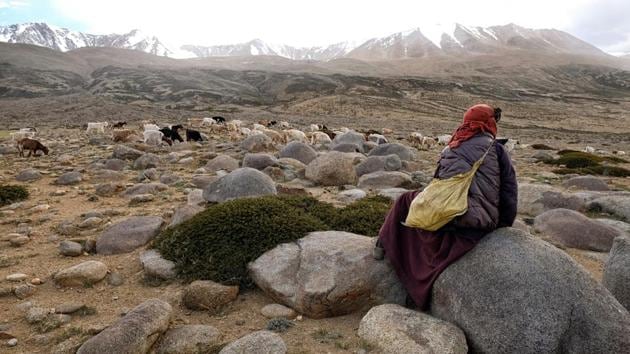
A Changpa nomad shepherd pastures pashmina goats near Korzok village, in Leh district, Ladakh. For centuries the Changpa have tended the shaggy goats that provide silky-soft, super-expensive pashmina wool. But now many are rethinking their way of life, in part because of climate change. (Noemi Cassanelli / AFP)
2/8
 View Photos in a new improved layout
Updated on Jan 25, 2020 10:20 PM
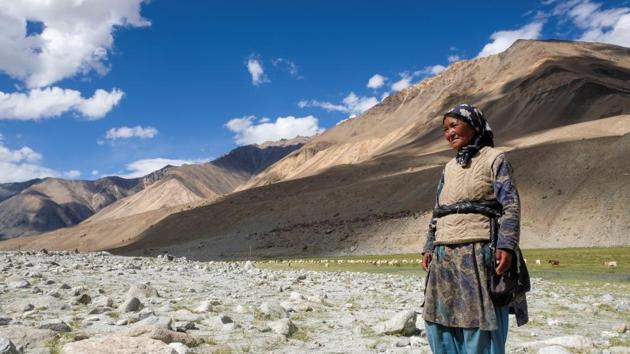
A Changpa nomad shepherd looks on as she brings her pashmina goats to pasture near Durbuk village, between Chang La mountain pass and Tangste, Ladakh. Winters have become harsher and summers drier for the semi-nomadic people living 5,000 metres (16,400 feet) up in the Changtang region straddling northern India and Tibet. (Noemi Cassanelli / AFP)
3/8
 View Photos in a new improved layout
Updated on Jan 25, 2020 10:20 PM
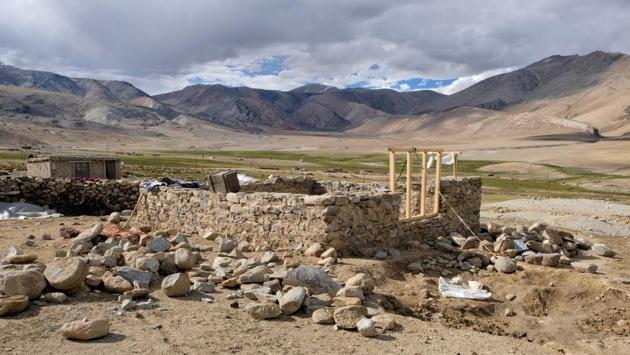
A stone house under construction at the Changpa nomadic camp, near Korzok village. Changing weather patterns and other factors have pushed many on the inhospitable plateau to abandon their traditions and migrate to villages and cities in the Ladakh region in search of alternative sources of income. (Noemi Cassanelli / AFP)
4/8
 View Photos in a new improved layout
Updated on Jan 25, 2020 10:20 PM
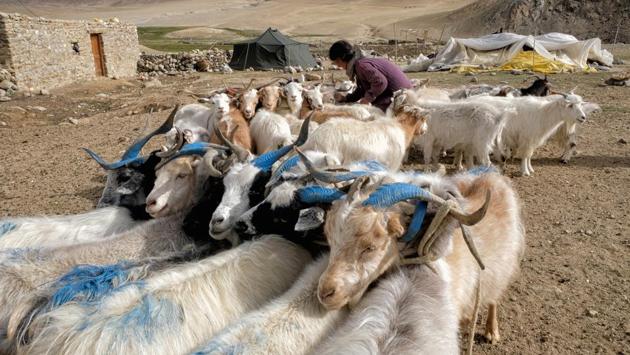
Changpa nomad Sonam Yangzom ties pashmina goats before milking them. Pashmina, a highly coveted cashmere wool, comes from the fine undercoat of a Himalayan goat found in India, Nepal, Tibet and Central Asia. But the pashmina from Changtang is seen by purists as the best. For this exceptionally warm, light and fine fibre, the animals need the particular climatic conditions of the Changpa’s homeland. (Noemi Cassanelli / AFP)
5/8
 View Photos in a new improved layout
Updated on Jan 25, 2020 10:20 PM
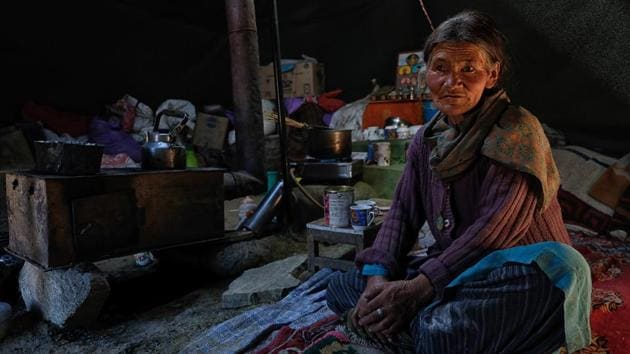
“During the period June to September we live in the camp inside tents but during the winter we have to shift to Korzok village because the weather gets too cold,” said Sonam Yangzom, 55. “We will have to build a house in the camp because living in the tents is getting too cold,” she told AFP, her face weather-beaten after a lifetime in Changtang. (Noemi Cassanelli / AFP)
6/8
 View Photos in a new improved layout
Updated on Jan 25, 2020 10:20 PM
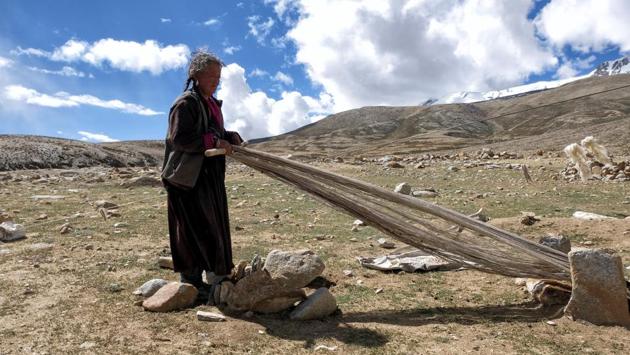
A Changpa nomad looms pashmina wool. Shopkeeper Irfan Goruu, 31, said there were sometimes shortages of pashmina because of the changing weather. “If the nomads of Ladakh do not produce it then nobody will... so this industry will finish,” he told AFP. (Noemi Cassanelli / AFP)
7/8
 View Photos in a new improved layout
Updated on Jan 25, 2020 10:20 PM
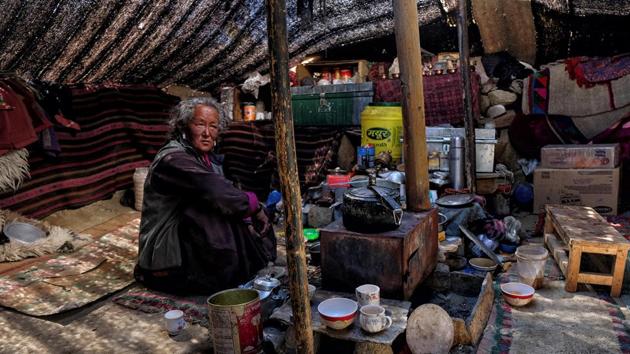
A young Changpa nomad (top C) sits as others milk pashmina goats. ActionAid International activist Harjeet Singh said northern India is at the forefront of the ravages of climate change, suffering more droughts, floods and cyclones. “These impacts are driving migration. People are leaving their homes. And we have seen that their livelihoods change, their patterns of life change,” the 43-year-old told AFP. (Noemi Cassanelli / AFP)
8/8
 View Photos in a new improved layout
Updated on Jan 25, 2020 10:20 PM


