
 E-Paper



Photos: In Pakistan, the other great home of the bagpipes
South Asia has had for centuries its pungi, a wind instrument used for snake charming, and shehnai, a traditional oboe. But the bagpipe had to wait until the mid-19th century for British colonialists to bring it to subcontinental India, of which Pakistan was a part before independence and partition in 1947. Ans while the instrument is a popular fixture in weddings, army bands and religious festivals, Pakistan's main affiliation with bagpipes is its mass production of them. Now a new generation of Pakistanis is taking control of the tradition, thousands of kilometres from Scotland yet sells thousands of bagpipes each year.
Updated on: Mar 12, 2019 12:21 PM IST

Share via


Copy link

1/9
 View Photos in a new improved layout
Updated on Mar 12, 2019 12:21 PM
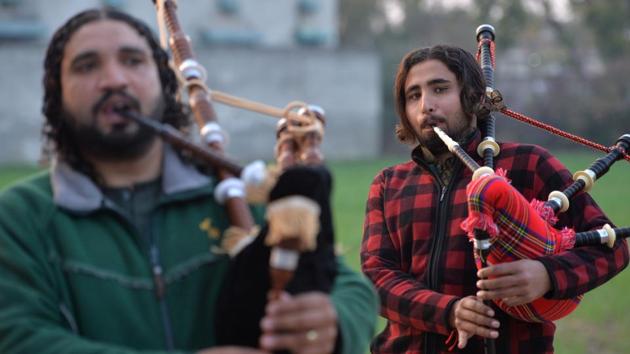
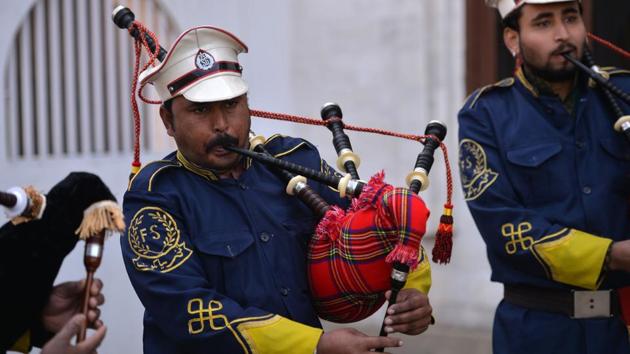
A musical band performs with bagpipes made at the Mid East bagpipe factory in the city of Sialkot, Pakistan. The fresh smell of wood floats through the Mid East factory on the eastern side of Pakistan’s Punjab province, where third generation owner Umer Farooq (not pictured) is one of the managers. Workers are busy standing or sitting on the ground. (Aamir Qureshi / AFP)
2/9
 View Photos in a new improved layout
Updated on Mar 12, 2019 12:21 PM
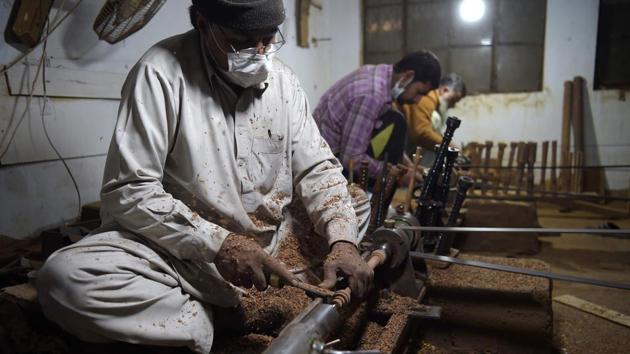
Pakistani artisans work on machines to make components to be used in bagpipes. Covered in sawdust, they carve the wood and polish it. Rosewood or ebony serve as the blowstick, into which players exhale. The drones -- long pipes with a lower tone -- follow a similar process. (Aamir Qureshi / AFP)
3/9
 View Photos in a new improved layout
Updated on Mar 12, 2019 12:21 PM
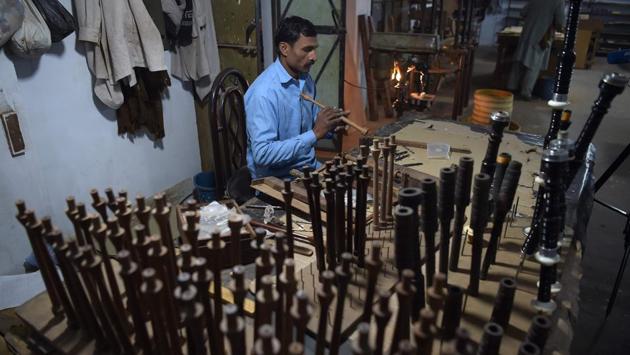
The sticks and drones are then attached to a bag, and often covered with tartan, a coloured plaid fabric typical of Scotland. “In my family, all the boys know how to make a bagpipe, step by step,” said Farooq. “When we were seven or eight, we would go to the factory. It was like a school, but the teachers were our dads and uncles.” (Aamir Qureshi / AFP)
4/9
 View Photos in a new improved layout
Updated on Mar 12, 2019 12:21 PM
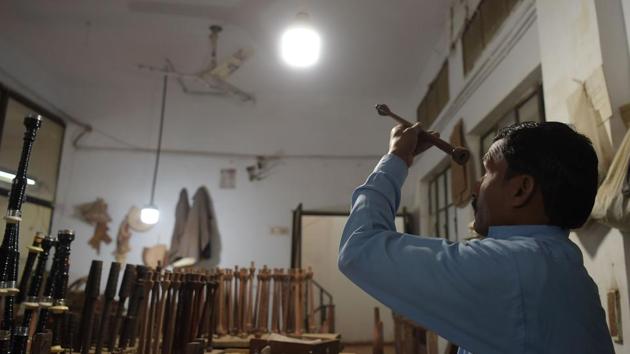
A worker inspects a component. South Asia has had for centuries its pungi, a wind instrument used for snake charming, and shehnai, a traditional oboe. But the bagpipe had to wait until the mid-19th century for British colonialists to bring it to subcontinental India, of which Pakistan was a part before independence and partition in 1947. (Aamir Qureshi / AFP)
5/9
 View Photos in a new improved layout
Updated on Mar 12, 2019 12:21 PM
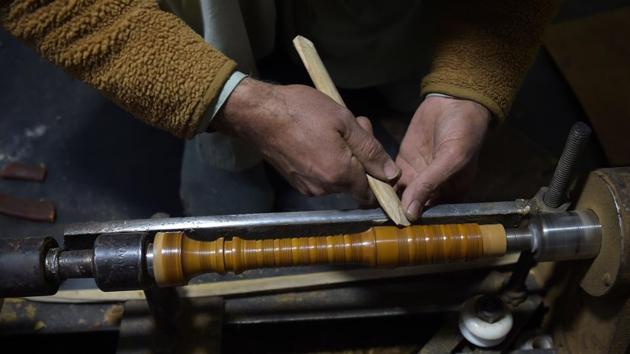
An artisan works to make bagpipe components. “Anywhere the British army went, they took pipers with them,” said Decker Forrest, a Gaelic music teacher at the University of the Highlands and Islands in Scotland. Pakistani bands put the emphasis on how they look, rather than technique. At the world bagpipe championship, they are “the most beautifully dressed.” The kilt, however, is not de rigueur. (Aamir Qureshi / AFP)
6/9
 View Photos in a new improved layout
Updated on Mar 12, 2019 12:21 PM
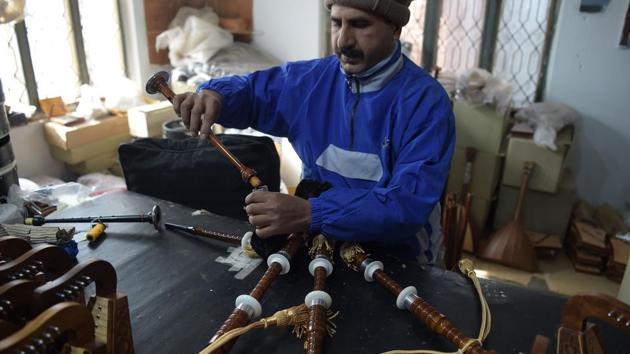
A worker fixes a component to make a set of bagpipes. The Pakistani military, born out of the colonial British Indian Army, also still has a soft spot for the instrument. In 2014 it established a camel-mounted bagpipe band attached to a unit of Desert Rangers. The camels, draped in scarlet and gold as their musicians sway above them, are particularly appreciated during parades. (Aamir Qureshi / AFP)
7/9
 View Photos in a new improved layout
Updated on Mar 12, 2019 12:21 PM
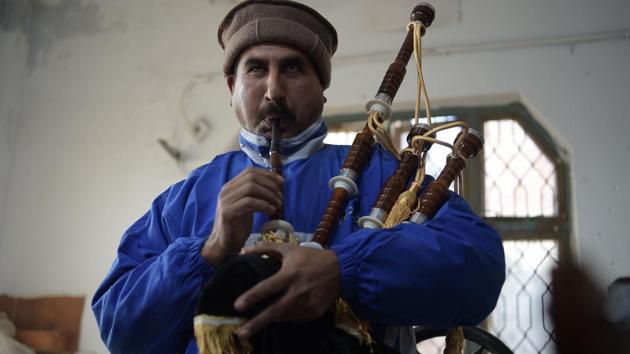
A worker plays and tests bagpipes. Pakistan’s main affiliation with bagpipes is their mass production, though the quality of the instruments can vary. Some 2,600 are exported from the Mid East factory each year, mainly to the United States. When contributions from small and medium-sized businesses are counted, Sialkot can produce a total of 10,000 bagpipes a year. (Aamir Qureshi / AFP)
8/9
 View Photos in a new improved layout
Updated on Mar 12, 2019 12:21 PM
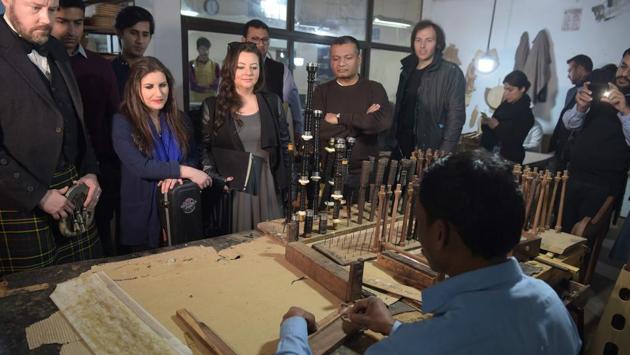
Visiting international musicians watch the manufacturing process at the Mid East bagpipe factory. Cheap labour means Pakistani bagpipes are priced less expensively than ones made in Scotland. But Pakistani bagpipes have a reputation. “The quality of sound is not the same,” said Paul Gardner, manager of a London music store. “It might get somebody started, but that person will quickly look to upgrade.” (Aamir Qureshi / AFP)
9/9
 View Photos in a new improved layout
Updated on Mar 12, 2019 12:21 PM


