Under Aadhaar, no longer can we distinguish between a genuine person and a non-existent person. It is just like the life-threatening disease AIDS, which reduces the body’s ability to differentiate between internal and foreign cells,” said Anupam Saraph, e-governance expert and Right to Information (RTI) Act activist.
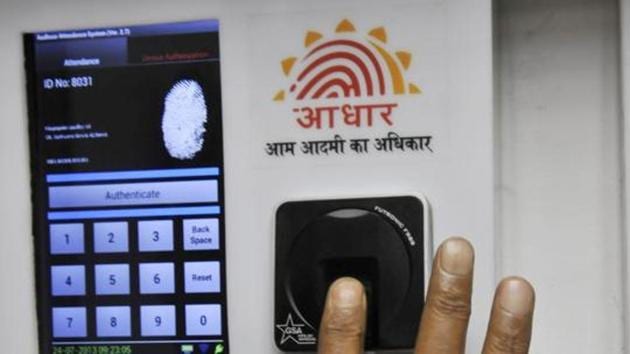
He was speaking at a session organised by non-profit organisation Moneylife Foundation, which had an array of discourses and counter-arguments on privacy, Aadhaar and RTI, put forth by three experts on Saturday at Sumant Moolgaokar Auditorium, ICC tower.
The other two speakers included Aurangabad division deputy commissioner (revenue) Pralhad Kachare and the central information commissioner (CIC) M Sridhar Acharyulu, who gave keynote addresses.
Elaborating on his take on Aadhaar and its issues in violating privacy, Saraph said, “I had filed a RTI application to UIDAI (Unique Identification Authority of India) on December 31, 2017, seeking a number of clarifications regarding the mechanism of Aadhaar. One of the prominent clarifications was to define the difference between identification and authentication of biometric or demographic data by them. To my shock, while the definition of authentication is available in regulation 2 (c) of Aadhaar Act, 2016; there is none for identification, and so no difference was cited in the reply. A system like Aadhaar cannot solely depend on authentication, without paying heed to identification of the individual, thus making it very risky.”
“Also, if the ID is unique, the biometric should retrieve only one record, not multiple records and I asked this to UIDAI and received an unambiguous reply that it will not retrieve one record, proving that in fact it is not unique, hence it cannot be used to deduplicate any database as claimed initially.
{{/usCountry}}“Also, if the ID is unique, the biometric should retrieve only one record, not multiple records and I asked this to UIDAI and received an unambiguous reply that it will not retrieve one record, proving that in fact it is not unique, hence it cannot be used to deduplicate any database as claimed initially.
{{/usCountry}}“Further, I found out through the response that they do not have officers to certify all the personal details submitted by those to whom Aadhaar has been issued, thus raising the risk and duplication quotient,” he said.
In response to Saraph, Kachare pointed out the selective approach to compromising privacy. “Aadhaar can never be an issue as it is just an identification tool. However, we must worry about privacy curtailing RTI. Every day the value of privacy is reducing and the best example is the Internet whereby we are asked to share details like our contact list, images, etc. We are ok with that, but then why be selective?” said Kachare.
Acharyulu said, “The issue here is the ‘Right to Choose’. On the Internet, we are given a choice to allow access to our personal information which we can either accept or deny. But Aadhaar being mandatory has no such room, plus there is no way of denying to enlist onself, as the basic amenities to survive in this country is being linked to it.”