Six endangered vultures, born and bred in captivity at Pinjore’s Jatayu Conservation Breeding Centre, 20 km from Panchkula, will fly free by the year-end. Two adult vultures will accompany them.
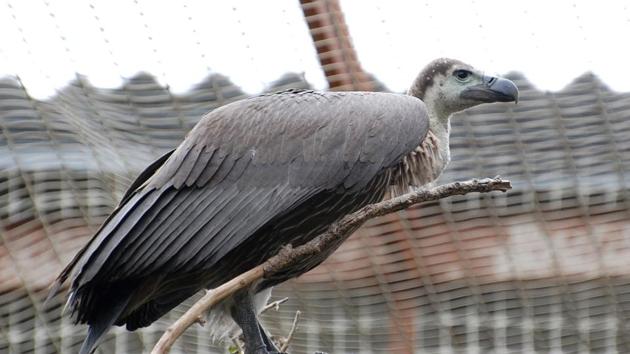
Their flight is special because they will sport satellite transmitters that allow the centre to monitor their survival in the wild. If all goes well, 100 pairs of three endangered species, namely white-backed, slender-billed and long-billed Gyps, will be released in 10 years.
Centre head Vibhu Prakash says the telecom department allowed the satellite-based tracking system to be tagged to the wings of the birds last month. “We’ve got the radio frequency. The Haryana forest department will buy satellite transmitters and we should be ready to fly by the year-end,” he says.
The permission was awaited since November 2015 and clearance took time due to security concerns.
Haryana principal conservator, wildlife, Gulshan Ahuja says, “The transmitters are available in Europe and US. We have applied for the import licence and placed the order. It can take two months. A single piece costs Rs 5 lakh.”
Prakash, a principal scientist with Bombay Natural History Society that runs the Pinjore centre along with the Haryana government since 2001, says of the eight vultures to be released with the transmitters, six are white-backed. Two are adult vultures caught at the beginning of the breeding programme.
{{/usCountry}}Prakash, a principal scientist with Bombay Natural History Society that runs the Pinjore centre along with the Haryana government since 2001, says of the eight vultures to be released with the transmitters, six are white-backed. Two are adult vultures caught at the beginning of the breeding programme.
{{/usCountry}}The centre is preparing the birds by making them habitual to dummy tags.
Last year, the centre released two Himalayan Griffons brought in 2005 to lay eggs. They couldn’t be tracked after release.
Vultures face extinction in India due to their contact with fatal veterinary drug diclofenac, which they consume while feeding on cattle carcass. The use of diclofenac in treating cattle has gone down since the ban in 2007 but the threat remains. Vultures die of renal failure due to diclofenac poisoning.
160 vultures bred at centre in a decade
*The Pinjore centre, named after mythical vulture Jatayu that tried to rescue Sita from Ravana’s clutches in the epic Ramayana, has 250 vultures. Of them, 160 have been bred in captivity, while the rest were caught for breeding
* The centre has mastered artificial incubation and doubled the count of vultures, which are otherwise slow to breed
* The centre bred its first vulture in 2007 and has since nurtured the endangered white-backed, slender-billed and long-billed Gyps species.
Why vultures
Vultures are natural scavengers. They hold ecological, economic, social and religious importance. With vultures virtually gone, many of Mumbai’s Parsis have turned to cremations after their traditional way of disposing of the dead before the birds stopped working.
How tags work
*Vultures remain in a radius of 100 km but can fly further.
*The satellite transmitters or tags, which have a life of three years, will relay their location in latitude and longitude.
*Satellite company Argos gives four readings a day on their movement.
*If their location is static for a day, it means something is wrong. The ground team will track the vultures.
*Each transmitter weighs 30g and costs Rs 5 lakh. It will be fixed with teflon strings under the wings. Such tags have been used to track animals such as tigers and rhinos.