Mumtaj Bholi stands out. Not only because she is the only transgender among 1,145 candidates in the Punjab assembly polls, but also because it’s hard to find a candidate whom voters greet by touching her feet, even when she is far from the top rung of her party and, at 48, not that old either.
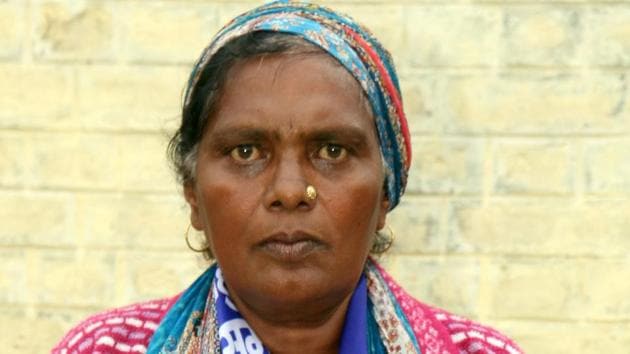
“This is traditional respect for ‘mahants’. After all, we bring good luck and most happy occasions are incomplete without our customary visit,” says Mumtaj, as we meet her on the campaign trail in villages of Bhucho segment, 15km from district headquarters Bathinda.
Wearing a salwar-suit and sneakers, she has an entourage of 20-odd workers and a tricycle-cart that carries an announcement system blaring songs about “inquilab” or revolution, a buzz word of the polls this time. She follows the cart, folding her hands, distributing pamphlets, asking the people to vote for “hathi”, elephant, the symbol of the Bahujan Samaj Party (BSP). How did she get the ticket? “I am a known figure in this area. And the BSP is a party that backs the oppressed classes, because winning is not everything.”
But she is no novice in politics. Since the ’90s, she worked to gather votes for the Shiromani Akali Dal (SAD) under Bathinda councillor Santosh Kumari, also a transgender, whom Mumtaj has mentioned as her “guru” in the “father/mother” section of her nomination form. By 2007, when Mumtaj got involved with the BSP, she had grown out of the guru’s wings. She’d been “assigned” four villages of Bhucho area from where only she or her designated “mahants” could collect the “wadhai”. “Going and singing at a son’s birth still remains my bread-and-butter work. That’s the work God has assigned to us,” she says.
{{/usCountry}}But she is no novice in politics. Since the ’90s, she worked to gather votes for the Shiromani Akali Dal (SAD) under Bathinda councillor Santosh Kumari, also a transgender, whom Mumtaj has mentioned as her “guru” in the “father/mother” section of her nomination form. By 2007, when Mumtaj got involved with the BSP, she had grown out of the guru’s wings. She’d been “assigned” four villages of Bhucho area from where only she or her designated “mahants” could collect the “wadhai”. “Going and singing at a son’s birth still remains my bread-and-butter work. That’s the work God has assigned to us,” she says.
{{/usCountry}}Born in a family of Mazhabi Sikh Dalits, she has a younger sister and a brother. When she realised she was a transgender, she had to follow tradition to live in a “dera” of “mahants” near her village Lehragaga in Sangrur district. “I was barely 10 years old. But my mother was constantly taunted by people when they saw me dancing and hanging out with the ‘hijra’ group.” By the time she entered teenage, she had shifted to Bathinda.
Now, she lives alone in a two-bedroom house. Her sister’s husband, son and daughter-in-law are in the house for now, to help out. “My parents are dead now. But I visit my family frequently,” she says.
In a segment reserved for the Scheduled Castes (SCs), among the promises she makes is reservation for the general-category poor. “And for transgenders!” she tells us later. “But being a Dalit is harder than being a transgender. As a Dalit, I may not be welcome in certain houses, but as a dancing ‘khusra’, I at least have a traditional occupation,” she says. Mumtaj talks fondly of a general store that she had started “as my collection area is not large enough to sustain me and others who work with me”. But then she got into politics, and “too busy”.
Yet, what’s the prime purpose of her contesting the election? It’s a first for a transgender in at least the last two assembly polls for which data is available. And, of the 273 voters who have enlisted under the “other” gender, only four are from her segment.
“Some people still hide their identity out of ignorance or embarrassment. I want to make our identity our strength — the shared identity of Dalits, mahants and all other oppressed classes,” she says.
How will she do that without enough votes? “That’s not all that elections are about. I want to use my recognition to get things done. And it’s also about making a point to people in the ruling classes. They baulk at the thought of a ‘khusra’ getting into their ‘raj’ (fiefdom). I don’t remember anyone who’s done this before. Winning is not everything, I told you.”
As for the contest, the SAD has fielded Harpreet Singh Kotbhai, the Congress has given the ticket to Pritam Singh Kotbhai, who was the SAD candidate in 2012, and the AAP has fielded a former teacher, Jagsir Singh.