E-Paper



Mumbai's slum redevelopment at record scale: Why more slums are being redeveloped now than ever | Explained
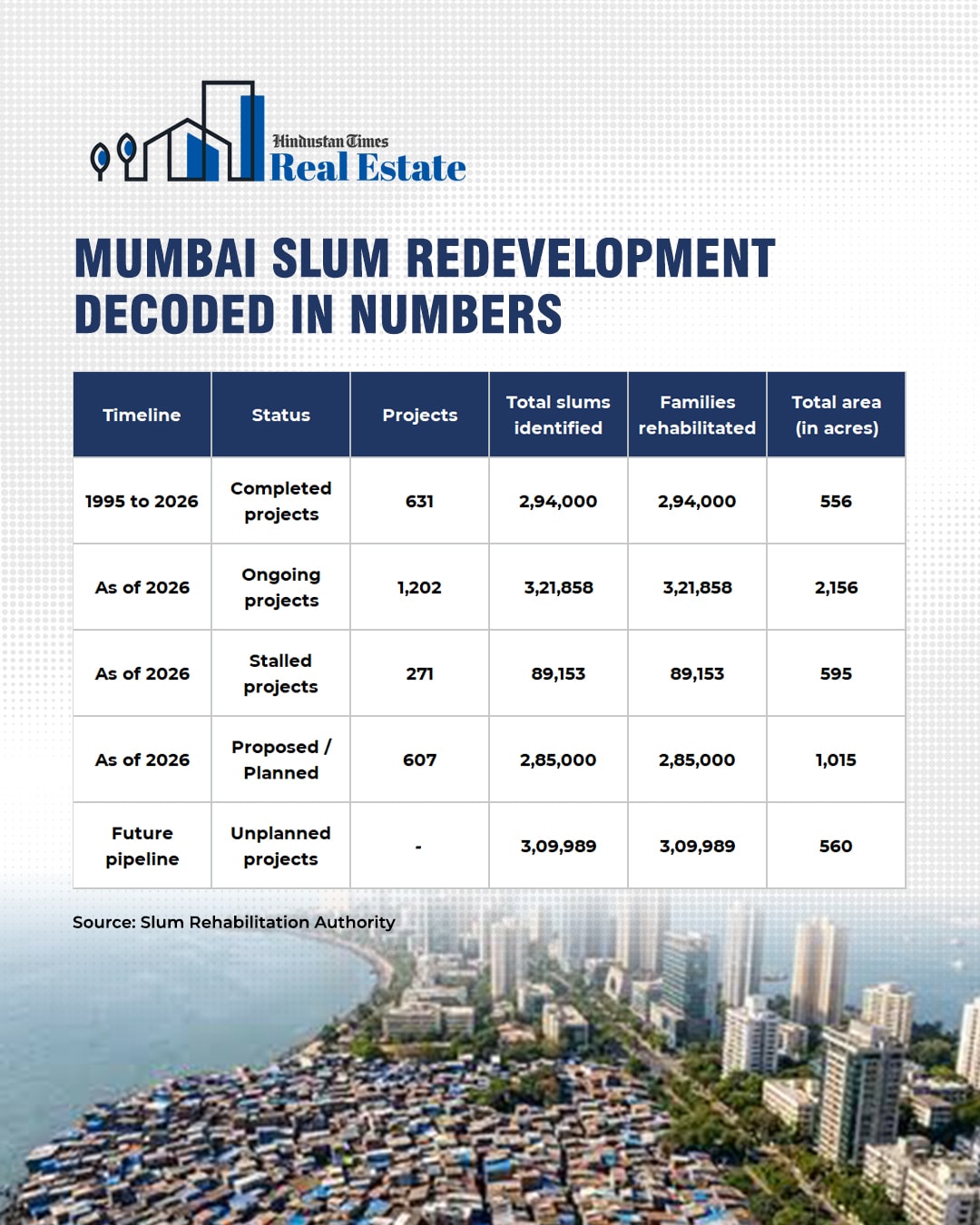
Mumbai real estate: Slum Rehabilitation Authority (SRA) data shows 1,202 slum redevelopment projects are underway across 2,156 acres

 Prefer HTon Google


Mumbai's slum redevelopment programme has reached an unprecedented scale. More land is currently under redevelopment than has been successfully redeveloped over the past three decades, since the inception of the Slum Rehabilitation Authority (SRA) in Maharashtra since 1995.
Around 2,156 acres of Mumbai's slum land have ongoing redevelopment projects. This includes 1,202 slum projects in which 3.21 lakh families reside, according to a Hindustan Times report.
Along with this, 607 slum projects are proposed, housing 2.85 lakh families spread across 1,015 acres. On the other hand, slum projects covering about 595 acres have stalled due to legal, financial or administrative hurdles. This includes a total of 271 projects where over 89,000 families reside, according to the report.
Between 1995 and 2026, as many as 631 slum projects spread across 556 acres rehabilitated 2.94 lakh families.
Apart from SRA, several other bodies, including the Maharashtra Housing and Area Development Authority (MHADA) and the City Industrial Development Corporation (CIDCO), also construct affordable housing units in Maharashtra.
The MHADA is the nodal agency for providing affordable housing in the State. Since its establishment (1977) up to November 2025, MHADA has constructed 5.27 lakh dwelling units in Maharashtra, according to data shared by the Maharashtra government Economic Survey 2025-26.
On the other hand, CIDCO, which has been implementing a housing development programme in a planned manner in Maharashtra since 1970 up to December 2025, has constructed a total of 2.30 lakh units, according to the data.
Also Read: Maharashtra government’s new slum cluster redevelopment approach: 5 key things to know
What is the Slum Rehabilitation Authority?
The Slum Rehabilitation Authority (SRA) is a government body responsible for implementing slum redevelopment projects in Maharashtra. Established in 1995, it enables private developers to provide free housing to slum dwellers while allowing them to build and sell additional apartments on the same land to recover project costs. Instead of rehabilitating slum dwellers, developers obtain additional construction rights, enabling them to build more flats for sale on the open market.
What’s the difference between slum redevelopment and redevelopment?
Redevelopment means rebuilding an existing legal building that has become old or unsafe. The people living there are already homeowners.
Slum redevelopment means rehabilitating eligible slum residents by replacing informal settlements with formal housing, while allowing the developer to build additional saleable units to finance the project.
Why is there an increase in the number of slum redevelopment projects
According to real estate experts, a combination of policy reforms and the sheer scale of redevelopment opportunities has prompted large corporates to enter Mumbai's cluster redevelopment segment.
"Maharashtra passed its slum cluster redevelopment framework in November 2025. Developers could buy connected plots of land of 50 acres or more without having to get permission from each resident. The permission part was a massive hurdle that had kept big names away. It finally made economic sense to add more development rights and higher FSI incentives," said Santhosh Kumar, vice chairman, ANAROCK Group.
“There is a huge spurt in the number of projects as well as the total acres under redevelopment. This has happened due to multiple factors, including policy interventions favouring revamp of such colonies, a dearth of land availability within Greater Mumbai limits, the opportunities Mumbai’s real estate provides, and most importantly, several of the slum colonies are on good and premium locations," Pankaj Kapoor, founder and managing director of real estate research company Liases Foras, told Hindustan Times newspaper.
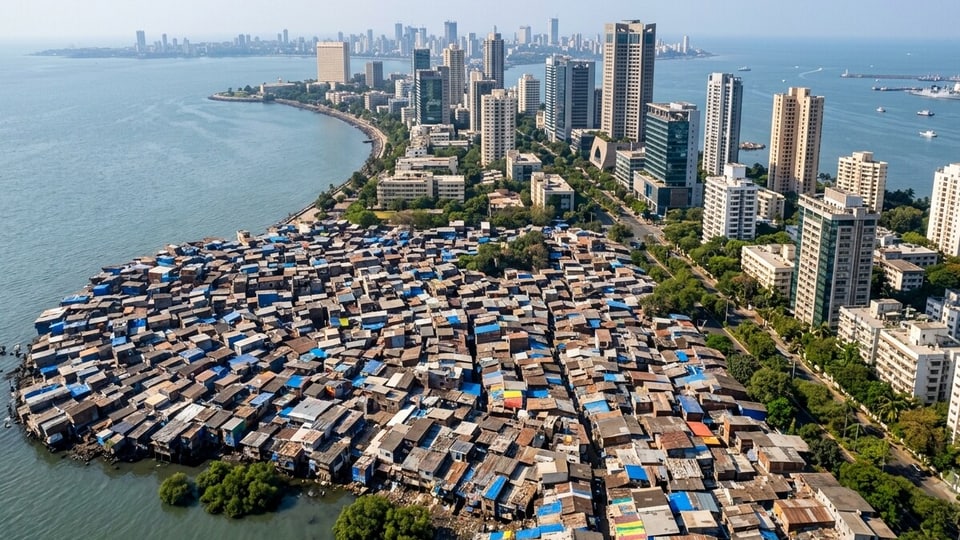
Slums cover 24% of Mumbai's land, and house over half its population
Slums now occupy nearly 24% of Mumbai’s land and house more than half of its population, according to recent findings by the SRA. The survey also found that approximately 58 hectares of collector or government land had been encroached upon over the past 14 years. Officials noted that the total encroached area across land owned by other authorities could be significantly higher.
To map the extent of encroachments, the SRA used satellite imagery and GIS, comparing images from 2000 with GIS data from 2011 and 2025.