When people suddenly evacuate their homes, animals can be left behind to fend for themselves. That happened in Fukushima, Japan, after the 2011 nuclear disaster forced residents to leave areas surrounding the Fukushima Daiichi nuclear power plant. Some domestic pigs escaped or were released and eventually encountered Japanese wild boar. The animals interbred, producing offspring that carried genetic material from their domestic ancestors.
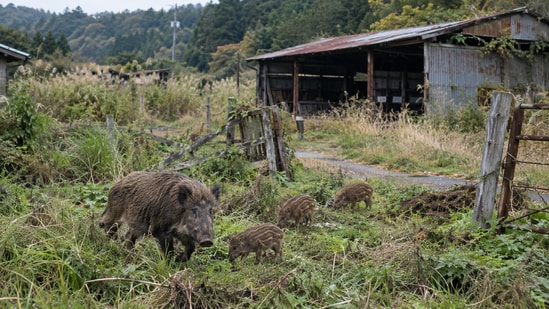
A 2026 study published in the Journal of Forest Research examined how domestic pig ancestry persisted in Fukushima’s wild boar population after the evacuation. Researchers Donovan Anderson, Toshihito Takagi, Hiroko Ishiniwa and Shingo Kaneko analyzed samples collected between 2015 and 2018 from 191 wild boar and 10 domestic pigs. They identified 31 admixed individuals, 21 of which were estimated to be more than five generations removed from the initial hybridization. The researchers also found differences in the proportion of domestic nuclear DNA among animals carrying different mitochondrial lineages, suggesting that reproductive patterns may help explain how domestic ancestry changed over generations.
Domestic ancestry over the generations
Domestic pigs and Japanese wild boar belong to the same species, Sus scrofa, which allows them to interbreed. When domestic pigs entered the surrounding landscape, their descendants could mate with wild boar and pass domestic genetic material into the wild population. To investigate how this ancestry changed, the researchers compared mitochondrial DNA, which tracks maternal lineage, with nuclear DNA inherited from both parents.
{{/usCountry}}Domestic pigs and Japanese wild boar belong to the same species, Sus scrofa, which allows them to interbreed. When domestic pigs entered the surrounding landscape, their descendants could mate with wild boar and pass domestic genetic material into the wild population. To investigate how this ancestry changed, the researchers compared mitochondrial DNA, which tracks maternal lineage, with nuclear DNA inherited from both parents.
{{/usCountry}}Hybrids carrying the H1 mitochondrial haplotype associated with domestic pigs had an average estimated domestic contribution of 3% to their nuclear genomes. By comparison, hybrids carrying the J10 haplotype associated with wild boar had an average domestic contribution of 14%. The researchers suggested that this difference may be linked to faster generational turnover in the domestic pig maternal lineage, potentially reflecting the shorter reproductive cycle of domestic pigs.
Repeated breeding with wild boar can reduce the proportion of domestic pig nuclear DNA in later generations. However, mitochondrial DNA inherited through the maternal line may remain detectable even when the domestic contribution to the rest of the genome becomes small. This distinction helps explain why an animal can retain a mitochondrial marker associated with domestic pigs while having relatively little domestic nuclear ancestry. The proposed role of reproductive turnover is an explanation for the observed pattern, not evidence that every hybrid followed the same genetic trajectory.
What earlier research found
A 2021 study published in Proceedings of the Royal Society B documented the extent and distribution of hybridization following the Fukushima disaster. Donovan Anderson and his co-authors analyzed 243 specimens collected from the evacuation area and other locations, including domestic pigs. Their analysis identified 31 hybrid wild boars, representing about 16% of the wild boars sampled in the evacuated zone.
The study also revealed a geographic pattern: approximately 75% of the detected hybrids were found within the original 20-kilometer evacuation zone around the nuclear plant. The researchers reported a decline in domestic genetic contribution over time, a pattern consistent with repeated breeding between hybrids and wild boar. The 243 specimens represented the study’s overall sample, not the number of wild boar sampled in the evacuation zone.
The two studies offer complementary insights into the genetic consequences of the evacuation. The 2021 research documented the extent of hybridization and where hybrids were found, while the 2026 study examined how maternal lineage was associated with differences in domestic nuclear ancestry. Neither finding means that all wild boar in Fukushima carry domestic pig genes.
Even when descendants resemble wild boar, genetic testing can reveal traces of domestic ancestry that are difficult to identify from appearance alone. By examining both mitochondrial and nuclear DNA, the researchers showed how different genetic markers can preserve different parts of an animal’s ancestry, helping explain how the genetic influence of Fukushima’s abandoned pigs persisted across generations.