Every parent is familiar with the routine of removing a diaper from a baby, throwing it into the trash, and getting rid of it as soon as possible. Researchers at the University of Kitakyushu in Japan, however, explored whether used disposable diapers could instead become part of a house. Their study, Application of non-degradable waste as building material for low-cost housing, was published in Scientific Reports in May 2023. Siswanti Zuraida, Bart Dewancker, and Romi Bramantyo Margono examined how shredded diaper waste could replace some of the fine aggregate, or sand, used in concrete and mortar for low-cost housing in Indonesia.
Housing gap and garbage issue
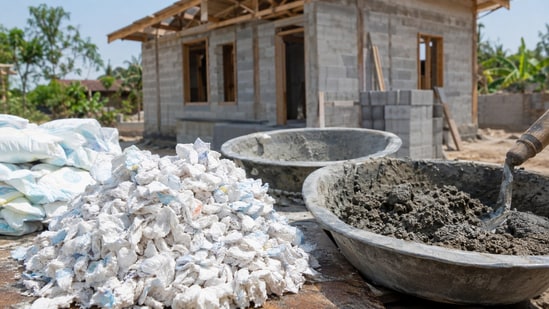
The research focused on Indonesia, where the authors identified both a need for affordable housing and a growing waste-management challenge. Instead of treating the two problems separately, the study explored whether some disposable diaper waste could be diverted into construction materials. The researchers washed, dried, and shredded used diapers before mixing them into concrete and mortar as a partial replacement for fine aggregate. They tested concrete intended for structural elements such as columns and beams separately from mortar intended for architectural elements such as walls and floors. The concrete mix had a target compressive strength of 25 megapascals, and the samples were tested after 28 days of curing.
Results of the experiments and their shortcomings
As more diaper material was added, the compressive strength of the mixes generally decreased. Ordinary concrete reached 24.91 megapascals, close to the 25-megapascal target. With up to 10% of the fine aggregate replaced by shredded diapers, the concrete remained in the 20-to-25-megapascal range, which the study associated with structural use in a three-story house. At 27% replacement, the strength fell to about 10 megapascals, a level the researchers associated with structural components in a single-story house.
{{/usCountry}}As more diaper material was added, the compressive strength of the mixes generally decreased. Ordinary concrete reached 24.91 megapascals, close to the 25-megapascal target. With up to 10% of the fine aggregate replaced by shredded diapers, the concrete remained in the 20-to-25-megapascal range, which the study associated with structural use in a three-story house. At 27% replacement, the strength fell to about 10 megapascals, a level the researchers associated with structural components in a single-story house.
{{/usCountry}}The 40% figure applied to a narrower use. Mortar made with 40% diaper replacement reached about 2 megapascals and was intended for non-load-bearing wall partitions. The study also found that mortar used for floors and garden paving could accommodate about 9% replacement and reach 8.5 megapascals. Higher replacement levels were not recommended for those applications because the resulting strength fell below the relevant Indonesian standards.
To see how the material could be used in a real building, Zuraida and her colleagues applied the experimental results to a 36-square-meter house designed for four people on a 60-square-meter lot. Their calculations called for 22.79 cubic meters of composite construction material, including 1.73 cubic meters of disposable diaper waste, meaning diapers could account for about 7.6% of the total material volume. The researchers also built a small prototype house in Indonesia using the approach, with diaper-based material incorporated into its architectural components. Contemporary reports on the project described the completed prototype as a roughly 36-square-meter house.
The prototype did not eliminate the study's limitations. The researchers said they had not carried out an exhaustive structural analysis of the column and beam dimensions in their housing design and called for additional testing of soil-bearing capacity, load capacity, and other structural requirements. Wider adoption would also require systems for collecting, sanitizing, and shredding used diapers, as well as regulatory changes to accommodate the material. The paper further notes that the datasets generated and analyzed for the study were not publicly available because of a pending patent, although they could be obtained from the corresponding author on reasonable request.
The idea does not change the routine at the changing table, but it offers another possible destination for a difficult waste stream. The 2023 study showed that shredded disposable diapers could partially replace sand in specific construction applications, while the prototype demonstrated how the laboratory results could be incorporated into a small house. The researchers presented the work as a starting point for developing the collection, processing, and construction systems needed to use the material more widely.