
Levent Alpöge has a résumé that would impress even Claude.
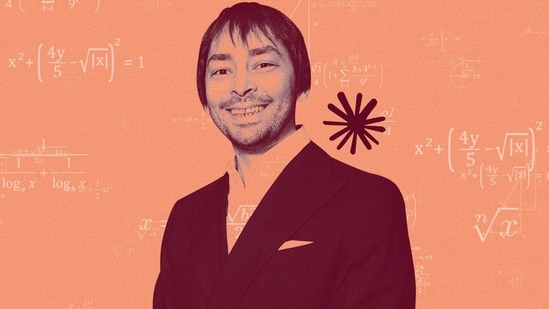
He graduated Harvard with the highest GPA in his class, won the prize for America’s top young math researcher and earned his Ph.D. in math from Princeton before he took a job at Anthropic. He also speaks six languages and hopes to add Latin and ancient Greek.
And he recently had a work experience that had never before appeared on anyone’s CV: He believes he’s solved the single most famous
Levent Alpöge has a résumé that would impress even Claude.
He graduated Harvard with the highest GPA in his class, won the prize for America’s top young math researcher and earned his Ph.D. in math from Princeton before he took a job at Anthropic. He also speaks six languages and hopes to add Latin and ancient Greek.
And he recently had a work experience that had never before appeared on anyone’s CV: He believes he’s solved the single most famous problem in all of mathematics.
Ever since 1859, when Bernhard Riemann hypothesized about the pattern of prime numbers, mathematicians had tried, failed and gone mad trying to prove his conjecture. But last week, Alpöge felt that he and Anthropic’s Claude were closing in on math’s holy grail. Days before his company’s trillion-dollar IPO, he fired off a message to Anthropic CEO Dario Amodei.
“Hypothetically,” Alpöge says he began, “if I were to have…”
The day after Anthropic went public, he went public with his secret. Alpöge and AI had discovered a proof of the Riemann Hypothesis.
Once he published it, mathematicians around the world scrambled to verify his proof’s code—all 17 million lines of it. The next day, two independent groups announced they had “full confidence” it was correct. “We congratulate him on this achievement,” they wrote.
If it holds up to further scrutiny, the achievement would make the 34-year-old employee of an AI company one of the most prominent mathematicians in history—the man who solved Riemann.
It also appears to be the most dazzling example yet of humans and AI pushing the frontier of knowledge.
Many in the math world see Alpöge and Claude’s breakthrough as a preview of “centaur science,” in which humans work together with their machines to make discoveries that neither could have accomplished on their own.
Anthropic declined to comment and didn’t make Alpöge available to comment beyond his papers and social-media posts.
In his own telling, Alpöge is an “old-school mathematician” who just so happens to be working on the bleeding edge of the field. He combines his taste, intuition and expertise with absurdly powerful technology to produce unfathomable results.
This one seemed especially improbable. Until recently, some forecasters predicted the Riemann Hypothesis would stand until 2035. Terence Tao, widely considered the world’s finest mathematician, theorized last month that humans and AI might be able to conquer it by 2050.
Alpöge was ahead of schedule, but he always has been. Born in New York to Turkish parents, he was a precocious child whose mother noticed him reading at 3 years old. He learned arithmetic from his sister in the back seat during long car rides. Even then, his brain worked in unusual ways. Alpöge says he has synesthesia, which means he experiences letters and numbers in color.
As a high-school student on Long Island, he used Nvidia’s graphics processing units to analyze medical scans long before those chips would power the AI boom. He was selected as a finalist in the Intel Science Talent Search, which came with the nerdiest possible reward: putting his name on an asteroid now known as 25898 Alpoge.
Back on this planet, he went to Harvard and graduated in 2014 with a bachelor’s in math and a master’s in physics. In his spare time, he woke up at 5 a.m. and trained for marathons. He also finished at the very top of his class.
After graduation, he told CNN Türk what he wanted to do with the rest of his life.
“My dream,” he said, “is to solve the Riemann Hypothesis.”
While every mathematician dreams of solving Riemann, few were better positioned to actually do it. At summer research programs in college, Alpöge gravitated to hard problems and stood out for his ability to simplify the complex into elegant work. In a letter of recommendation, Williams College professor Steven J. Miller wrote: “Of all the students I have known, he has the greatest potential to be a leader in mathematics.”
Along the way, Alpöge studied number theory, probability and combinatorics before writing a prizewinning thesis with an epigraph from a different 19th-century German mathematician: “God made the integers; all else is the work of man.” (“It’s always been clear that he’s very passionate about math,” said his adviser Jacob Tsimerman, who recently won the Fields Medal, math’s top honor, and pivoted to AI safety.)
His work earned Alpöge a scholarship to Cambridge, a spot at Princeton for his Ph.D. and an elite fellowship back on Harvard’s campus. But when OpenAI released its GPT-4 model in 2023, he saw the future of math and left academia for AI.
“To me,” he later wrote, “it was instantly the most interesting thing humanity had ever created.”
In 2024, he started at Anthropic to work on AI—and with AI.
And it was in 2026 that Alpöge emerged as a main character in the math wars.
This summer, he became a frenetic presence on X, where he made a habit of dropping major results without any of the decorum his peers expected. On a Sunday night in July, he tweeted, “hello there the jacobian conjecture is false,” announcing that Anthropic’s top model found a counterexample to the 87-year-old riddle of algebraic geometry that day, while billions of humans were busy watching the World Cup final.
On Aug. 31, he seized the attention of the math world again with two words: Augustus Mirabilis.
At OpenAI, his cryptic tweet was taken to mean that something amazing had just happened: Anthropic must have solved a Millennium Prize Problem.
In 2000, seven notoriously difficult problems were designated as math’s greatest challenges and each was given a bounty of $1 million. Only one had ever been cracked.
But after Alpöge’s tweet, amid rumors that Anthropic was on the verge of a solution, and perhaps two, OpenAI launched its own bid for glory. On Sept. 1, the company unleashed a powerful model and millions of dollars in computing resources on a bunch of math problems. A week later, OpenAI unveiled its solution to the Navier-Stokes problem. For a year, Alpöge had been quietly working on the same one with an NYU mathematician, and the landmark proof set off a vicious fight for credit—with Alpöge caught in the middle.
In October, mathematicians were still reeling from the Millennium Prize brawl when OpenAI released not just one result but hundreds at the same time. Alpöge himself called it “obviously the most significant moment in mathematical history.”
At least for a little while longer.
After all the extraordinary advances this year, the biggest prize was still out there: a resolution of Riemann’s hypothesis on the mysterious distribution of primes, a topic that has captivated mathematicians for millennia. Alpöge had obsessed over it since childhood. In school, he familiarized himself with the tools he might need to tackle it. He figured he had decades.
As it turns out, he miscalculated.
Alpöge hasn’t revealed his prompts or his compute budget, so it remains unclear exactly who did what. But it’s clear that Claude wasn’t working autonomously. Alpöge’s years of preparation and deep understanding of Riemann allowed him to steer the model in the right direction. “Claude and I,” he wrote, “had a great time together.”
Alpöge acknowledges that he doesn’t yet understand all of the math in his own proof and he’s trying to digest it along with other humans. But as it came into view, he pulled all-nighters and watched his collaborator in awe.
“Claude far outpaced me near the finish line,” he wrote. “Claude flew, and danced, and sparkled near that finish line.”
What Claude could not do was write. When Alpöge asked it to put the proof into words, he said the AI churned out 250,000 pages of what he called an “unreadable travesty of ‘slop.’”
The other problem with this solution to a 167-year-old problem was the timing: Anthropic was days away from the largest initial public offering in history.
“If I could have,” he wrote, “I’d have finished this all much earlier.”
Alpöge held off posting it until the day after the company went public. That morning, he published the proof’s code on his personal website along with a four-page file called “remark.pdf.”
It was the most impressive achievement on his résumé—and one that mathematicians had chased for more than a century.
“I just could not live,” he wrote, “if I waited even longer.”
Write to Ben Cohen at ben.cohen@wsj.com and Joshua Robinson at Joshua.Robinson@wsj.com
One Subscription.
Get 360° coverage—from daily headlines
to 100 year archives.
Archives
HT App & Website