THE RUMOURS that emerged sounded like the opening of a thriller. A young woman working in a Siberian research lab supposedly breaks a test tube containing a lethal plague pathogen. She is dead within 48 hours. Authorities race to contain the situation. The questions outnumber the answers, breeding suggestions of conspiracy. The fears may prove unfounded: there may not have been a leak at Russia’s Irkutsk Anti-Plague Research Institute. But the world can be forgiven for its panicked interest.
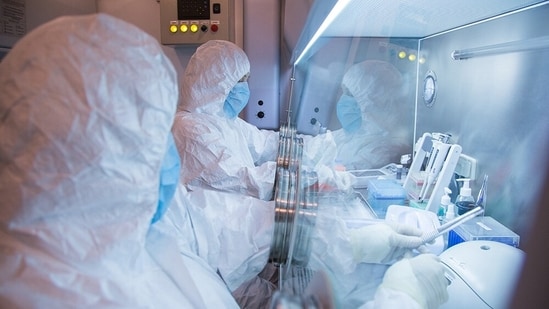
Some facts are not under dispute. Darya Shipilova, a 28-year-old researcher at the institute, died at a regional hospital on October 2nd. Around 200 of Ms Shipilova’s contacts have been placed under medical observation, suggesting authorities believe she may have died of an infectious disease. But no cause of death has been officially confirmed, according to the World Health Organisation (WHO). Russia’s federal health watchdog claimed to have found “no evidence of microorganisms related to her professional activities”, and said the cause of death was “pneumonia of unknown etiology”.
Beyond confirming the death Russian officials have provided little information, though they are urgently implementing regional control measures. On Monday Marco Rubio, America’s secretary of state, said that his government is “watching and monitoring it closely”. With the covid pandemic still a recent memory, it is no wonder the world has shown close interest. Inevitably, some have asked if the incident is connected to Russia’s biological warfare programme, which Western intelligence services say is still active.
The bacterium Yersinia pestis, generically known as “plague”, manifests in two forms. Every year thousands of cases of bubonic plague occur naturally when people catch it after contact with wildlife such as rodents. Bubonic plague is treatable with antibiotics if caught early, but untreated it can become pneumonic plague, which can be transmitted via respiratory droplets. This is harder to treat and has a higher mortality rate. Legitimate reasons exist for study of the pathogen, such as to understand how it causes disease, and to develop vaccines and treatments.
{{/usCountry}}The bacterium Yersinia pestis, generically known as “plague”, manifests in two forms. Every year thousands of cases of bubonic plague occur naturally when people catch it after contact with wildlife such as rodents. Bubonic plague is treatable with antibiotics if caught early, but untreated it can become pneumonic plague, which can be transmitted via respiratory droplets. This is harder to treat and has a higher mortality rate. Legitimate reasons exist for study of the pathogen, such as to understand how it causes disease, and to develop vaccines and treatments.
{{/usCountry}}But Filippa Lentzos, a biosecurity expert at King’s College London, says the lack of transparency around the incident in Siberia is worrying. Plague is one of a group of high-risk pathogens that have easy transmissibility and high mortality rates, including anthrax, smallpox, and viral hemorrhagic fevers such as Ebola. Biosafety laboratories are proliferating around the world, raising the likelihood of accidents.
These pathogens are also considered prime candidates for use in bioweapons. Plague can be aerosolised to ease transmission to humans and genetically modified to make it resistant to antibiotics. Despite ratifying the Biological Weapons Convention in 1975, the Soviet Union ran an extensive covert bioweapons programme. In 1992 Boris Yeltsin, then president of Russia, acknowledged the programme and agreed to dismantle it. But more recently Russia has maintained secrecy around its military biological-research facilities. Satellite imagery of one such site outside Moscow indicates significant expansion since Russia invaded Ukraine in 2022. In 2023 a report on treaty compliance by America’s State Department concluded that Russia maintains an offensive biological weapons programme.
Based on the unofficial information currently available on the situation in Irkutsk, the WHO believes the risk to the general population to be low. No evidence suggests that the institute in Irkutsk is linked to bioweapons activities, and Russia insists its cloaked military sites only undertake defensive research. But Russia said the same thing about its chemical-weapons research before it attempted to assassinate Sergei Skripal, a Russian defector in Britain, with a military-grade nerve poison in 2018. There may be nothing to the lab-leak rumours. But with so little transparency, it is hard to take Russia at its word.
To stay on top of the biggest European stories, sign up to Café Europa, our weekly subscriber-only newsletter.