Around 100,000 newborn babies will have their entire genome sequenced, as part of a £105 million ($128.7 million) study into whether the practice could lower the burden of rare genetic diseases in the UK.
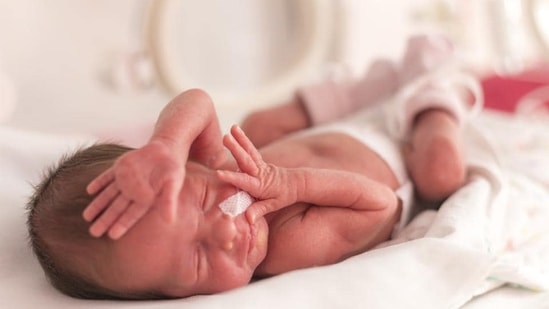
The study, led by Genomics England in partnership with the National Health Service, will test whether sequencing is a cost-effective way of preventing and treating childhood diseases. It will be funded as part of a £175 million package of support for genetics research from the Department of Health and Social Care announced Tuesday.
The program will run in addition to the heel prick blood test that is part of current newborn screening, which looks for nine rare disorders. The new project will analyze the full DNA of the baby, and possibly both parents as well if anomalies are found, looking for genes that are known to be connected to around 200 rare diseases that begin within the first five years of life. Adult-onset illnesses will not be assessed.
Some of the conditions tested for can be treated much more easily if caught early, which could improve health and save the NHS money. David Bick, clinical adviser for the project, gave an example of biotinidase deficiency — a rare inherited disorder that affects the absorption of the mineral biotin. If untreated, it can lead to seizures, development issues and skin disorders, among other problems. However, if diagnosed early enough, the condition can be treated by taking biotin supplements.
{{/usCountry}}Some of the conditions tested for can be treated much more easily if caught early, which could improve health and save the NHS money. David Bick, clinical adviser for the project, gave an example of biotinidase deficiency — a rare inherited disorder that affects the absorption of the mineral biotin. If untreated, it can lead to seizures, development issues and skin disorders, among other problems. However, if diagnosed early enough, the condition can be treated by taking biotin supplements.
{{/usCountry}}Also read: US teases 'major' scientific breakthrough amid fusion energy reports
“We can prevent a condition which if it arises could damage a child permanently and take years to sort out,” said Bick. “For the families this is enormously important and very gratifying.”
The first families will be recruited at the end of next year, with the study expected to run over several years.
Researchers estimate that there are about 3,000 children born a year nationally who could be helped by this type of screening. However, these numbers might be artificially inflated given the presence of false positives in testing.
Some experts raised concerns about casting a wide net for potential anomalies, including results that might be hard to interpret or disorders for which there is no treatment. The testing is “not innocuous,” especially given the parents’ genomes will be analyzed, said Peter Braude, professor of obstetrics and gynaecology at King’s College London.
“It has potential medical implications for the parents, and their extended family – which they did not sign up for,” he said. “It could also reveal the unlikely but possible finding of non-paternity.”
Also read: Researchers say meteorites could have paved way for life on Earth. Here's how
Louise Fish, chief executive at Genetic Alliance UK, said the country should be trying to get better value from its current newborn screening program. There are 20 European countries using the heel-prick test to screen for more conditions than the UK does, and 13 of those are screening for 20 or more conditions, she said.
“This technology may not be as innovative or fashionable as whole genome sequencing, but it has just as great an ability to improve the lives of babies and their families where tests are available for a particular rare condition,” she said.