Michael Carrick's story with Manchester United manager has ended, but not in the way he would have hoped. The former midfielder returned to Old Trafford in January with the responsibility of rescuing the club in crisis.
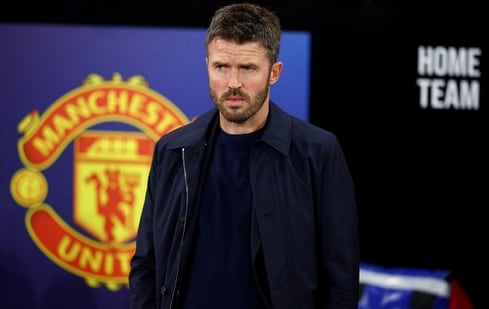
Ten months later, he leaves the club after failing to build on a promising start, becoming the latest casualty of the club's post-Sir Alex Ferguson era.
His dismissal raises the same questions that have followed the Red Devils through the last 13 years: are Manchester United appointing the wrong managers, or are they repeatedly failing to address the problems that make their jobs so difficult?
Carrick himself had his shortcomings, and the results made his position difficult to defend. Manchester United are languishing in the relegation zone, currently in the 18th spot in the Premier League table. They have got just eight points from their first 10 games, with just one win, and eight consecutive matches without a single victory.
A promising start
Carrick was appointed as the interim head coach on January 13, 2026, following the sacking of Ruben Amorim. At that point, United were struggling, and the former midfielder, who won five Premier League titles and the Champions League in 2008 while playing for the club, was expected to steady the ship until the end of the season.
{{/usCountry}}Carrick was appointed as the interim head coach on January 13, 2026, following the sacking of Ruben Amorim. At that point, United were struggling, and the former midfielder, who won five Premier League titles and the Champions League in 2008 while playing for the club, was expected to steady the ship until the end of the season.
{{/usCountry}}He did considerably more than that. Under Carrick, Manchester United won 12 out of 17 Premier League games, drawing three and losing just two. The team collected 39 points during that period, the most by any team in the league, and secured UEFA Champions League qualification by finishing third.
He also brought Kobbie Mainoo into the starting XI and gave him a more prominent role. Bruno Fernandes benefitted considerably as Carrick placed him at a more advanced position where he could influence the final third rather than shoulder much of the defensive responsibility that he did under Amorim.
On May 22, Manchester United rewarded Carrick with a permanent appointment on a contract until 2028. However, the club may have mistaken a successful rescue operation for evidence that Carrick was ready to lead a long-term rebuild.
Carrick's tactical shortcomings
One of Carrick's biggest decisions was to move away from Amorim's three-at-the-back system. He preferred a back four, operating with a 4-2-3-1 structure, and this gave Manchester United greater flexibility in midfield and allowed Fernandes to return to his natural No.10 position.
Carrick also placed emphasis on quick transitions. United looked more comfortable playing without the ball, pressing selectively and using the pace of the attackers to exploit spaces left by opponents. Their wins against Manchester City, Arsenal, and Liverpool showed how effective this approach could be.
However, the catch was that United were more comfortable playing against teams that allowed them space than against opponents who sat deep and forced them to dictate possession.
That weakness became glaringly obvious this season.
United struggled to turn possession into meaningful attacking opportunities, often moving the ball around without creating enough openings. He struggled to find a reliable alternative when opponents denied his attackers space.
This was perhaps his biggest tactical limitation. A team competing at the highest level cannot rely on opponents leaving spaces to exploit. Carrick needed to develop a more effective possession game, but United never consistently found one.
The squad problem
Carrick's tactical limitations were only part of the problem. Manchester United's recruitment also deserves scrutiny.
Returning to the Champions League meant a demanding schedule, and hence the team needed to strengthen across several positions. They did not get any of their first-choice midfield options, and they did not make any additions to their defensive and attacking units.
There were also concerns about the team's physical intensity. United struggled to maintain their pressing levels and often appeared vulnerable when opponents moved the ball quickly through midfield.
Carrick could not entirely escape responsibility. As head coach, he was expected to improve the team's organization, intensity and consistency. His decisions also came under scrutiny as results deteriorated.ALSO READ: Why Capri Sports bet on Indian women’s football league
Bigger problems remain unsolved
There is no denying that Carrick failed to deliver this season. His side lacked consistency, struggled defensively and could not find a reliable attacking structure.
But Manchester United's problems cannot be reduced to one manager.
Since Ferguson retired in 2013, the club have gone through David Moyes, Louis van Gaal, Jose Mourinho, Ole Gunnar Solskjaer, Erik ten Hag, Ruben Amorim and now Carrick. Each arrived with a different footballing philosophy, but none managed to establish sustained success.
Recruitment has often lacked direction, managerial appointments have repeatedly led to fresh tactical resets, and the club have struggled to build a squad around a consistent identity.
Carrick inherited that uncertainty. His successful interim spell offered hope, but the demands of a full season, European football and the expectation of competing at the highest level exposed the limitations of both the manager and the squad.
His dismissal might be understandable, but it does not guarantee that Manchester United will be any closer to solving their problems.
A legacy beyond management
For Carrick, the disappointment of his managerial spell should not overshadow what he achieved as a footballer.
Signed from Tottenham Hotspur in 2006, he spent 12 years at Old Trafford, making 464 appearances and winning five Premier League titles, the Champions League, the FA Cup and the Europa League, among other honours.
He was never the most flamboyant member of Alex Ferguson's team. Playing alongside the likes of Cristiano Ronaldo, Wayne Rooney, Paul Scholes and Rio Ferdinand, Carrick operated away from the spotlight, but was central to the team's balance.
There is a certain irony in how his two Manchester United careers have unfolded. For 12 years, he was the man in midfield who made the team tick. In the dugout, however, he could not find the answers to the questions that have troubled Manchester United for more than a decade.
Perhaps managing the club was a challenge that came too soon for him. His tactical shortcomings and the team's results cannot be overlooked, but neither should the circumstances in which he was expected to succeed.
Carrick's managerial chapter at Old Trafford may not find a place among the club's great stories. But his playing career already has one. He was part of a generation that knew what it meant to wear the Manchester United shirt and compete for the biggest trophies.
He leaves the dugout without having restored the club to its former glory. But his legacy has not diminished. Manchester United might have lost faith in Michael Carrick the manager, but they have no reason to forget Michael Carrick the footballer.