
 E-Paper



Commonwealth Games 2026: The biggest changes, India's challenges and why this edition is unique
This year India heads to Scotland with a leaner 125-member contingent, chasing glory across a significantly reduced programme featuring 215 medal events.

 Prefer HTon Google


Eight years after last hosting the Commonwealth Games, Glasgow is ready to welcome the multi-sport spectacle once again from July 23 to August 2.
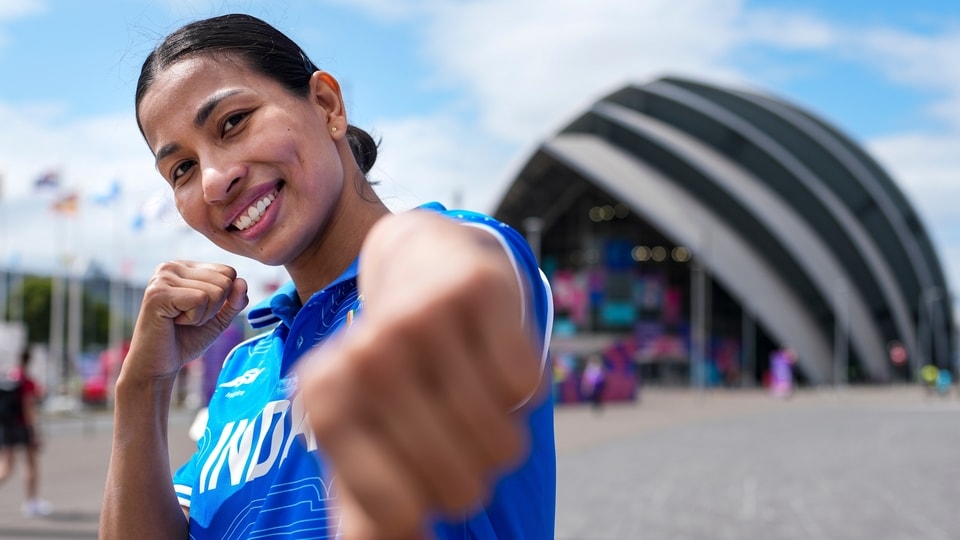
For India, the Commonwealth Games have traditionally been a happy hunting ground. Since the turn of the century, the country has consistently finished inside the top five of the medal table, winning at least 50 medals at every edition since 2002. This year, however, India heads to Scotland with a leaner 125-member contingent, chasing glory across a significantly reduced programme featuring 215 medal events.
While familiar names such as PV Sindhu and the Indian hockey, table tennis and wrestling teams are absent because of changes to the programme, India's campaign will still be spearheaded by Olympic medallists Neeraj Chopra, Mirabai Chanu and Lovlina Borgohain.
The contingent comprises 77 men and 48 women, including para athletes. Athletics contributes the largest squad with 32 athletes, followed by boxing (14), judo (14) and weightlifting (12).
Why this edition of the Commonwealth Games is different
The 2026 Commonwealth Games were originally awarded to the Australian state of Victoria, but the hosts withdrew in 2023 after citing escalating costs.
The Commonwealth Games Federation (CGF) was then forced to find an alternate host at short notice, with Glasgow stepping in. Having staged the Games in 2014, the Scottish city already possessed much of the required infrastructure. However, with barely three years to prepare, organisers opted for a scaled-down version of the event.
As a result, the number of sports has been reduced from 20 in Birmingham 2022 to just 10, making Glasgow 2026 the smallest Commonwealth Games programme since 1994.
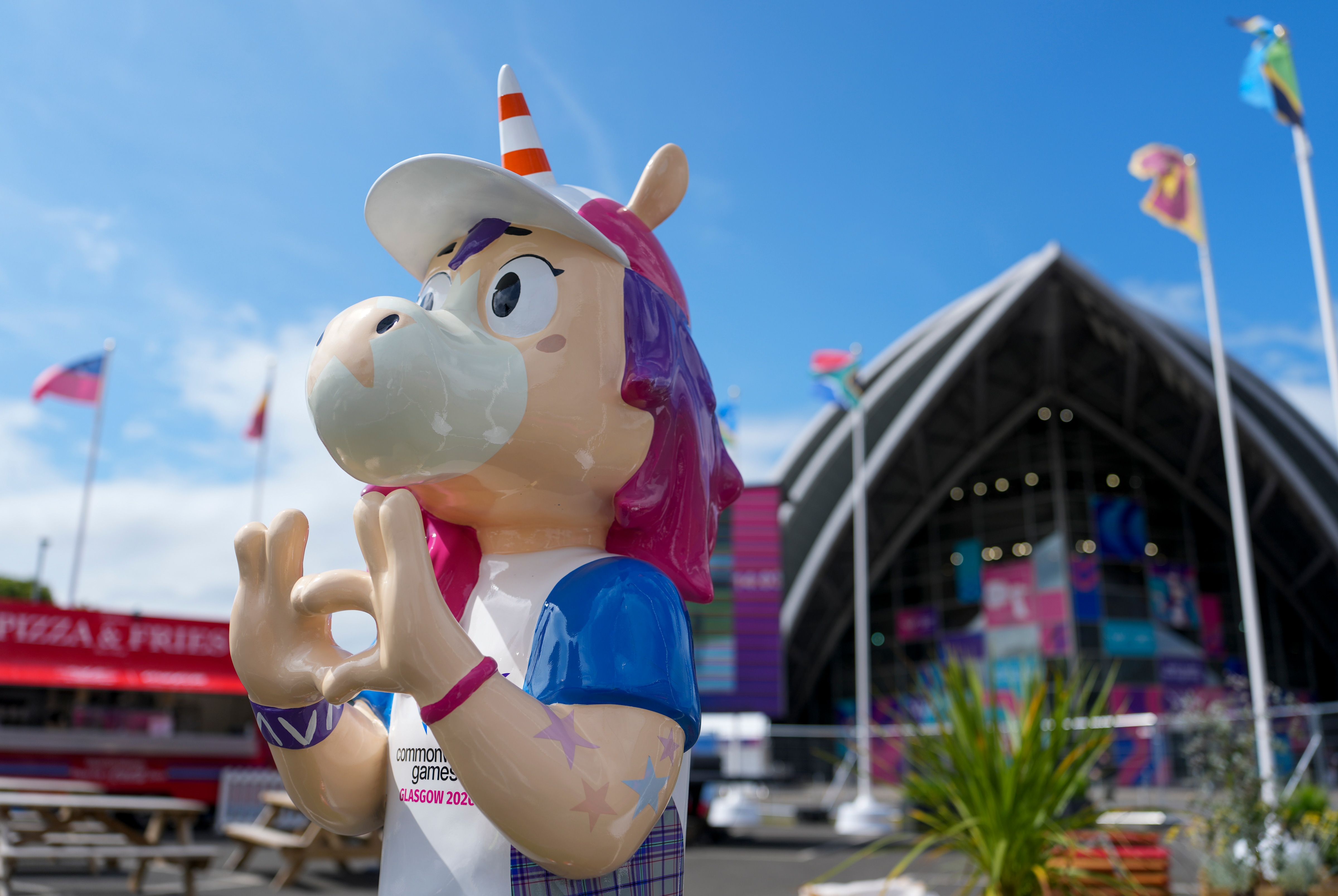
Which sports are included at CWG 2026?
According to the CGF, sports were selected based on factors including global participation, competitive quality and local appeal.
The 10 sports on the programme are:
Athletics (track and field)
Swimming
Artistic Gymnastics
Track Cycling
Netball
Weightlifting
Boxing
Judo
Bowls
3x3 Basketball
Six of these disciplines also feature para events:
Para Athletics
Para Track Cycling
Wheelchair 3x3 Basketball
Para Swimming
Para Bowls
Para Powerlifting
Meanwhile, badminton, cricket, hockey, squash, diving, table tennis, wrestling, triathlon, beach volleyball, rugby sevens, along with several other disciplines, have been removed. Even sports such as cycling and gymnastics have had their disciplines trimmed.
How will this affect India's medal chances?
The impact on India could be significant.
At the 2022 Commonwealth Games, India won 61 medals, with 30 of them coming from six sports that have been dropped from this year's programme:
Wrestling – 12
Table Tennis – 7
Badminton – 6
Hockey – 2
Squash – 2
Cricket – 1
These disciplines have formed the backbone of India's Commonwealth Games success for nearly two decades.
The trend was similar in Gold Coast 2018, where wrestling contributed 12 medals, table tennis eight and squash two. Shooting, which yielded 16 medals that year, had already been removed before Birmingham because of logistical reasons.
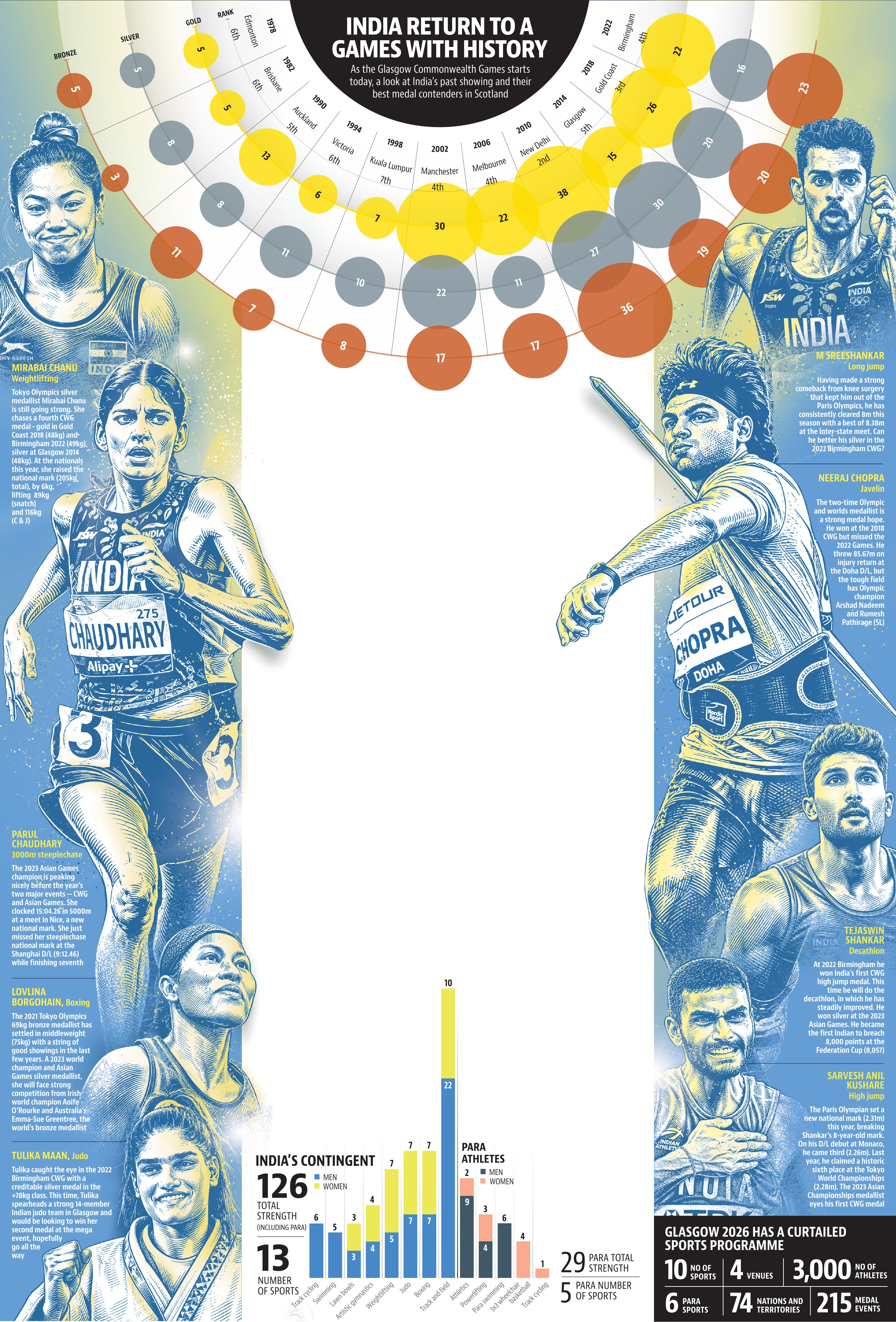
How can India extend its top-five run?
India have never finished outside the top five at the Commonwealth Games. But with several medal-rich sports missing, maintaining that record will be considerably more difficult.
The responsibility now shifts largely to athletics, boxing and weightlifting.
Leading the athletics squad is Neeraj Chopra, although the Olympic champion heads into Glasgow in the unfamiliar position of challenger rather than overwhelming favourite. Pakistan's Arshad Nadeem and Sri Lanka's Rumesh Tharanga promise stiff competition, but Chopra remains India's biggest gold medal hope.
India will also look towards Sarvesh Kushare, Murali Sreeshankar, Praveen Chithravel, and the men's and women's 4x400m relay teams to contribute to the medal tally. Athletics returned eight medals in Birmingham.
In weightlifting, all eyes will be on Mirabai Chanu, who is bidding for an unprecedented third successive Commonwealth Games gold medal.
Boxing hopes rest heavily on Lovlina Borgohain, the Tokyo Olympic bronze medallist, who is chasing the only major multi-sport gold missing from her collection.
Other medal prospects include reigning world champion Jaismine Lamboria, Preeti Pawar, Sakshi Choudhary and Arundhati Choudhary in the women's categories, while Narender Berwal and World Cup medallist Sachin Siwach headline India's men's challenge.
India's key events at CWG 2026
India's campaign begins on July 23, but these are among the biggest events to watch:
July 26
Mirabai Chanu – Women's 49kg final (6:30 PM IST)
July 27
Sarvesh Kushare & Adarsh Ram – Men's High Jump final (11:00 PM–2:15 AM IST)
July 29
Murali Sreeshankar & Lokesh Satyanathan – Men's Long Jump final*
Parul Choudhary – Women's 3000m Steeplechase final
(*Subject to qualification)
July 30
Parul Choudhary – Women's 5000m final
Neeraj Chopra, Rohit Yadav & Yash Vir Singh – Men's Javelin qualification (2:30 PM–8:00 PM IST)
July 31
Men's Javelin final* (11:00 PM–2:15 AM IST)
(*Subject to qualification)
August 1–2
Boxing, Lawn Bowls and Judo medal events
You can check out India's complete day-by-day schedule for CWG 2026 HERE.
When is the opening ceremony?
The opening ceremony will be held on July 23 at Glasgow's OVO Hydro and is expected to begin around 10:30 PM IST.
Mirabai Chanu will carry the Indian flag during the athletes' parade, while Lovlina Borgohain will carry the ceremonial King's Baton.
Scottish singer-songwriter KT Tunstall, folk sensation Nathan Evans and musical duo Saint PHNX will headline the ceremony.
Which countries are competing?
Around 3,000 athletes representing 74 Commonwealth Games Associations will compete in Glasgow, including sporting heavyweights such as India, Australia, England, Canada, New Zealand and South Africa.
The Games feature nations and territories that are part of the Commonwealth of Nations, an intergovernmental association comprising largely former British colonies.
How has India fared at the Commonwealth Games?
Here is a detailed look at India's performance across all 19 Commonwealth Games appearances.
Where to watch Commonwealth Games 2026 live in India
Live streaming will be available on Sony LIV. Television coverage will be available on Sony Sports Ten 2 and Sony Sports Ten 2 HD.


