As a young boy, Srinath Narayanan was fascinated by the idea of playing chess on the internet. It was the early 2000s and online chess was far from the global phenomenon it would become. “The idea of using the internet every day in those times was still a very new concept,” the grandmaster told HT. “So was online blitz, which was then growing across the world. I was excited to play it and I remember this eminent person who pretty much shouted me down declaring — nothing good can ever come from playing online blitz.”
Two decades later, with online chess thriving, Srinath says he can afford to laugh at the certainty with which his younger self was dismissed.
“As a 10-12-year-old, I understood the changing times better than someone much older," he says. "Maybe because I wasn’t burdened by preconceived notions.”
For Srinath, coach of the Indian Olympiad team, the episode was an early lesson in the perils of treating experience as infallibility. It would eventually shape his own coaching philosophy: listen to students, encourage disagreement and not mistake curiosity for defiance.
It is a distinction that India’s first individual Olympic gold medallist Abhinav Bindra believes sport too often fails to make.
"Throughout my sporting career, I questioned my coaches, challenged ideas and remained curious. Not because I lacked respect but because I wanted to understand, learn and get better," Bindra wrote in a recent post on X.
The former shooter who serves on the IOC Athletes’ Commission, warned that discouraging athletes from speaking freely could have consequences far beyond the immediate coach-athlete relationship.
{{/usCountry}}The former shooter who serves on the IOC Athletes’ Commission, warned that discouraging athletes from speaking freely could have consequences far beyond the immediate coach-athlete relationship.
{{/usCountry}}"I worry that when athletes feel they cannot speak freely, something far more troubling happens over time. They slowly stop questioning even in their own minds. And when that happens we lose something essential to sporting excellence. We need athletes who question their own work, their coaches, the methods recommended to them and the structures they operate within. Not out of defiance but out of a genuine desire to improve. What some might consider indiscipline may in fact be essential to growth."
It is an argument that goes to the heart of a familiar contradiction in competitive sport. Athletes are expected to follow instructions in training without asking questions, while being demanded to make independent decisions under enormous pressure, sometimes in a split second, during competition.
In India, that contradiction is compounded by a culture of deference to elders, where questioning someone older or more experienced can be mistaken for disrespect. The relationship between a coach and an athlete is also marked by a power imbalance, with the athlete often dependent on the coach for training, opportunities and career progression.
Srinath — he coached Arjun Erigaisi and Nihal Sarin — remembers being a rebellious child, unwilling to accept that someone was right simply because they were older.
"I grew up receiving a lot of bad advice from coaches, which I felt delayed my own progress," he says. "My creativity and independence were beaten down. I also noticed how many of those coaches were so confident in their wrong advice. I realised that no one really knows everything. I’ve always seen the working relationship between coach and student as a collaborative effort rather than a command centre approach.”
As a coach, Srinath has had to confront his own assumptions.
“Around the time Arjun was entering the elite level, my initial feeling was that he should try to be more solid against the top players, especially with Black. That’s how players approached the game a decade ago. But Arjun didn’t feel the same way. Over the years, I realised that his approach was probably better suited to the changing times. I think it happens in every generation, when the young challenge and change how things are done. That’s how evolution across generations happens.”
Aimee Boorman, who coached decorated American gymnast Simone Biles from elementary school to a five-medal run at the Rio Olympics 2016, spoke of how athletes who question their coaches can make the coaches better too.
"If everybody is just strict and obedient, you grow stale as a coach," she said in a 2025 interview.
Boorman recalled other coaches telling her with pride that Biles, whom she describes as a “challenging” pupil, would never have lasted in their gyms. “'So, you realise how many potential Simones you have pushed out of your gym?'" Boorman wondered.
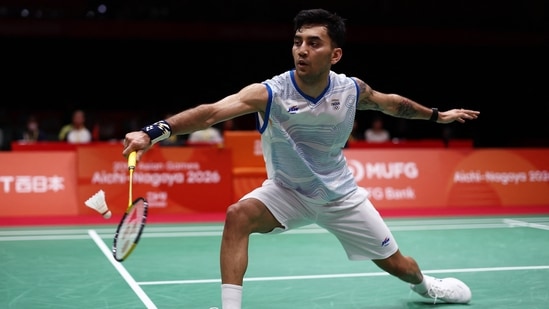
Badminton coach Vimal Kumar believes that the culture of unquestioning obedience in Indian sport often prevents athletes from developing the independence needed to succeed at the highest level. He argues that coaches must encourage the athlete to question decisions and take responsibility for their own careers.
“I always tell our players – whether it’s Sindhu or Lakshya, that you have to push your coaches. You have to keep talking to your physio, trainer, everybody. You cannot go about it saying, ‘I'm doing this because my coach told me to.’ If something is not bringing you results, you have to ask, ‘It's not working for me. Maybe I need to adjust something. Can I do this differently?’”
As Bindra points out – there is a difference between an athlete who refuses to learn and one who refuses to stop asking questions.
Sporting systems that tend to reward compliance must be able to recognise the difference.