Six Months In, Honest and Technical
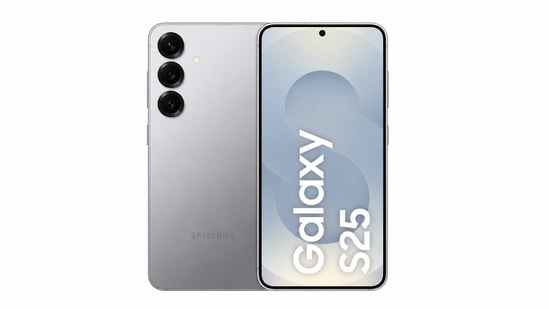
I've never been the kind of person who upgrades his phone every year. I like to live with a device long enough to know its moods — the way it behaves when the battery is old, the way it feels in my back pocket after a long day, the way it survives the ordinary chaos of a life that involves trains, rickshaws, spilled chai, and a toddler who treats every phone as a chew toy. So when I finally picked up the Samsung Galaxy S25, I told myself I wasn't going to write a pure "spec sheet" review — but I also wasn't going to pretend the specs don't matter. They do. What I want to give you here is both: the real numbers under the hood, and what those numbers actually translate to in the hands of an ordinary person who paid full price out of his own pocket.
This is that review.
The Hardware, Briefly, Because It Matters
Before I get into the lived experience, here's what's actually inside the phone I'm using. The Galaxy S25 runs on Qualcomm's Snapdragon 8 Elite (the SM8750-AB variant, built on a 3nm process), paired with an Adreno 830 GPU and 12GB of RAM. Storage comes in 128GB, 256GB, or 512GB configurations — I opted for 256GB, which for a person who shoots a fair number of photos and keeps a handful of large apps installed, is the sensible middle ground. The display is a 6.2-inch Dynamic AMOLED 2X panel, 2340 x 1080 resolution, 416 ppi, with a 120Hz refresh rate and a claimed peak brightness of 2600 nits. It's protected by Corning Gorilla Glass Victus 2, sitting on an aluminum frame, with an IP68 rating for dust and water resistance. The battery is a 4000mAh Li-Ion cell, with 25W wired charging (Samsung claims 50% in about 30 minutes), 15W wireless charging, and 4.5W reverse wireless charging for topping up earbuds or a watch. The camera array is a 50MP main sensor (f/1.8, OIS, PDAF), a 10MP telephoto (f/2.4, OIS), and a 12MP ultra-wide (f/2.2), with a 12MP front camera (f/2.2). It ships on Android 15 with One UI 7 on top, and Samsung is promising up to seven years of major OS and security updates.
None of that tells you what it's like to actually live with the phone. So let's get into that.
Check out the Samsung S25 on Amazon
{{#product}}{{/product}}
First Impressions: It Feels Like a "Proper" Phone
The Galaxy S25 feels good in the hand. Samsung has clearly settled into a design language that isn't trying to reinvent itself every year, and honestly, that's a compliment. The flat sides, the matte back, the way the aluminum frame sits flush against your palm — it all feels considered rather than gimmicky. It doesn't feel like a phone trying to impress you in a shop window. It feels like a phone trying to survive your life.
The 6.2-inch panel is bright, sharp, and does exactly what you want a display to do in 2026 — it disappears. You stop noticing the screen and start just using the phone, which is the highest compliment I can give a display. That 2600-nit peak brightness figure isn't just a marketing number either; outdoor visibility, which matters enormously in a country like India where you're constantly checking your phone in blazing sunlight while trying to find an auto-rickshaw, is genuinely excellent. I've had zero complaints reading maps or messages in direct sun, even at midday in peak summer glare.
Day-to-day performance, powered by that 3nm Snapdragon 8 Elite chip and 12GB of RAM, is smooth in a way that's hard to overstate if you're coming from a two- or three-year-old phone. Apps open fast, multitasking between WhatsApp, email, a couple of news apps, and whatever half-written article I'm working on doesn't produce any of the stutter or lag you might remember from older mid-range hardware. For someone like me who is constantly toggling between work and personal life on the same device, that responsiveness matters more than any benchmark score — though for what it's worth, the benchmark numbers on this chipset are genuinely among the best in the Android ecosystem right now, and gaming performance with ray tracing support is noticeably a generation ahead of what the S24 series offered.
The Drop Test Nobody Asked For (But I Did It Anyway)
Here's something I didn't plan on writing about, but it happened organically enough that it deserves its own section: I have dropped this phone. Multiple times. Not as a deliberate stunt for a review video, but as the natural, embarrassing outcome of someone who talks with his hands, walks fast, and occasionally forgets his phone is balanced precariously on the arm of a chair.
The first drop was from about waist height onto a marble floor — the kind of floor that shows no mercy to anything made of glass. I braced for a cracked screen and the accompanying sinking feeling in my stomach. Nothing. Not even a visible scuff. The second drop was worse — it slipped out of my hand while I was getting out of a car, and it hit the road, bounced once, and skittered a fair distance. Again: no cracks, no shattered glass, not even much in the way of scratches once I wiped the dust off.
I'm not going to pretend this is scientific. I didn't drop it from a controlled height onto a controlled surface with a slow-motion camera running. But as a stand-in for what actually happens to a phone in real life — the kind of accidental, clumsy, "oh no" drops that happen to literally everyone — the S25 held up impressively well. Technically, this comes down to two things: the Gorilla Glass Victus 2 cover glass, which Corning rates for improved drop performance on rough surfaces (their lab tests claim survivability from up to 1 metre onto surfaces that simulate concrete or asphalt, on top of scratch resistance), and the aluminum mid-frame, which absorbs and distributes impact energy rather than transferring it directly into the glass the way a purely plastic or poorly-braced frame might. The IP68 rating also means the internals are properly sealed, so a drop that jars the chassis isn't simultaneously an invitation for dust or moisture ingress.
If you're the kind of person who has broken a screen before (and let's be honest, most of us have), this is a genuinely reassuring aspect of daily ownership. I still use a case, because I'm not reckless, but the fact that the phone survived what it survived without one gives me a lot of confidence in it as a long-term companion rather than a fragile status object you're afraid to actually use.
Now, the Part I Have to Be Honest About: The Battery
I wanted to love the battery on this phone unconditionally. I didn't get to.
Let's start with the number itself: 4000mAh. In isolation, that's not a small battery, but it's worth putting in context — Samsung's own S25+ carries a 4900mAh cell, and even the smaller-bodied S25 Edge ships with 3900mAh in a thinner chassis. The base S25 is, by design, the most compact phone in the lineup, and that 6.2-inch body simply doesn't leave much room for cell capacity once you account for the camera stack, the 3nm chipset, and the vapor chamber cooling. That's an engineering trade-off, and I understand why Samsung made it. But it's a trade-off I feel every single day.
Here's the thing about battery life claims from any manufacturer: they're tested in laboratory conditions — fixed brightness, fixed screen timeout, often airplane mode or Wi-Fi-only, no push notifications — that bear almost no resemblance to how a real person actually uses a phone. Real life means a screen that's on far more than any lab test accounts for, background apps constantly refreshing over mobile data, a couple of aggressive push-notification apps that never truly rest, Bluetooth connected to a smartwatch or earbuds for hours at a stretch, and — in my case — a work life that means I'm on calls, replying to emails, and juggling multiple apps almost constantly through the day, much of it at that power-hungry 120Hz refresh rate rather than a lower adaptive step.
Under that real-world load, the Galaxy S25's battery is fine. Not great. Fine.
On a genuinely busy day — heavy messaging, an hour or two of navigation, some music streaming, a bit of social media scrolling, a couple of video calls — I'm reaching for the charger by early evening. That's roughly 14 to 16 hours off the charger before I need a top-up, and screen-on time in that window tends to hover in the four-and-a-half to five-hour range for me. On a lighter day, where I'm mostly just messaging and checking email, I can stretch it closer to a full day and into the next morning with charge to spare. But "on a light day" is doing a lot of work in that sentence — a 4000mAh cell on a flagship-tier 3nm chip with a 120Hz QHD-adjacent AMOLED panel simply doesn't give you the two-day buffer that a larger 5000mAh-plus battery on a similarly efficient chipset can offer. This isn't a software problem so much as a straightforward capacity-versus-consumption problem.
What frustrates me more than the raw numbers is the drain pattern. The battery percentage feels steady and well-behaved for the first half of the day, and then somewhere in the afternoon — almost like clockwork — it starts dropping faster than the earlier hours would suggest it should. I don't think this is my imagination; I've watched it happen across weeks of ownership, and it lines up with when background app refresh, accumulated Bluetooth radio use, and thermal throttling behaviour on the SoC seem to compound. It's the kind of thing that makes you start being a little more careful with the phone by 4 or 5pm, which is exactly the opposite of what you want from a flagship device you're paying a premium for. A phone in this price bracket should let you stop thinking about the battery. This one doesn't quite manage that.
Charging speed helps offset some of this frustration, but even here the S25 is arguably behind the curve. 25W wired charging, with Samsung's own claim of roughly 50% in 30 minutes, is respectable but no longer class-leading — plenty of competing Android flagships, and even Samsung's own S25+ at 45W, charge meaningfully faster. Wireless charging tops out at 15W, and reverse wireless charging (useful for topping up earbuds or a watch off the phone's own battery) is a modest 4.5W. In practical terms, a quick 20 to 30 minute top-up during a lunch break or a meeting genuinely does buy you a meaningful chunk of the day back, so if you have access to a fast charger and the discipline to plug in opportunistically, you can work around the battery's shortcomings. But "work around" is the operative phrase, and note that Samsung, in typical fashion, doesn't include a charging brick in the box — you'll need to already own or separately buy a compatible fast charger to get anywhere near that 30-minute figure. I shouldn't have to manage my day around my phone's battery in 2026, on a device that costs what this one costs. If you're someone who's constantly on the move — sales, field work, frequent travel, long commutes without easy access to a charger — I'd urge you to budget mentally, and maybe literally with a power bank, for the fact that this phone will not comfortably see you through a long, demanding day without a boost.
To be fair to Samsung, software updates over my ownership period have nudged things in a slightly better direction — a couple of One UI updates seemed to calm down some background battery drain, and the adaptive battery and power-saving modes do genuinely extend runtime if you're willing to dial the refresh rate back from 120Hz to a lower adaptive step and cap background activity. But that's a workaround, not a fix. The core issue — that a 4000mAh cell paired with a 120Hz AMOLED display and a high-performance 3nm chipset doesn't comfortably clear a full demanding day for a moderately heavy user — remains the single biggest asterisk I'd put next to an otherwise excellent phone.
Camera: Reliable, Not Revolutionary
I'm not a photography obsessive, and I suspect most people reading this aren't either. What I care about is: does the phone take a good photo of my kid without me thinking about it, does it handle low light without turning everything into a grainy mess, and does video look clean when I'm recording something spontaneous.
On paper, the setup is a 50MP main sensor at f/1.8 with OIS and PDAF, a 10MP telephoto at f/2.4 with its own OIS, and a 12MP ultra-wide at f/2.2. In practice, on all three counts the S25 delivers competently. Daylight shots from the main sensor are crisp, colours are accurate without being oversaturated the way some phones tend to punch up reds and greens artificially. Low-light performance, aided by Samsung's Nightography processing, has improved meaningfully compared to what I remember from older Samsung phones — indoor evening shots, restaurant photos, the kind of unglamorous everyday photography most of us actually do, come out usable and often genuinely good without much fiddling. The telephoto, having its own OIS rather than relying purely on digital cropping, holds up decently for casual zoom shots, though it's not going to compete with a dedicated periscope zoom the way the more expensive Ultra model's camera system does. It's not going to replace a proper camera for someone serious about photography, but for 95% of what an actual person photographs in an actual week, it's more than sufficient.
Software and the Small Everyday Frictions
One UI 7, Samsung's software skin over Android 15, remains a matter of personal taste. I find it slightly busier than I'd like out of the box, with a fair amount of pre-installed bloat that I ended up disabling or uninstalling in the first week. Once you've done that housekeeping, though, the experience settles into something clean and dependable. Samsung's promise of up to seven years of software and security updates is genuinely reassuring if, like me, you intend to hold onto a phone for three or four years rather than upgrading annually — it's a meaningfully longer commitment than most of the Android ecosystem still offers, and it factors directly into the phone's long-term value even against the battery complaints above.
Who Should Buy This, and Who Shouldn't
If you want a phone that feels premium, performs smoothly for years of daily use on genuinely current silicon, survives the accidental drops that are an inevitable part of owning a phone, and takes reliably good photos without demanding much technical thought from you — this delivers all of that convincingly.
If your day is long, your access to charging is unpredictable, and you resent the idea of thinking about your battery percentage before 6pm — go in with your eyes open. At 4000mAh with a 120Hz display and a power-hungry flagship chipset, this is a phone you'll likely be charging at least once, sometimes twice, during a genuinely active day, and no amount of marketing language changes that arithmetic. If battery life genuinely tops your priority list over raw compactness, it's worth seriously considering the S25+ and its 4900mAh cell and faster 45W charging instead.
Samsung S25 Series
Our Principles
Full Transparency
Every product review clearly lists the Pros and Cons, giving you a balanced view.
Brand Confidence
We focus on products from brands with a proven reputation and long-standing market trust.
The Bottom Line
Six months of real ownership — messy, dropped, overworked, thoroughly ordinary ownership — tells me the Samsung Galaxy S25 is a phone built with real durability and everyday usability in mind, backed by genuinely current hardware in the Snapdragon 8 Elite chipset, a bright and sharp 120Hz display, and a camera system that punches well above what most people need. It's let down by a 4000mAh battery that doesn't quite match the ambition of everything else around it. It's sturdy where it counts, capable where it matters, and honest in a way that I respect, even when that honesty means admitting the battery is its weakest link. For the common man just trying to get through his day, that one caveat matters — plan your charging, and the rest of the phone will not let you down.