The National Aeronautics and Space Administration's Mars lander InSight had touched down on the Red Planet in 2018 to detect Marsquakes on the planet's crust. Four years later, the lander's Twitter handle posted that it would sign off soon.“My power’s really low, so this may be the last image I can send. Don’t worry about me though: my time here has been both productive and serene. If I can keep talking to my mission team, I will – but I’ll be signing off here soon. Thanks for staying with me”, it posted.The rover's previous tweets indicate that the US space agency was aware what was in store.
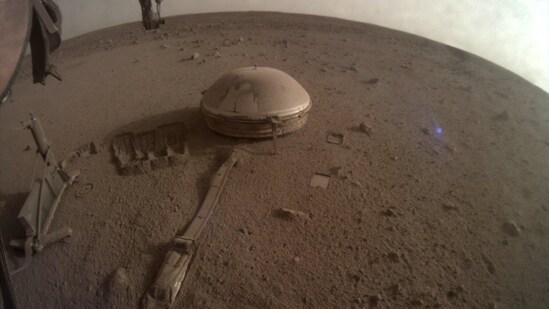
On November 26, the rover tweeted, "I've been lucky enough to live on two planets. Four years ago, I arrived safely at the second one, to the delight of my family back on the first. Thanks to my team for sending me on this journey of discovery. Hope I’ve done you proud".In October, it was reported that InSight's solar panels were covered with dust from a recent storm which had obstructed much of the sunlight needed to recharge the batteries. It was reported that the spacecraft would stop responding to commands from the space centre within few weeks.
InSight is the first and only spacecraft to probe Marsquakes. It has gathered data on more than 1,300 quakes since landing on the Red Planet. The researchers recently discovered that Mars' mantle has more iron than the Earth's.
{{/usCountry}}InSight is the first and only spacecraft to probe Marsquakes. It has gathered data on more than 1,300 quakes since landing on the Red Planet. The researchers recently discovered that Mars' mantle has more iron than the Earth's.
{{/usCountry}}According to NASA, InSight's payload includes two instruments, the seismic experiment for interior structure which has been provided by the French space agency CNES and other institutions, the Jet Propulsion Laboratory (JPL) and the Heat Flow and Physical Properties Package (HP3) provided by the German space agency (DLR).
NASA said the rotation and interior structure experiment led by the jet propulsion laboratory would use the spacecraft communication system to provide precise measurements of planetary rotation. These instruments are carried by a spacecraft based on the proven Phoenix Lander design, built by Lockheed Martin Space, providing low-cost, low-risk access to the surface of Mars.