
A real can of soup costs just a couple of dollars at the supermarket, yet Andy Warhol’s 1962 depiction of one just commanded more than $9 million at auction. Created in casein and graphite on linen, Warhol’s “Campbell’s Soup Can (Turkey Noodle)” sold at Christie’s in New York on November 19. Coming from the prestigious Sonnabend Collection Foundation, the 64-year-old Pop Art masterpiece drew intense bidding.
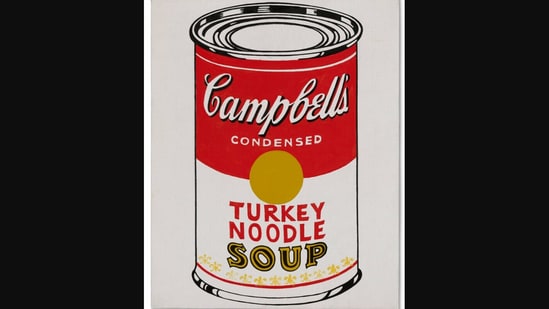
“Andy Warhol’s ‘Campbell's Soup Can (Turkey Noodle)’ sold for US$9,026,000 in our Rockefeller Center saleroom last night,” wrote auction house Christie’s in a social media post.
The auction house added, “This work is one of the most important examples of early Pop, painted in 1962 during the year Warhol first unveiled his soup cans and changed the course of contemporary art. Unlike his later silkscreened canvases, the soup variety — in this case ‘Turkey Noodle’ — has been hand-painted, marking an important step in Warhol's artistic evolution.”
The post continued, “A gift to Warhol’s friend, the photographer Edward Wallowitch, it later entered the collection of Ileana and Michael Sonnabend and was then on long-term loan to the Baltimore Museum of Art. Most recently, ‘Campbell's Soup Can (Turkey Noodle)’ has been on display at The Sonnabend Collection Mantova, and its sale will support the Sonnabend Collection Foundation.”
{{/usCountry}}The post continued, “A gift to Warhol’s friend, the photographer Edward Wallowitch, it later entered the collection of Ileana and Michael Sonnabend and was then on long-term loan to the Baltimore Museum of Art. Most recently, ‘Campbell's Soup Can (Turkey Noodle)’ has been on display at The Sonnabend Collection Mantova, and its sale will support the Sonnabend Collection Foundation.”
{{/usCountry}}A video of the auction shows the piece opening at $4 million. Within seconds, however, the bidding war begins, and the hammer falls at just over $7 million, with the auctioneer confirming the sale.
The painting fetched over $9 million in total after adding the buyer’s premium, the additional commission charged by the auction house directly to the winning bidder. The hammer price was over $7 million.
What makes this canvas special?
First exhibited at the Ferus Gallery in Los Angeles in 1962, the painting is considered to be a powerful portrayal of Pop. According to Christie’s, the “Vibrant color, graphic impact, and a rare hand painted quality all combine to create a palpable sense of the artist’s hand in this particular work.”
The auction house stated that “Warhol cut out elements of the original source image from some of Campbell’s corporate stationery” to create the image. He tapped those cutouts on tracing paper and “projected that image onto the canvas.”
Why a soup can?
Warhol explained the reason for choosing such an unusual subject in the book “I'll Be Your Mirror: The Selected Andy Warhol Interviews”. He said, "Because I used to drink it. I used to have the same lunch every day, for twenty years, I guess, the same thing over and over again. Someone said my life has dominated me; I liked that idea.”
He took a readily available product and turned it into an iconic masterpiece.
ABOUT THE AUTHOR
Trisha Sengupta is a Chief Content Producer at Hindustan Times with over six years of digital newsroom experience. Specialising in high-engagement storytelling, she blends viral trends with traditional journalism to cover the intersection of technology, finance, and human emotion. Her reporting spans real estate and personal finance struggles in hubs like Bengaluru and Gurgaon, the NRI experience, and corporate shifts like tech layoffs. Trisha also frequently tracks global figures and writes human interest stories. Offline, Trisha is an avid reader, history enthusiast and solo traveler. She balances her journalism career with family life while actively integrating AI tools into her modern storytelling approach.