A German climber is preparing for a rare winter challenge on Mount Everest that could make mountaineering history. Jost Kobusch, 34, is attempting to scale the world's highest peak solo, without supplemental oxygen, using the West Ridge route, which has never been successfully climbed in winter.
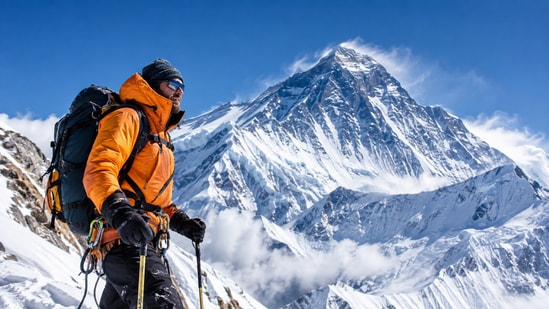
According to a Reuters report, Kobusch is heading to Nepal this week to prepare for the 8,849-metre ascent, which he hopes to make towards the end of December. If successful, he would achieve a first-of-its-kind winter ascent of Everest via the West Ridge, one of the mountain's challenging routes.
Why Kobusch has chosen the West Ridge route
The climber, who hails from Borgholzhausen in Germany, has previously attempted to climb Everest in 2019, 2021 and 2024. However, strong winds prevented him from progressing beyond 7,540 metres on those expeditions.
This time, he plans to take on the West Ridge, a challenging route that has never seen a successful winter ascent. He will also attempt the climb without bottled oxygen and without the support of guides above the base camp.
{{/usCountry}}This time, he plans to take on the West Ridge, a challenging route that has never seen a successful winter ascent. He will also attempt the climb without bottled oxygen and without the support of guides above the base camp.
{{/usCountry}}Speaking in Kathmandu, Kobusch explained that his decision was driven by his passion for alpine climbing and the appeal of the route.
"West Ridge is more beautiful, and as an alpinist I am looking for this beauty," he said.
According to official data cited by The Independent, more than 10,000 people have climbed Mount Everest since Edmund Hillary and Tenzing Norgay Sherpa first reached its summit in 1953. However, winter ascents remain exceptionally rare. Only 14 climbers have successfully reached the summit between December and February, and none have used the West Ridge route.
Why winter climbing on Everest is so dangerous
Climbing Mount Everest in winter is far more difficult than during the spring season. Temperatures in the so-called death zone, above 8,000 metres, can plunge to minus 40 degrees Celsius or lower. Strong winds, extreme cold and fewer hours of daylight make the climb even more challenging.
However, for Kobusch, the harsh conditions and relative isolation are part of the appeal. Speaking to Reuters, he said he wanted to experience Everest away from the crowds that usually gather during other climbing seasons.
"My ultimate goal is to be the best alpinist that I can be," he said, adding that he was drawn to the wilderness the mountain offers in winter.
"For me it is about experiencing Everest in its purest stage ... that is what I am looking for," he added.
As part of his preparation, the German climber plans to scale several smaller peaks before attempting Everest towards the end of December.
(Also Read: Life-sized cake statues of Prince William and Kate Middleton unveiled at UK baking show)
The West Ridge has also proved challenging for other climbers attempting it in winter. In February 2020, four Sherpa mountaineers had to abandon their expedition after heavy snowfall made the route dangerous. According to a report by The Japan Times, the team had reached close to its third camp at 7,100 metres before deciding to turn back following 34 hours of continuous snowfall.
Kobusch's expedition will test his endurance and skills as he attempts the first successful winter ascent via the West Ridge.