Bengaluru's Fraser Town is known for its heritage homes, leafy avenues and old-world charm. But beyond its familiar streets lies a story that dates back to a very different time in the city's history. The neighbourhood's name has an interesting connection to a British-era official, while its origins are linked to an event that went on to shape Bengaluru's urban landscape.
Who was Fraser Town named after?
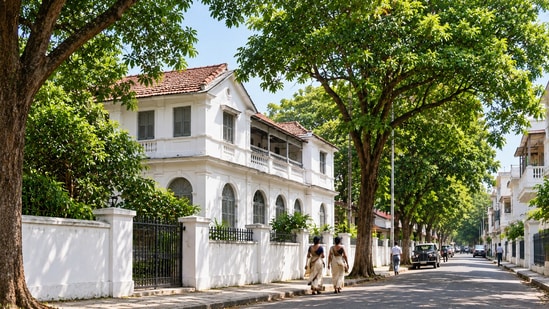
Fraser Town was named after Sir Stuart Mitford Fraser, an Indian Civil Service officer who served as the British Resident in Mysore. Before taking up the position in 1905, Fraser had been associated with the education of several Indian royals, including Krishnaraja Wadiyar IV, who later became the Maharaja of Mysore.
A commemorative plaque at the junction of Coles Road and Mosque Road records the naming of the neighbourhood. It states that the town was named in Fraser's honour and was formally christened by Mrs F J Richards in August 1910.
(Also Read: Australian executive avoids jail after charging taxpayers $50,000 for business class flights to China)
The area was also known by other names before it became Fraser Town. A Bangalore Mirror account of the neighbourhood's history notes that the locality was earlier called Mootocherry. Before the township was developed, the area had ragi fields and grape gardens.
How the plague shaped the neighbourhood
{{/usCountry}}The area was also known by other names before it became Fraser Town. A Bangalore Mirror account of the neighbourhood's history notes that the locality was earlier called Mootocherry. Before the township was developed, the area had ragi fields and grape gardens.
How the plague shaped the neighbourhood
{{/usCountry}}Fraser Town's development can be traced to the plague outbreak that hit Bengaluru in 1898. The epidemic exposed the problems caused by overcrowded neighbourhoods, poor sanitation and closely packed houses. After the outbreak, authorities began looking at ways to reduce congestion and create healthier residential areas.
The authorities planned Fraser Town as a residential extension with less crowded surroundings and better sanitary conditions. The neighbourhood was developed in the early 1900s, with its foundation stone commemorated in 1910.
An Indian Express report on the history of Fraser Town describes how the new layout included building regulations intended to keep rodents away and reduce overcrowding. These measures were particularly important at a time when plague-carrying fleas spread through rats.
From ragi fields to a planned township
Much of the land that became Fraser Town was once used to grow ragi. Historian Aditya Ramesh's academic research, published in the journal Urban History, traces how the area was developed into a planned residential extension. The township eventually had around 400 houses.
Fraser Town was presented as a model of sanitary town planning and was praised for its relatively low incidence of plague. Its layout was designed to address some of the problems that had made densely populated parts of Bengaluru vulnerable during the epidemic.
(Also Read: 'Never too late': 91-year-old athlete still breaking records in steeplechase, hurdles and pole vault)
Today, Fraser Town is part of a much larger Bengaluru, but its name and layout still reflect a chapter in the city's history when the plague outbreak prompted a rethink of residential planning.