
 E-Paper



Tiger pee for rheumatoid arthritis? China zoo sells animal urine for ₹600, claims medicinal use
Yaan Bifengxia Wildlife Zoo in China has sparked social media outrage for selling “medicinal tiger urine” from Siberian tigers.

 Prefer HTon Google


A zoo in China is making headlines but for all the wrong reasons. The “world class” animal park was recently seen promoting tiger urine as a solution to treat rheumatoid arthritis and other conditions. The Yaan Bifengxia Wildlife Zoo in Sichuan province, southwestern China claimed that mixing white wine and pee from the animals has “good therapeutic effect.”
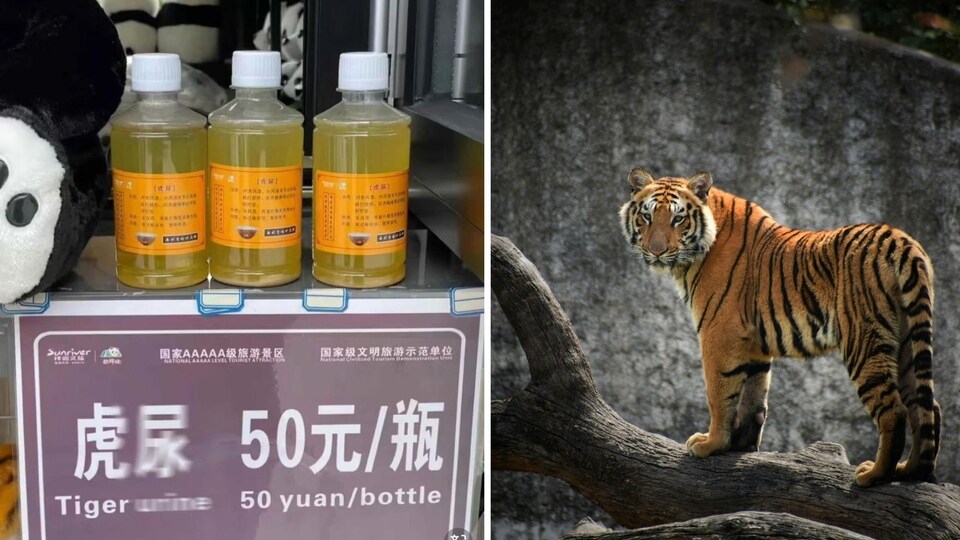
According to the South China Morning Post (SCMP), the matter came to light when a visitor at the zoo posted about it on social media. The place was found selling 250 g bottles of urine of Siberian tigers for 50 yuan or $7 each, which is roughly ₹600.
“Apply or drink?”
According to the outlet, the text on the bottles claims that urine has therapeutic effects on rheumatoid arthritis, sprains, and muscle pain. It also mentions that a person has to mix urine with white wine before applying it to the affected area using ginger slices. The zoo claims it can be taken orally. However, it also warns that it should be discontinued in case of allergic reactions.
Also Read: Visitors outraged as Chinese aquarium's much-touted 'whale shark' turns out to be a robot
How is the urine collected?
A staff member working with the zoo told the outlet that the pee accumulates in a base where the tigers urinate. The urine is collected from the basin. However, it is unclear if the body waste is disinfected before being sold.
Experts’ opinions:
“Exaggerating its value without evidence distorts traditional Chinese medicine and harms tiger conservation,” a pharmacist from Hubei Provincial Traditional Chinese Medicine Hospital in central China told the outlet. The individual added that tiger urine is not a traditional medicine. Further, there is no proven medicinal effect.
Another traditional Chinese medicine practitioner questioned whether the zoo is qualified to sell tiger pee. The zoo responded by saying it has a business licence.
How did social media react?
According to the outlet, several people took to Chinese social media platforms to share their reactions to the zoo selling tiger urine.
An individual shared that they purchased the item and wrote, “I bought some for my dad out of curiosity, but have not seen any effect, so it is just sitting there.”
Another added, “I am thinking of buying a bottle for my mum. No side effects, so I thought I would give it a try.” A third expressed, “Will the urine not spread bacteria? It is just gross to think about.”
Also Read: 'Truly made in China': Chinese zoo dyes chow chow dogs to resemble pandas. Watch
Tiger in Chinese culture
According to the outlet, the animal symbolises bravery and strength. There have been mentions of this big cat in some Chinese medical texts. They suggest that a tiger's bone can treat epilepsy and rheumatism.
However, such uses have been banned by the Chinese government. A critically endangered species in China, anyone caught hunting tigers can face both prison and fine.


