After many years of working in commercial law, Anna Radel, a lawyer from Queensland, left the profession at 50. She realized that her work had become incongruent with her own values. Therefore, she turned toward a life shaped by family, animals, and the land, helping build a large cattle operation managed with organic and regenerative principles. Her story, as told in The Wellness Couch's Self Love Podcast, demonstrates how shifting focus can transform careers, and how the act of nurturing land could be considered the foundation of a new concept of success.
From a legal career to rural Queensland
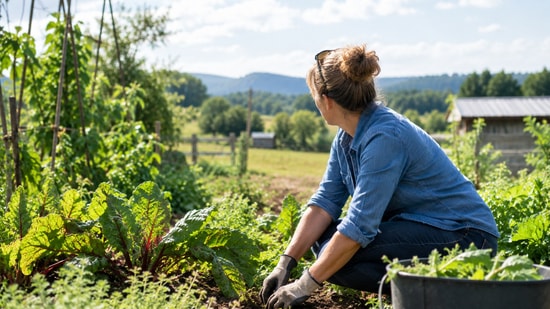
According to The Wellness Couch’s From Law to Land: A Journey of Resilience and Regeneration, Radel was raised in Brisbane with a passion for horses, and early on in her life she formulated two dreams: one of being a lawyer and the other being an equestrian eventer. She went on to establish a career in commercial law, where she worked with clients and developed the strategic and analytical skills required by the profession. But gradually, the increasing difficulties in reconciling her work as a lawyer with her ethical principles became apparent. In the podcast, she states that even though she loved the idea of serving clients, law did not feel right anymore.
Leaving the profession at 50 was certainly a big step, but her movement toward rural life had begun much earlier. Anna Radel and her husband acquired their first piece of land for grazing in 2003 as they were trying to balance taking care of their families and running their legal business. This slow but sure shift to farming shows how sometimes a significant career change takes time.
Regenerating the land, one decision at a time
{{/usCountry}}Leaving the profession at 50 was certainly a big step, but her movement toward rural life had begun much earlier. Anna Radel and her husband acquired their first piece of land for grazing in 2003 as they were trying to balance taking care of their families and running their legal business. This slow but sure shift to farming shows how sometimes a significant career change takes time.
Regenerating the land, one decision at a time
{{/usCountry}}Deep Dive
Why did Queensland lawyer Anna Radel leave commercial law at 50?
How did Anna Radel develop her regenerative cattle operation?
Can regenerative grazing improve soil and vegetation in Queensland?
By 2025, their original dream had expanded into a cattle enterprise spanning approximately 10,000 acres, managed organically and with a regenerative focus, according to the podcast’s published biography. The operation reflects a long-term dedication to working with the landscape rather than treating it simply as a place to raise livestock. In a 2024 case study published by the Fitzroy Basin Association, Radel highlighted the actions being done in order to aid the growth of indigenous trees on the couple’s property near Biloela.
The planting involved the use of eucalyptus trees which were good for koalas, as well as fencing off the planted area in order to shield the saplings from any damage from cattle. The idea was to provide better ground cover and restore the koala habitat, which had been reduced in numbers. Dry weather and frost had proven to be difficult for young trees. The initiative represents how regenerative farming can involve more than changing how cattle graze. In addition, this may include the regeneration of native plants as well as increased support for livestock grazing on the land.
Resilience, Family and the Realities of Farming
Despite Radel’s move to the countryside, she still faced uncertainty; it changed the kinds of challenges she faced. In the podcast, she discusses the pressures of managing a cattle station through drought, maintaining soil health and coping with the emotional and financial demands of farming. She also explains how the horse is a significant element in her life, and she perceives her association with the land to go beyond its business aspect. The experience is indicative of a larger dilemma faced by Australian graziers: that of combining livestock rearing with the health of the land. Research published in The Rangeland Journal examined grazing properties in Queensland’s Burdekin catchment and found that regenerative grazing practices may improve vegetation, soil and land condition. Improvements may take many years, especially when the land had been degraded before.
For Radel, the transition has been about more than exchanging a legal career for farming. It has involved redefining success around family, animal welfare, and stewardship of the landscape, while continuing to manage a demanding business. Radel’s work on re-establishing native plants along with cattle grazing highlights how such priorities could be put into practice in the field. Radel’s story gives an indication that redirecting oneself at a certain point in one’s career is not always tantamount to leaving behind the years of knowledge and experience gained over the years but rather utilizing them for another objective. The transition made by Radel from being a commercial lawyer to becoming a regenerative cattle farmer is an example of this.