
 E-Paper



Bangladesh commission says Sheikh Hasina involved in enforced disappearances
The commission submitted its first interim report to Yunus on Saturday, according to an official statement

 Prefer HTon Google


New Delhi: An inquiry commission in Bangladesh said on Saturday that former premier Sheikh Hasina and some officials of security forces and her government were involved in enforced disappearances.
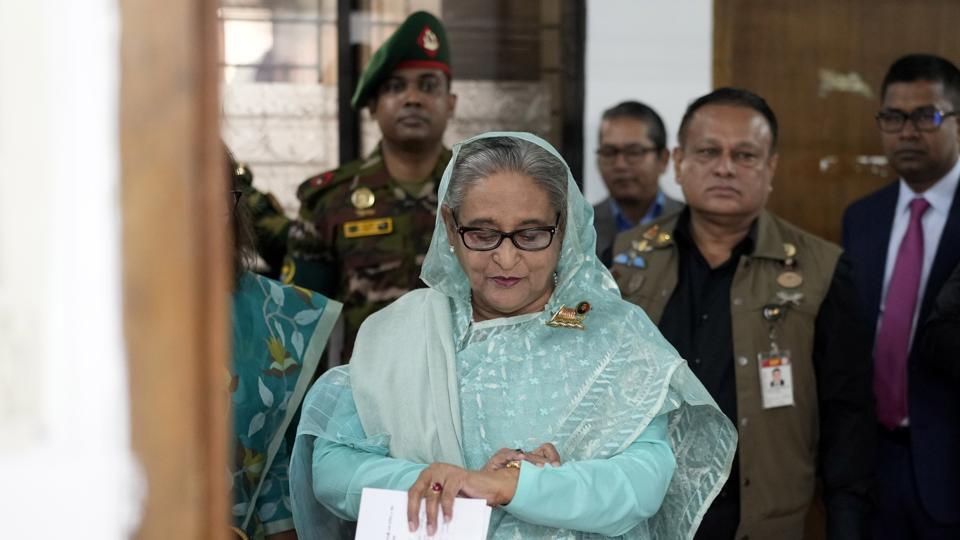
The Commission of Inquiry on Enforced Disappearances also recommended the disbanding of the Rapid Action Battalion (RAB) in a report submitted to caretaker administration chief Muhammad Yunus.
The commission submitted its first interim report to Yunus on Saturday, according to an official statement.
There was no immediate response to the development from Hasina, who is currently in India, or her Awami League party.
Hasina stepped down in the face of widespread protests led by student groups and fled to India in August. The interim government led by Nobel laureate Yunus was formed days later. Yunus and other officials have spoken about seeking Hasina’s extradition from India, though no formal request has been made so far.
The five-member commission led by retired justice Mainul Islam Chowdhury handed over the report titled “Unfolding The Truth” to Yunus.
Chowdhury said the commission had “found the prima facie involvement of former prime minister Sheikh Hasina and some high-ranking officials of security forces and her government, including her defence adviser, Major General (retd) Tarique Ahmed Siddique, in the enforced disappearances”, the statement said.
The commission further said the former director general of the National Telecommunication Monitoring Centre, sacked Major General Ziaul Ahsan, and senior police officers Monirul Islam and Mohammed Harun-Or-Rashid, were involved in several incidents of enforced disappearances.
The commission said it had recorded a total of 1,676 complaints about enforced disappearances, and 758 of these had been scrutinised. It estimated that the number of enforced disappearances in Bangladesh “would cross 3,500”.
Chowdhury said the commission had found a “systematic design” so that enforced disappearances remained undetected. The individuals carrying out enforced disappearances or extrajudicial killing lacked knowledge of the victims, he said.
The commission will submit another interim report in March and it will need at least a year to complete the scrutiny of all the allegations it had received, he said.
Yunus thanked the commission for its first interim report and promised all possible support for the panel to accomplish its work. “You are doing a really very important job. We are ready to give you all kinds of support that you need,” he said.
Yunus said he would visit some of the “Aynaghar” or secret detention centres and joint interrogation cells detected by the commission to get first-hand knowledge about the suffering of victims.



