At least seven new cases of the Wuhan novel coronavirus were reported on Saturday including three unconfirmed cases in the cities of Shanghai and Shenzhen even as a new analysis by the Imperial College, London, said many more people could have been infected by it than the number currently reported.
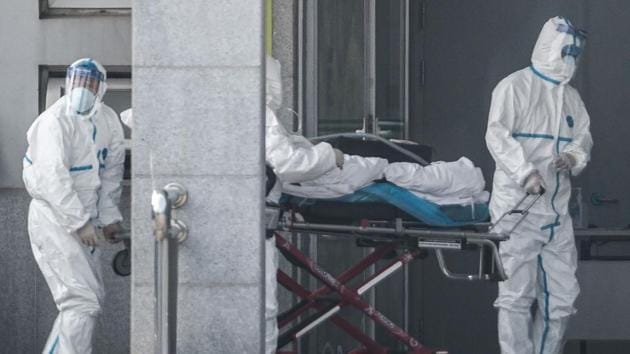
Chinese health officials confirmed four more cases in the city of Wuhan in central China on Saturday, taking the official number to 47 including two deaths; three more cases have already been reported from Thailand and Japan.
The Hong Kong-based South China Morning Post (SCMP) reported that three suspected cases had been found in the financial capital Shanghai and in the city of Shenzhen in southeastern China.
Officials declined to confirm the three cases.
Meanwhile, a new analysis by Imperial College’s MRC Centre for Global Infectious Disease Analysis said the Wuhan novel coronavirus, a virus previously unknown, could have infected many more people than the number currently reported.
It could well be over 1700, the researchers said.
The statistics of the infected shared by the Chinese government, in fact, leaves one question unanswered: If at least three patients of the coronavirus were detected in Thailand and Japan – all three travelled from Wuhan – how is it possible that the rest of China doesn’t have a single case officially?
And, at a time when hundreds of millions of Chinese are travelling within and outside the country for the Chinese New Year (CNY) holidays?
{{/usCountry}}And, at a time when hundreds of millions of Chinese are travelling within and outside the country for the Chinese New Year (CNY) holidays?
{{/usCountry}}How many persons have been infected with the coronavirus which originated from the central Chinese city of Wuhan until now?
The total number of confirmed cases now stands at 47 in China, according to the Wuhan health commission.
“The source of the outbreak is still under investigation in Wuhan. Preliminary investigations have identified environmental samples positive for nCoV in Huanan Seafood Wholesale Market in Wuhan City, however, some laboratory-confirmed patients did not report visiting this market. To date, there is no reported infection among healthcare workers in China, Thailand or Japan,” according to an update from WHO on Friday.
Until Friday, authorities in Wuhan had also traced 763 people who had close contact with the patients till Wednesday night; 313 of them are under medical observation, according to state media.
But is that all? Especially given the fact that both the WHO and Wuhan health authorities haven’t ruled out the possibility of human-to-human transmission of the virus.
There could many more cases, said the reputed MRC Centre for Global Infectious Disease Analysis.
“We estimate that a total of 1,723 cases of 2019-nCoV in Wuhan City…had onset of symptoms by 12th January 2020 (the last reported onset date of any case),” the Centre said in an analysis released early on Saturday.
The estimate is based on Wuhan’s population of 19 million, a mean 10-day delay between infection and detection and four-five delay from the onset of symptoms to detection and hospitalisation.
The five researchers involved in the report also took into account the total volume of international travel from Wuhan over the last two months, which have been 3,301 passengers per day (as per IATA data.)
“It is likely that the Wuhan outbreak of a novel coronavirus has caused substantially more cases of moderate or severe respiratory illness than currently reported,” the report said.
“The estimates presented here suggest surveillance should be expanded to include all hospitalised cases of pneumonia or severe respiratory disease in the Wuhan area and other well-connected Chinese cities”.
The researchers added: “This analysis does not directly address transmission routes, but past experience with SARS and MERS-CoV outbreaks of similar scale suggests currently self-sustaining human-to-human transmission should not be ruled out.”
“As in all outbreaks, the relevant health authorities (in this case, Chinese health officials) are the primary source of data on cases. WHO is continuing to work closely with the Chinese authorities as they conduct further investigations into the outbreak,” the WHO’s China media team told HT in an email.
The cases have been linked to exposure at a seafood market in Wuhan which has been closed since 1 January 2020 in efforts to contain the outbreak.
According to state-run China Daily, authorities in Wuhan, Hubei province have intensified efforts to prevent the spread of a virus that has caused a pneumonia outbreak in the city.
“All outbound travelers from Terminal 3 of Wuhan Tianhe International Airport, a major airport in Central China, have had to receive temperature tests before boarding flights since Wednesday, and those displaying fever symptoms are quarantined,” the airport authority said on Thursday.
At Wuhan Railway Station, employees told the newspaper that they had received notification from the authorities to start checking travelers’ temperatures.
The clinical signs and symptoms reported are mainly fever, with a few cases having difficulty in breathing.