
President Trump’s gambit to end Russia’s war in Ukraine by pressuring the victim is certain to fail. His approach to the war reveals he misunderstands facts that American voters understand well.
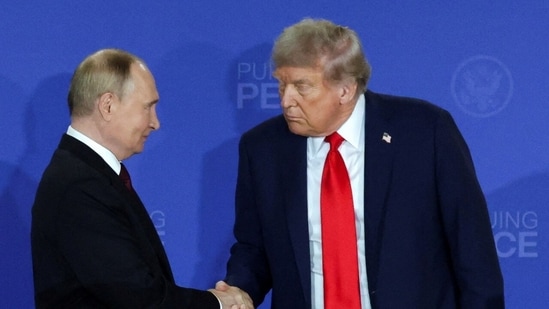
While Vladimir Putin ignores Mr. Trump’s call for an energy cease-fire and continues to murder Ukrainian civilians, the U.S. president claims that Russia “has been fine on Ukraine.” This is factually wrong, strategically naive and morally bankrupt. His obsequious accommodation of Russia, rewarding the aggressor with sanctions relief, won’t
President Trump’s gambit to end Russia’s war in Ukraine by pressuring the victim is certain to fail. His approach to the war reveals he misunderstands facts that American voters understand well.
While Vladimir Putin ignores Mr. Trump’s call for an energy cease-fire and continues to murder Ukrainian civilians, the U.S. president claims that Russia “has been fine on Ukraine.” This is factually wrong, strategically naive and morally bankrupt. His obsequious accommodation of Russia, rewarding the aggressor with sanctions relief, won’t persuade Mr. Putin to stop. History shows that such behavior emboldens Russia’s autocrat, who sees it as weakness.
In June 2021, Mr. Putin watched President Biden pause $100 million in lethal security assistance to Ukraine in pursuit of “deliverables” for a U.S.-Russia summit. We know what happened the following year. Yet Mr. Trump seems determined to repeat the mistakes of a predecessor he scorns.
Threatening to withhold security and intelligence assistance or access to crucial satellite communications systems won’t materially weaken Ukraine’s will to defend itself, but it may allow Mr. Putin to make battlefield headway that had until now been out of reach. This could prolong the war, not shorten it. And when Russia’s limited supply of diesel has changed hands, it will have done little to bring down prices at the pump.
Regardless of the midterm election results, Mr. Putin is America’s enemy. He is aligned with China, Iran and North Korea to divide the U.S. from our allies and undermine our global influence.
Americans, including most Republicans, understand this. They sympathize with Ukraine’s defenders, its abducted children, its shivering elderly and persecuted Christians. They know America’s strategic interests are aligned with Kyiv’s.
If the president means what he says about ending the conflict, he should look to the wisdom of the American people, not naive businessmen who seem to think diplomacy entails fawning over adversaries. Mr. Putin is many things, but he is no humanitarian. A Russian victory would have far worse consequences for our economic and national security and our global influence than temporarily high diesel prices.
Mr. Putin has directed cyberattacks against U.S. government agencies, businesses and infrastructure and helped Iran target U.S. personnel and facilities in the Middle East. He is an ally of Xi Jinping. He will continue to seize opportunities to weaken America—and Europe.
The Continent is our biggest trading partner and an engine of American economic growth. An outcome to this war that makes it easier for Russia to threaten Europe harms our own interests. Meanwhile, Ukraine’s innovation on the battlefield against a more powerful aggressor makes its value as a partner obvious.
The destruction of American aircraft, materiel and facilities, and the killing of U.S. personnel by Iranian drones—the same kind of Iranian drones Russia uses against Ukrainian cities—underscores the urgency of working with Ukraine. Senior Army leaders who traveled to Ukraine, like former Secretary Dan Driscoll, Gen. Chris Donahue and Lt. Gen. Curtis Buzzard, understood this. Not a single senior Pentagon policy official appears to have done the same, and it shows.
The Pentagon officials involved in restricting U.S. assistance to Ukraine should explain how abandoning the “Silicon Valley of warfare” and the world’s experts in battlefield drone innovation will help America achieve drone dominance. Next, they should explain why the president blames Ukraine for the U.S. military’s shortage of Tomahawk cruise missiles, even though we haven’t provided any to Ukraine.
The strategic incoherence extends beyond Ukraine. The Pentagon has undercut allies in the North Atlantic Treaty Organization that are meeting military spending targets faster than we are. This is evident in the Pentagon policy office’s determination that supporting Baltic allies is wasteful and the Pentagon’s failure to commit appropriated funds to the Baltic Security Initiative. These funds are invested directly in the U.S. defense industrial base. The initiative’s procurement equips friends on NATO’s front line and spurs their own far greater investments in American weapons.
European assistance to Ukraine outpaces our own. The Prioritized Ukraine Requirements List lets allies procure American-made weapons for this purpose. But the Trump administration is using PURL to pressure allies to reimburse the U.S. for security assistance Congress already appropriated. This dilutes our allies’ buying power and undermines American leadership and credibility. It also perversely encourages allies to reduce their use of American military hardware as soon as they can.
Securing a just and stable peace in Ukraine will require the moral clarity to assign blame where it belongs and a willingness to speak the only language Mr. Putin understands: strength.
The good news for Americans is that Senate Republicans oppose retreat and appeasement and favor a strong defense. They support Ukraine. They support NATO. They understand Russia, China, North Korea and Iran are enemies. And they want the president to work with Congress to restore American primacy.
Mr. Trump has high hopes for a lame-duck legislative agenda, including the one-time defense spending I’ve urged the administration instead to build into full-year appropriations. Passing this agenda will require working with Republicans who know the difference between the good guys and the bad guys. Ending the obeisance to Mr. Putin may be table stakes for the end-of-year legislation. The president should plan accordingly.
Mr. McConnell, a Republican, is a U.S. senator from Kentucky.
One Subscription.
Get 360° coverage—from daily headlines
to 100 year archives.
Archives
HT App & Website