
 E-Paper



Deep in the Amazon, the Gospel Arrives by Boat
Evangelical Christianity is spreading fast across the Amazon. The spiritual battle is reshaping the world’s biggest rainforest


LIVRAMENTO, Brazil—Spirits were high as the double-decker Missionary chugged down the Negro River, carrying some 30 Brazilian evangelicals home after a weeklong expedition deep into the Amazon.
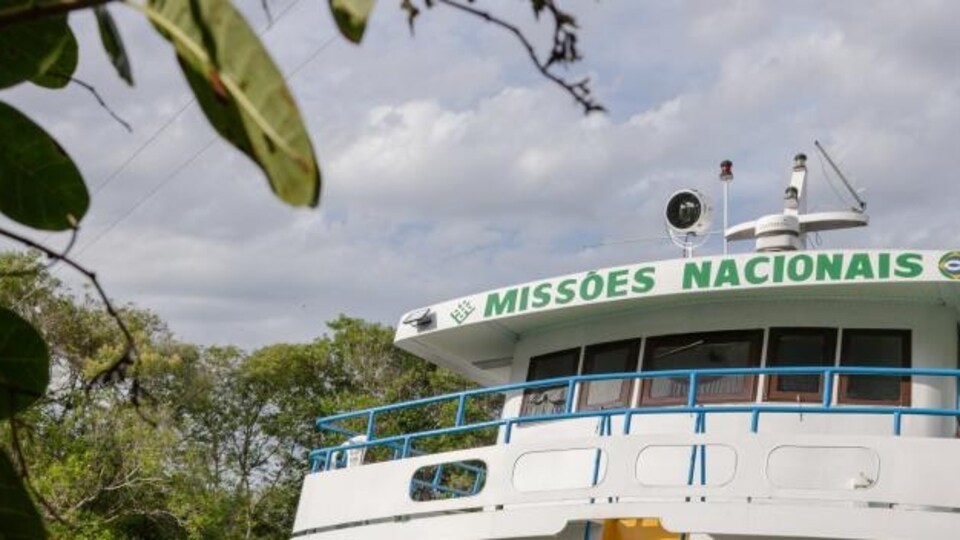
The missionaries said they aren’t only doing God’s work here—they are advancing the government’s, too. Every month, Brazilian and U.S. churches send hundreds of evangelical pastors, doctors and dentists upriver to provide health services to the poor, converting fishermen and indigenous people along the way.
Their ministrations are paying off.
Brazil’s first census in 12 years showed in June that the Amazon has the nation’s highest share of evangelical Christians, accelerating the country’s shift away from Catholicism. Over a quarter of Brazil’s 213 million people are evangelical, up from 9% three decades ago. A third of indigenous people have adopted this branch of Christianity, and evangelicals for the first time outnumber Catholics in Amazonian states such as Acre and Rondonia.
As the blue-and-white Missionary proceeded through the steamy forest, villagers crowded the river’s silty reddish banks. The lower deck, where missionaries sleep on hammocks at night and pray on plastic chairs by day, was transformed into a makeshift ward for some of the 100,000 or so patients the boat treats a year.
“We don’t just offer them medical care. We offer them Jesus,” said Germana Matheus, a dentist who runs the boat as part of Project Amazon, a campaign by Brazil’s Baptist churches to evangelize the forest’s nearly 30 million people.
In the most remote communities, where locals have little contact with Western medicine, she said even a painkiller can seem like a gift from God after months of toothache. “People are grateful for the simplest of things,” she said over a cacophony of gospel music and the drone of the boat’s engine.
The spiritual battle in the Amazon is also reshaping the world’s biggest rainforest, environmentalists and indigenous leaders say. Brazil’s evangelicals have forged alliances with right-wing agribusiness groups and landowners who have thwarted moves in Congress to protect the forest.
Missionary activity could accelerate the erasure of indigenous culture, threatening communities that environmentalists say safeguard the Amazon. Deforestation rates in indigenous lands are more than 80% lower than elsewhere in the Amazon, a 2024 study by U.K. and Brazilian researchers showed.
“We’re facing extinction,” said Eládio Curico, a leader of the Kokama people.
He said he considers preachers with Bibles as threatening as loggers with chain saws. In the 1970s, he said, Catholic missionaries nearly destroyed his village near Brazil’s border with Colombia and Peru. They persuaded some Kokama to abandon their culture, sparking family feuds and spurring many to leave. It took decades to persuade younger generations to come back, he said.
“Just as the Kokama were proud to be Kokama again, the evangelicals came to wipe us out,” said Curico.
Brazilian laws protect indigenous communities and their beliefs, customs and traditions, especially within indigenous reserves. But the deeper into the forest, where government oversight is weaker, the murkier those rules become.
Livramento, on the banks of the Negro some 15 miles outside the city of Manaus, is a regular stop for church boats including the Missionary. At the entrance to the village, whose name means “deliverance,” Catholic missionaries decades ago built a small church. But the priest is absent; some residents said they thought he was dead.
In contrast, the village of 350 families has five thriving evangelical churches. Their influence is everywhere.
Teachers paid by the government regularly arrive by boat to give classes in indigenous languages such as Baré, hoping to preserve cultural and linguistic diversity. The classes are given in outbuildings of the Baptist church.
The church housed the region’s schoolchildren for a year recently while the village school was under renovation. Eleama Franklin, a 31-year-old missionary with Project Amazon who lives next door in a wooden house built by Texan volunteers, said it was the perfect chance to talk to children about the gospel.
Getting into schools in more remote villages is even easier, she said. “You can go and talk about Jesus with the children, you just need to have a word with the teacher.”
Many parents in the Amazon welcome the evangelicals. In addition to health services, the missionaries give communities their best—and sometimes only—defense against illicit drugs that are increasingly common in the forest.
Criminal organizations have spread across the Amazon, fighting over lucrative river routes to coca-growing regions of Bolivia, Peru and Colombia. Their expansion has scattered the forest with small-time dealers of crack and marijuana, community leaders say. The nearest police station—or any vestige of the state—is sometimes hours away by boat.
But evangelicals are never far.
“The boat is one of the few blessings we have,” said Maria do Carmo, a Livramento resident who converted to evangelical Christianity from Catholicism several years ago. “The evangelicals care about the people.”
As night fell in Livramento and a storm gathered over the forest canopy, Franklin began the hourlong trek to visit an elderly indigenous Baré couple. The husband converted years ago after overcoming a drinking problem, but they were now too frail to reach the church or boat.
“It’s not a problem—we just go to them,” said Franklin, stepping out into the darkness with her Bible and guitar. By her side was her husband, who is a pastor, and Sara Oliveira, a 17-year-old student who converted to evangelical Christianity during the school renovation.
Oliveira dreams of becoming a missionary too. “I was once sick of this place…It’s just trees and rivers,” she said. “But now I realize that this is my calling.”
As the Missionary headed back to Manaus the next day, it had one final stop: the Missionary Training Center, one of the evangelicals’ most ambitious projects yet.
In a giant clearing on the riverbank, the center—dotted with inspirational messages about God on colorful signposts—resembled a cross between a summer camp and a wellness center, training missionaries to start churches where none exist.
“The trick is not to turn up and start talking about the gospel and preaching,” said Cirlene Macario, a 19-year-old missionary and member of the Kokama indigenous group from Jutaí, a village some 450 miles to the west. “We try to make friends first.”
Aspiring missionaries are taught to hunt and cook local dishes. They sleep in hammocks and relieve themselves outside in the forest—essential skills to survive and fit in with locals, Matheus said.
Over the past 12 years, Matheus and Project Amazon have recruited some 200 missionaries to live in the forest, who have helped establish some 170 churches across the Amazon. The goal is to recruit 1,000.
The Missionary docked in Manaus, where colorful canoes laden with fish bustled for space among cargo ships under the unforgiving midday sun, as another group of American evangelicals arrived from a separate mission upriver.
“We brought many folks to the Lord,” said Anthony Mustoe, an IT executive from Dallas, packing his belongings with his 17-year-old son. “The Bible tells us to go far and, well, that’s what we did.”
Write to Samantha Pearson at samantha.pearson@wsj.com


