Iran's president Ebrahim Raisi expressed regret at a "lack of unity" among Muslim countries in response to the war between Israel and Hamas. Ebrahim Raisi said greater co-ordination across the Muslim world could have stopped Israel's bombing of Palestine.
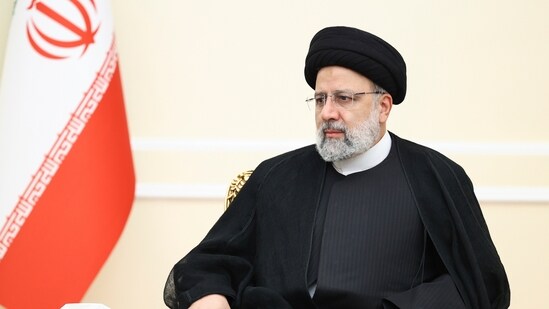
"A united and unified position in the Muslim world could have prevented the oppression and aggression of the Zionist regime and the excesses of its Western supporters in a more effective way," he said. While receiving the credentials of the new Saudi ambassador to Tehran, Abdullah bin Saud al-Anazi, Raisi also called for "strengthening co-operation" between countries in the region to avoid interventions from outside nations.
Iran and Saudi Arabia broke off diplomatic ties seven years ago, amid an escalating geopolitical rivalry. This March they signed a China-brokered deal to restore relations.
"The presence of foreigners in the region not only does not solve any issues but is itself a factor in exacerbating the problems," Ebrahim Raisi said without naming any specific countries.
Read more: More than 100 detained in Egypt after pro-Palestinian protests
Iran has frequently criticised the role of the United States, which has boosted its military presence in the Middle East since the start of the war between Israel and Hamas. The Iranian president had already called on October 12 for Muslim and Arab countries to join together to "stop the crimes" of Israel.
{{/usCountry}}Iran has frequently criticised the role of the United States, which has boosted its military presence in the Middle East since the start of the war between Israel and Hamas. The Iranian president had already called on October 12 for Muslim and Arab countries to join together to "stop the crimes" of Israel.
{{/usCountry}}The war between Israel and Hamas was triggered on October 7 by the terror group's attack on southern Israel, in which it killed more than 1,400 people, mostly civilians. Israel's retaliatory bombardment of Gaza Strip has killed more than 5,000, also mostly civilians, according to Hamas-run health ministry.
This comes as the United Nations called for improved coordination among humanitarian groups in making sure aid moves into the Gaza Strip. UNRWA said that some of the food delivered into Gaza so far, such as rice and lentils, had been impractical given the dwindling availability of fresh water and fuel.
Israel has cut off water, food, fuel and energy supplies to Gaza, and only some aid has been allowed in from Egypt in recent days.
"An additional challenge in a very limited flow of supplies is that we are not really receiving the most needed supplies for Gaza, or the most relevant," UNRWA spokeswoman Tamara Alrifai said.