
 E-Paper



Epstein’s ghost haunts the Trump-Murdoch alliance
What happens when a president sues a press baron?


 Prefer HTon Google


“I told Rupert Murdoch it was a Scam, that he shouldn’t print this Fake Story,” wrote Donald Trump on July 17th, after the Wall Street Journal reported that in 2003 the president had sent a lewd birthday message to Jeffrey Epstein, a convicted paedophile who died in prison in 2019. “But he did, and now I’m going to sue his ass off, and that of his third rate newspaper.” The lawsuit was delivered the following day.
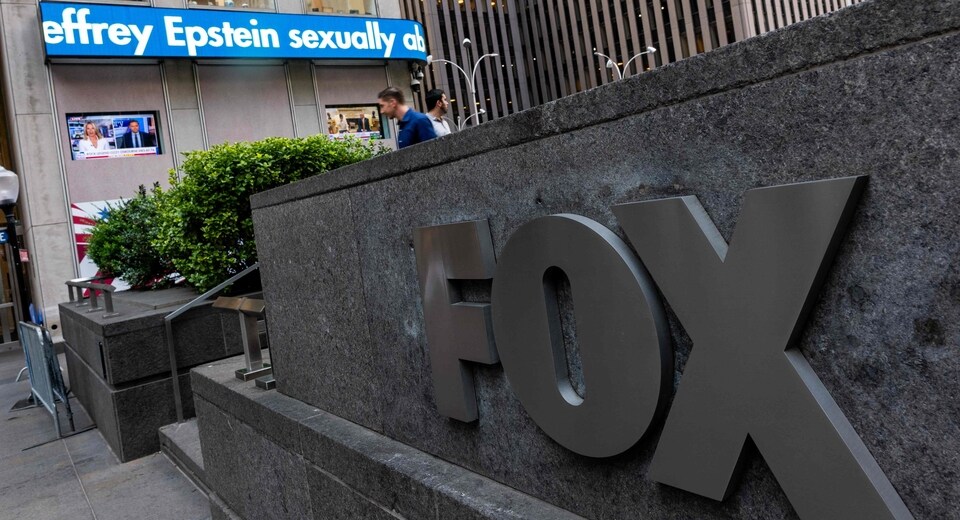
The bust-up between Mr Trump and Mr Murdoch, whose media empire includes Fox News as well as the Journal and other conservative-leaning titles, is the latest example of the president’s aim to enforce a kind of lèse-majesté rule against the American media. It also marks a twist in the relationship between the president and America’s last real news-media baron. Mr Murdoch, an influential supporter of Mr Trump, may prove to be less of a pushover than some of his peers.
Mr Trump’s recent lawsuits against critical news outlets have been flimsy but fruitful. Earlier this month Paramount Global paid $16m to settle a far-fetched complaint from the president about an interview on CBS’s “60 Minutes”. In December Disney paid $15m over an ABC report that had wrongly said Mr Trump was found liable for rape, rather than sexual assault, a case which lawyers considered trickier but winnable. Mr Trump alluded to these successful claims when announcing his lawsuit against the Journal.
The legal environment for journalists in America, benign on paper, has lately grown more hostile. Juries, and some judges, have become more mistrustful of the mainstream media (Mr Trump has filed his latest complaint in Florida, where he can expect a relatively friendly jury). And since Mr Trump’s re-election, defendants fear that if they do not fold they may be penalised by government agencies. Paramount’s settlement was widely seen as a bid to avoid interference by the Federal Communications Commission in its proposed merger with Skydance Media (the company denies this).
The Journal looks like a harder target for Mr Trump. It has reported deeply on the Epstein story, previously digging into the sex offender’s links to businessmen such as Bill Gates. Its parent company, Dow Jones, has a history of fighting libel cases, including a decades-long duel with Lee Kuan Yew, a former prime minister of Singapore. The Journal and Dow Jones are “steadfast in defending their journalism”, says Stuart Karle, who was general counsel of the Journal until soon after Mr Murdoch acquired it in 2007. “I have seen nothing that indicates to me that commitment to defend published stories has changed.”
The government’s leverage over News Corp, the Murdoch-controlled company that ultimately owns the Journal, also looks limited. Whereas Disney and Paramount appeared willing to sacrifice the reputations of ABC and CBS in order to protect more valuable segments of their respective companies, the Journal is a central part of the Murdoch empire. In the latest financial year Dow Jones was the largest contributor to profits at News Corp. And the federal government has limited control over print media. (Fox Corporation, the other Murdoch-controlled company, relies on government-issued broadcasting licences, however.)
How deep does the apparent rift between Mr Trump and Mr Murdoch go? Some conservatives see the Epstein story as a calculated move to bring down the president. The conspiracy-minded draw attention to a meeting in June between Mr Murdoch and J.D. Vance, the ambitious vice-president. Steve Bannon, a strategist in Mr Trump’s first administration, has said that the Journal’s recent Epstein story was a “kill-shot on President Trump because he had the stones to stand up to the Murdochs”. (According to Michael Wolff, a journalist, Mr Bannon gave Epstein some media training in 2019.)
Others think there is less to the spat than meets the eye. “People are treating this as a vendetta. This is a fuck-up,” says Claire Enders, a media analyst and longtime Murdoch-watcher. She suspects that Mr Trump’s demand that the story be dropped, apparently delivered to Mr Murdoch at a football match, may not have been heard or understood by the 94-year-old. What’s more, she adds, Mr Murdoch is keen to avoid any suggestion that he has editorial control over his companies, amid a libel complaint against Fox News by Smartmatic, a provider of voting systems. “He doesn’t want to be seen to have the power to cut a story—and it is scrupulously denied him, to avoid trouble with Smartmatic,” says Ms Enders.
For Mr Trump, a lawsuit against the mainstream media may seem like a way to unite his supporters, who are divided over his handling of the Epstein affair. But if the case moves forward then the discovery process, in which each side may request documents from the other, may be uncomfortable. “Discovery will probe his relationship with Epstein, his crude communications generally and with Epstein and other convicted felons as well,” predicts Mr Karle. That may lead to more revelations—and more unwelcome headlines.


