US President Donald Trump has signed off on the legislation that reaffirms the right of Tibetans to choose a successor to the Dalai Lama, a move described by the Tibetan government-in-exile as a “powerful message of hope and justice” to Tibetans living in Tibet.
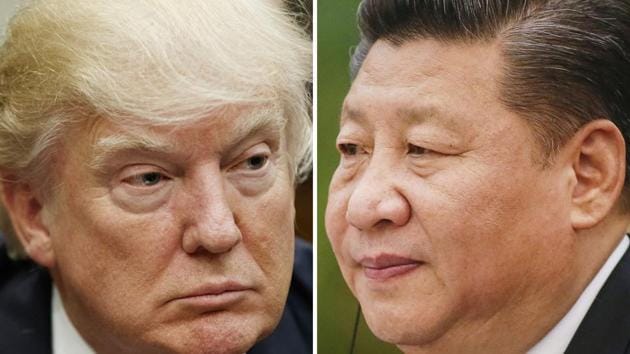
The United States Congress had passed the Tibet Policy and Support Act last week, provoking howls of protest from the Chinese foreign ministry that calls the legislation as an attempt to meddle in China’s affairs.
“We urge the U.S. side to stop meddling in China’s internal affairs and refrain from signing into law these negative clauses and acts, lest it further harms our further cooperation and bilateral relations,” Foreign ministry spokesperson Wang Wenbin said last week after the legislation was approved by the US Congress.
As news of the new law emerged on Monday, the Chinese foreign ministry said Beijing had firmly rejected the US legislation and “Tibet-related issues are domestic affairs”.
The legislation, which calls for the establishment of a US consulate in Tibet’s main city of Lhasa, also asserts the absolute right of Tibetans to choose a successor to the 14th Dalai Lama and the preservation of Tibet’s environment.
The US law that aims to build an international coalition to ensure that China does not interfere with the selection of the next Dalai comes against the backdrop of Beijing appointing its own Panchen Lama after arresting a boy Gedhun Choekyi Nyima in May 1995 who was identified by the Dalai Lama as the reincarnation of the Panchen Lama, the second-most senior figure in Tibetan Buddhism’s largest school. Human rights groups had called the Panchen Lama as the world’s youngest political prisoner. He was just six when he disappeared.
{{/usCountry}}The US law that aims to build an international coalition to ensure that China does not interfere with the selection of the next Dalai comes against the backdrop of Beijing appointing its own Panchen Lama after arresting a boy Gedhun Choekyi Nyima in May 1995 who was identified by the Dalai Lama as the reincarnation of the Panchen Lama, the second-most senior figure in Tibetan Buddhism’s largest school. Human rights groups had called the Panchen Lama as the world’s youngest political prisoner. He was just six when he disappeared.
{{/usCountry}}President Xi Jinping’s China, which regards the exiled Dalai Lama as a dangerous “splittist”, or separatist, claims that Beijing’s approval is a must for choosing the successor to Tibetan spiritual leader the Dalai Lama.
Tibetans have rejected this claim.
“This legislation sends a powerful message of hope and justice to the Tibetans inside Tibet and bolsters US support for the protection of Tibetan people’s religious freedom, human rights, environmental rights and exile Tibetan democracy like never before,” said Lobsang Sangay, president of Central Tibetan Administration in Himachal Pradesh’s Dharamshala said in a statement.
China’s deep interest in projecting its successor to the Dalai Lama and other spiritual leaders is driven by its objective to divide the world of Tibetan Buddhism, where religious leaders of all the four major schools have sought refuge sometime or other in India. The American legislation, in coordination with other countries, will try to build pressure on China to wait for the 14th Dalai Lama, who turned 85 this April, to identify his reincarnation, rather than come up with its nominee to split Tibetans.
India had settled the Dalai Lama in April 1959 and the thousands of Tibetans who followed him in the Himalayan town of Dharamshala where he has been living in exile after escaping from Tibet when it was invaded by the Chinese. There are over 80,000 Tibetans living in exile in India; 150,000 more around the world particularly in the US and Europe.