
 E-Paper



How Israel's Mossad used shell company, planted explosives and sold them to Hezbollah
A Lebanese security source said Israel's Mossad spy agency planted explosives inside at least 5,000 pagers to target Hezbollah militants.

 Prefer HTon Google


At least nine people were killed, including an 8-year-old girl, and nearly 3,000 were wounded when pagers used by Hezbollah members detonated simultaneously across Lebanon on Tuesday.
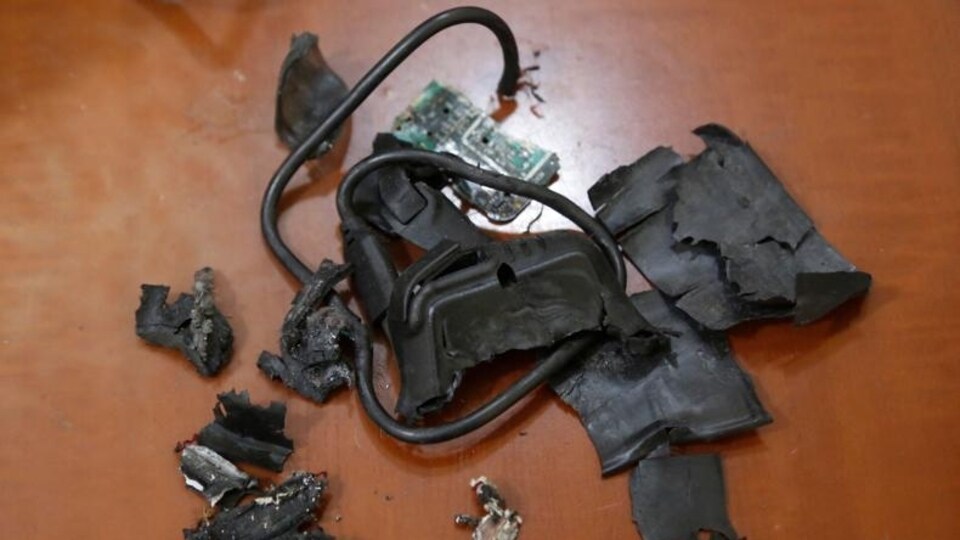
A Lebanese security source had told Reuters that explosives were planted inside the devices allegedly by Israel's spy agency Mossad. Israel, however, has not claimed responsibility for the detonations.
The United States said ahead of the explosion of pagers, Israel informed Defence Secretary Lloyd Austin that a military operation was going to take place in Lebanon but gave no details.
Iran-backed Hezbollah has vowed to retaliate against Israel. The two sides have been engaged in cross-border warfare since the Gaza conflict erupted last October.
How was the operation carried out?
The attacks on electronic devices this week appeared to be the culmination of a months-long operation by Israel to target as many Hezbollah members at once.
According to a New York Times report, which cited 12 current and former defence and intelligence officials who were briefed on the attack, the operation was complex and long in the making.
A senior Lebanese security source told Reuters that Israel's Mossad spy agency planted explosives inside 5,000 pagers, which had been imported by the Lebanese group Hezbollah months before.
Also Read | Why does Hezbollah still use pagers for communication?
The pagers were from Taiwan-based Gold Apollo, but the company said it did not manufacture the devices. A European firm gave them the right to use its brand name.
Hezbollah leader Hassan Nasrallah had previously warned its members not to carry cell phones as Israel could use them to track the group's movements. As a result of this, the Iran-backed militant group, has been using pagers for communication.
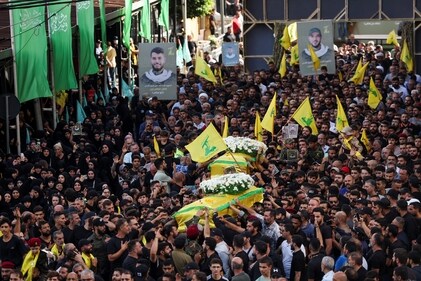
According to The New York Times, even before Nasrallah's decision to rely on pagers for communication, Israel had put into motion a plan to establish a shell company – Hungary-based B.A.C Consulting – that would pose as an international pager producer.
Three other intelligence officers briefed on the operation told the newspaper that at least two other shell companies were also created to mask the identities of Israeli intelligence officers, who were creating pagers.
Also Read | Lebanon attacks: US warplanes ready after Hezbollah leader's ‘red lines’ warning
The intelligence officers said the company also took ordinary clients and produced a range of ordinary pagers. However, the batteries of the pagers sent to Lebanon were explosively enriched.
The pagers were sent to Lebanon in small numbers in 2022, and subsequently, the orders increased.
According to a report in The New York Times, the orders to activate the pagers were given on Tuesday.
To trigger the blast, Israelis made the pagers beep and sent a message to them in Arabic that appeared to have come from Hezbollah’s senior leadership.


