For those who remember the memorable courtroom scene from the Tom Cruise blockbuster, “A few good men”, in which Jack Nicholson, in a moment of extreme provocation, exclaims “you can’t handle the truth’, the situation in Pakistan today is a grim reminder of the opacity with which the deep state operates to protect its interests. Even Imran Khan, the poster boy of the establishment, didn’t realise how deeply vested the interests of the Army are in the matters of the State when he decided to move his crusade against corruption to the next level by going after entrenched businesses. The initial euphoria around the leaked report on the modus operandi of the independent power producers in April suddenly evaporated even as the government and the NAB continued to relentlessly hound the opposition and some of its own allies on the sugar and other scams. What was different about the power sector scam that the government was forced to suppress the report?
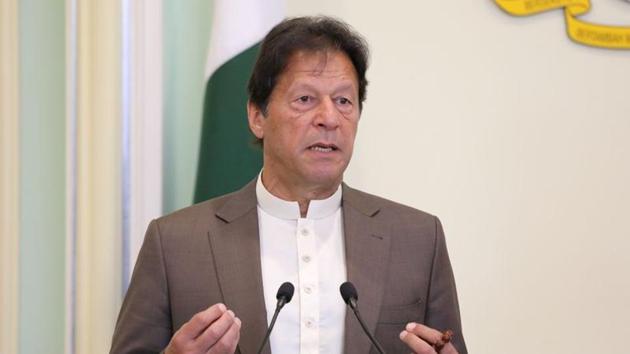
Imran Khan is not new to taking embarrassing U-turns on the diktat of his mentors. His hopes of scoring a diplomatic coup were dashed late last year when he was made to cancel his participation at the Kuala Lumpur Summit in view of Riyadh and Abu Dhabi’s sensitivities. The suppression of the power sector report also reeks of a similar intervention. After all, the report had unambiguously exposed the extreme profiteering built into the contracts with the Independent Power Producer, or IPPs, two of who happened to be Chinese companies under the glorified flagship China–Pakistan Economic Corridor, or CPEC extravaganza.
Commenting on the two CPEC projects, Sahiwal and Port Qasim coal plants, the IPP report revealed that “excess set-up cost of Rs 32.46 billion was allowed to the two coal-based plants due to misrepresentation by sponsors regarding Interest During Construction, or IDC as well as non-consideration of earlier completion of plants...”.
IDC was allowed for 48 months whereas the plants were completed within 27-29 months leading to entitlement of an excess Return on Equity (RoE) of $ 2.7 million annually over the entire project life of 30 years in the case of the Sahiwal plant, also known as Huaneng Shandong Ruyi (Pak) Energy or HSR. The estimated excess payment keeping in mind a 6 percent annual rupee depreciation against the dollar works out to a whopping Rs 291.04 billion.
{{/usCountry}}IDC was allowed for 48 months whereas the plants were completed within 27-29 months leading to entitlement of an excess Return on Equity (RoE) of $ 2.7 million annually over the entire project life of 30 years in the case of the Sahiwal plant, also known as Huaneng Shandong Ruyi (Pak) Energy or HSR. The estimated excess payment keeping in mind a 6 percent annual rupee depreciation against the dollar works out to a whopping Rs 291.04 billion.
{{/usCountry}}The report further revealed the underhand nature of HSR’s financial misrepresentations by brazenly claiming IDC based on markup on long term loan at the London InterBank Offered Rate, the benchmark interest rate at which major global lend to one another in the international interbank market for short-term loan, + 4.5 per cent during the entire construction period despite the Chinese company not borrowing any funds during the first year of construction and only short term loans at substantially lower interest rates during the second year.
The proceeds of profiteering are way too large for the common mind to have been missed as oversight. The complicity of government authorities in negotiating such profitable deals for the Chinese is the unwritten corollary to the report.
For just two projects that were examined, the report found over payment of Rs 484.84 billion or approximately $ 3 billion. Official acknowledgement of the IPP report would have opened a Pandora’s box. The public would have demanded similar auditing of all CPEC projects estimated at nearly $ 62 billion.
Imran Khan’s U-turn and the deafening silence of the media tells a sordid tale of how the deep state uses fear as an instrument of coercion to manipulate the public discourse, or in this case, make it disappear altogether. Notwithstanding the fact that the report has already been leaked, it is incredible how an entire nation has shut its eyes to its existence.
People can perhaps handle the truth about corruption in high places. Some might even argue that they are by now immune to it. What they may not be able to handle with as much ease though, is the truth about the spineless character of its establishment that would rather make common Pakistanis pay through the nose to shield ‘friends’ in Islamabad and Beijing.