Most of us know how small, consistent habits can add up over time. Practicing a skill every day or saving a little every month doesn’t usually feel very dramatic, but the results can be enormous. Conservation works in a similar way, and a little forest bird in the Cook Islands is a case in point. By 1989, there were only 29 kākerōri left on Rarotonga, researcher Hugh Robertson noted in a 2023 report. After decades of rat baiting, the island’s 2022 count was at least 618 birds.
A tiny bird in big trouble
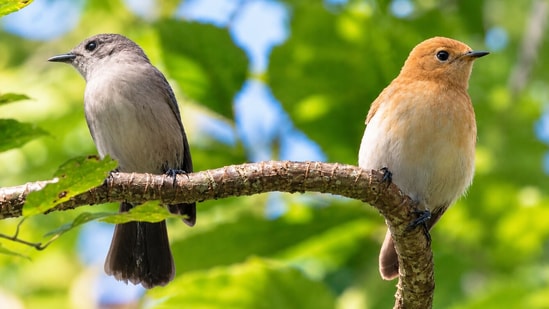
The kākerōri, or Rarotonga flycatcher, is a small forest bird endemic to Rarotonga. By 1989, there were only 29 birds left, driven to the brink by ship rats. In 1994, Hugh Robertson and colleagues published a paper in Conservation Biology reporting that introduced predators, especially ship rats, were hurting the bird’s breeding success. Rats raiding nests means fewer eggs hatch and fewer chicks survive. The paper found that rat control improved nesting success and cut adult deaths, and the population rose from 29 birds in 1989 to 60 in 1993.
Baiting, banding, and counting
Rat baiting is the placement of poison in bait stations to kill rats. Poisoning began in spring 1989 in what is now the Takitumu Conservation Area in the southeast of the island and has continued for decades. Tracking the birds is a challenge in itself. The report explains that birds are caught in fine mist nets and given colored leg bands, primarily when they are young. About half of the birds counted in 2022 had bands, which helped speed up the count and make it more accurate. Teams have banded 320 new birds since the 2017 census. Much of the fieldwork is done with the help of volunteers, local group, and government staff.
What the 2022 count found
{{/usCountry}}Rat baiting is the placement of poison in bait stations to kill rats. Poisoning began in spring 1989 in what is now the Takitumu Conservation Area in the southeast of the island and has continued for decades. Tracking the birds is a challenge in itself. The report explains that birds are caught in fine mist nets and given colored leg bands, primarily when they are young. About half of the birds counted in 2022 had bands, which helped speed up the count and make it more accurate. Teams have banded 320 new birds since the 2017 census. Much of the fieldwork is done with the help of volunteers, local group, and government staff.
What the 2022 count found
{{/usCountry}}Deep Dive
How did rat baiting help the kākerōri population recover?
How many kākerōri were counted on Rarotonga in 2022?
Why is the kākerōri count described as a minimum?
The census was planned for 2020, but COVID-19 travel restrictions pushed it back to August and September 2022. Teams counted a minimum of 612 birds. That’s a 28 percent increase over the 2017 census and equates to around 5.1 percent growth per year. A banding trip in August and September 2023, also covered in the report, recaptured banded birds and found others the census had missed, which raised the revised 2022 minimum to 618. That is roughly 21 times the 29 birds recorded in 1989. The word minimum is important here, because it means the real number could be higher.
Why the work is not yet done
The numbers are promising, but the report also explains why the work continues. Robertson noted that the 45 yearlings spotted in and around the conservation area in 2023 were far more than in recent years. He said there was nothing to be concerned about because the rat poisoning in 2022 was done to a high standard. Young birds are turning up in locations far outside the usual search areas, which suggests that the main forest zone may be filling up.
The team will continue counting every three years. The report says the 500-bird target was easily surpassed. There is a second population of kākerōri on Atiu, but a rapid survey in 2018 found at least 123 birds and was considered an undercount because of hard-to-search terrain. Recovery here took steady effort over many years, not one big fix. That might sound familiar to anyone sticking with a slow goal.