Mesquite was introduced as an environmental aid because it offered an alternative to firewood, helped stabilize soil, and supported the restoration of degraded land. However, its rapid growth has allowed it to spread aggressively in many places where it was planted. The resulting thickets can displace native vegetation and reduce grazing areas, while the tree's pollen, thorns, and potential effects on mosquito populations pose additional health concerns.
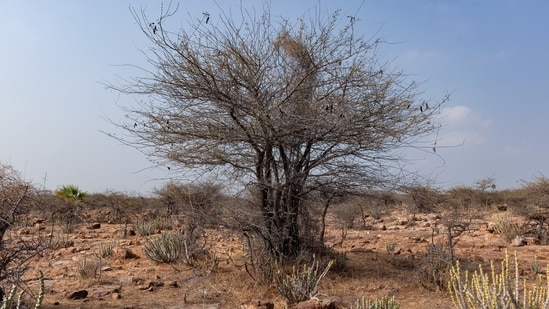
A 2020 review in Plants, titled Invasive Mesquite (Prosopis juliflora), an Allergy and Health Challenge, examines these risks. The paper describes how Prosopis juliflora reached Ethiopia in the 1970s and 1980s for soil and water conservation and was planted near Lake Baringo in Kenya in the 1980s to address fuelwood shortages. The United Arab Emirates also introduced it in the 1970s as part of efforts to green arid landscapes. Its rapid growth, extensive root system, and ability to fix nitrogen made it attractive for land restoration, but these characteristics also helped it establish and spread aggressively in several introduced regions.
Pollen, thorns, and mosquitoes
Mesquite pollen can trigger respiratory allergies such as rhinitis, conjunctivitis, and asthma. The 2020 review reports that positive skin-test reactions to mesquite allergens reached 76.1% among patients tested in Qassim, Saudi Arabia, compared with 11% in Hofuf. In India, 71 of 220 people with respiratory allergies tested positive to a mesquite pollen extract. Flowering can prolong exposure to the pollen. The review describes year-round flowering in parts of Delhi and extended flowering in invaded regions of Brazil and Haiti.
{{/usCountry}}Mesquite pollen can trigger respiratory allergies such as rhinitis, conjunctivitis, and asthma. The 2020 review reports that positive skin-test reactions to mesquite allergens reached 76.1% among patients tested in Qassim, Saudi Arabia, compared with 11% in Hofuf. In India, 71 of 220 people with respiratory allergies tested positive to a mesquite pollen extract. Flowering can prolong exposure to the pollen. The review describes year-round flowering in parts of Delhi and extended flowering in invaded regions of Brazil and Haiti.
{{/usCountry}}The tree's long, hard thorns pose another danger. They can penetrate the skin, with broken thorn tips sometimes remaining embedded and potentially leading to infections. The 2020 paper cites reports of hospitalizations in Kenya and amputations in Sudan linked to thorn injuries. Mesquite may also support mosquito populations by providing sap and nectar. A 2019 experiment in Mali, discussed in the review, found that removing the tree reduced mosquito numbers by 69.4%. The proportion of sugar-fed female mosquitoes capable of carrying malaria fell from 73% to 15%.
Mesquite can also harm livestock when it makes up a substantial proportion of their diet. Its hard pods can damage animals' teeth and jaws, while their high sugar content may contribute to tooth decay and interfere with feeding. Camels are particularly vulnerable to thorn injuries because of their soft footpads.
Why it is so difficult to eliminate
The ecological and economic effects of mesquite are examined in a 2024 review published in Frontiers in Conservation Science. Written by Amogne Asfaw Eshetu of Wollo University in Ethiopia, the paper describes how dense stands displace native plants and reduce forage for grazing animals, placing additional pressure on pastoral communities. In two surveys from Ethiopia's Afar region discussed in the review, 84% of households in one considered mesquite undesirable, while nearly 90% of respondents in the other expressed negative views of the tree.
Removing established stands is not straightforward. In Ethiopia's Awash region, cutting and burning were reported to be labor-intensive, expensive, and ineffective at eliminating mesquite because the trees regrew quickly. However, this does not mean every method of managing the tree has the same outcome. Sustained harvesting for commercial purposes can provide an incentive to clear new growth, even when cutting and burning alone fail to eradicate established stands.
Mesquite also supplies useful products. Its hardwood is used to produce charcoal, its pods can be processed into animal feed, and its flowers provide nectar for honey production. These benefits help explain why some communities favor managing the tree for economic gain rather than attempting complete eradication.
In the review, Eshetu cites examples in which charcoal production in Kenya's Baringo County has substantially reduced the spread of the tree. In Ethiopia's Afar region, cooperatives producing charcoal and milling pods for animal feed cleared more than 396 hectares, equivalent to about 980 acres, of thicket in one year. The review presents commercial use as a potential means of controlling mesquite's spread while emphasizing the importance of cooperation among countries threatened by its invasion.
The case of mesquite demonstrates how an intervention intended to protect arid regions can create additional environmental and economic problems. Managing the tree requires balancing the protection of native vegetation and pastoral livelihoods with the practical benefits that some communities continue to derive from it.