Iran's Supreme Leader Mojtaba Khamenei has called for an end to the country's current state of ‘neither war nor peace’ with the United States and announced that Tehran is open to negotiations but will not give in to pressure or threats, President Masoud Pezeshkian reportedly said.
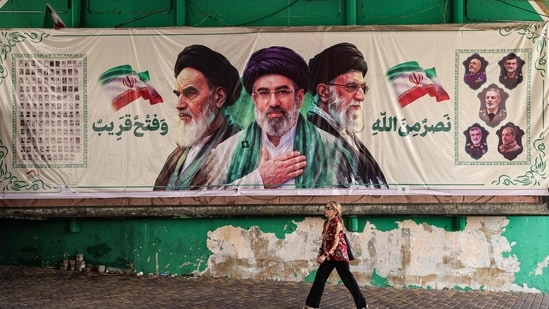
With the conflict continuing and efforts to reach a diplomatic settlement facing major hurdles, Pezeshkian said Khamenei had directed officials to end the ongoing “no-war, no-peace situation”, Iran's semi-official Tasnim news agency reported. Follow US-Iran war live updates here.
Pezeshkian on US-Iran talks stalemate
Speaking at an event on Monday, Pezeshkian said, “We can negotiate with dignity and bring the issue to an end with dignity.”
He said Iran should avoid war if negotiations could help secure its rights. However, he also said that the country would not give in to pressure, stating, “We will not surrender to force and bullying.”
“We seek our rights, but we will not submit to coercion,” he added.
What has Trump said recently on Iran
US President Donald Trump has threatened to launch another round of strikes against Iran in recent weeks, leading Tehran to warn of a strong response. On Sunday, however, Trump said he was unlikely to order fresh attacks as long as negotiations to end the conflict continued.
{{/usCountry}}US President Donald Trump has threatened to launch another round of strikes against Iran in recent weeks, leading Tehran to warn of a strong response. On Sunday, however, Trump said he was unlikely to order fresh attacks as long as negotiations to end the conflict continued.
{{/usCountry}}He is scheduled to meet Qatar's prime minister Sheikh Mohammed bin Abdulrahman Al-Thani at the White House on Monday.
Trump had indicated that attacks on Iran could resume after last week's US midterm elections. However, there has been no indication of a major US military operation so far.
US-Iran war: What's the latest?
More than eight months into the conflict, which Trump launched alongside Israel on February 28, there is no clear sign of a victory. Trump has played down the possibility of a major escalation in the near future but has refused to accept Iran's existing ceasefire proposal.
Attacks between the two sides have continued. Iranian state media reported that the US struck Iran's Qeshm Island recently, while Tehran has also targeted tankers in the Gulf and the Strait of Hormuz this month, and its Houthi allies in Yemen have attacked Saudi Arabia.
Iran's proposal to end the conflict includes an end to the US blockade of its ports, the removal of some sanctions and a halt to air strikes. In return, Tehran would stop its blockade of the Strait of Hormuz. Discussions on its nuclear programme and other sanctions would take place at a later stage.
The US has repeatedly rejected the proposal. Iran has said the agreement could be finalised within two days, but US secretary of state Marco Rubio dismissed the conditions on Sunday, calling them "outrageous and ridiculous and really not realistic".
Iranian foreign ministry spokesperson Esmaeil Baghaei defended the proposal on Monday, describing it as the most reasonable offer currently available.
With inputs from agencies