
 E-Paper



Iran’s strait toll violates law, nautical customs
The UNCLOS Articles 38 and 44 grant transit passage to all global shipping, which is defined as the exercise of the freedom of navigation

 Prefer HTon Google


US President Donald Trump has warned Iran against collecting toll from commercial shipping passing through the contested Strait of Hormuz, as legally, Tehran claiming $2 million transit dollars from vessels contravenes the UN Convention on Laws of the Seas (UNCLOS).
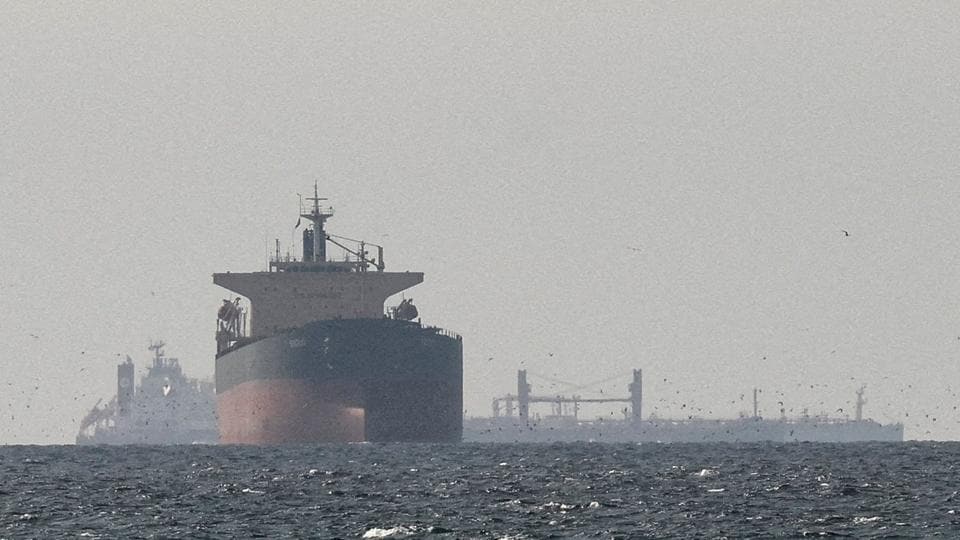
While the Strait of Hormuz has become the bone of contention between US and Iran, with the latter using the vital lane of energy communication as a chokehold on global energy supplies, Article 38 of the UNCLOS makes the legal position in favour of those countries, including India, demanding unimpeded freedom of navigation and global flow of commerce through the narrow channel.
Even though Iran and Oman retain sovereignty over their respective territorial seas, the law (Article 38 of UNCLOS) stipulates that the sovereignty is limited by the “right of passage” enjoyed by all ships and aircraft in straits used for international navigation. Article 44 of the UNCLOS prescribes that the passage must be continuous and expeditious and will not be impeded by States bordering the strait.

The fact is that Iran signed UNCLOS in 1982 but did not ratify it, inferring that it is not directly bound by its provisions. However, Iran recognises some principles of UNCLOS like 12 nautical miles of territorial seas (TS) but rejects the full transit passage regime which allows free navigation through the Strait of Hormuz. Oman is a party to UNCLOS, having ratified in 1989.
Notwithstanding, apart from conventions, international law is governed by the customary practices also. And therefore, the issue is subject to interpretation. Naval law and treaty experts told Hindustan Times that if not through UNCLOS, Iran is bound by customary international law and hence charging toll from vessels is against accepted norms. “Apart from the US and Israel no one bombed Iran, so why should they pay toll to Tehran for passing through an international channel of water. It is a Strait, not a man-made canal. Further, 20% of global energy supplies go through the Strait to all over the world. Today it is Iran, tomorrow maybe China will charge a toll on vessels passing between the Communist country and Republic of Taiwan or the South China Sea,” said a top official.
Also Read:India rolls back some LPG curbs, allots more gas to fertiliser plants
During the 40-day war, Iran has used the Strait of Hormuz as a choke-point and as a leverage against the US, apart from making Persian Gulf countries collateral damage in the war.
The Strait of Hormuz comprises the territorial seas of Islamic Republic of Iran (North) and Sultanate of Oman (South). The strait is approximately 21 nautical miles wide at its narrowest point, which means that territorial seas of the two bordering nations overlap each other.
The UNCLOS Articles 38 and 44 grant transit passage to all global shipping, which is defined as the exercise of the freedom of navigation and overflight for the purpose of transit. UNCLOS restricts the authority of coastal states to regulate such transit and intervene, by stating that the passage of vessels shall not be impeded and there shall be no suspension of transit passage.
There are, however, restrictions imposed by UNCLOS, 1982, on transit passage. These are:
The transit passage must be continuous and expeditious.
Transiting ships must comply with the accepted international regulations, procedures and practices for safety at sea and for the prevention, reduction and control of pollution.
Ships exercising the right of transit passage must proceed without delay through the strait, must not engage in any research or fishing activities and must refrain from any threat or use of force.
Over the past decades, International Maritime Organization’s regional traffic separation scheme (TSS) has operated within the Strait of Hormuz to manage the high volume of tanker traffic — as many as 135 tankers cross it on a normal day. Iran in the past has respected the TSS to manage traffic. But on March 26, Iran established a de facto IRGC controlled shipping corridor in the Strait requiring only so-called approved vessels transit the narrow channel in Iranian waters. With the IRGC having military facilities on Qeshm Island in the Strait, global commercial shipping is at mercy of the Islamist regime despite the IMO criticising the Iranian moves.
The Iranian unilateral move is not only aimed at administering pain to global energy security but also the global economy as choking the Strait of Hormuz is leading to a spike in oil, LPG and LNG prices and is also dampening global market sentiments. Despite both Iran and the US declaring a ceasefire on Wednesday, Iran has only allowed eight of its own cargo vessels to pass through the strait. Such moves are not only discriminatory but also hold ominous portents for the future of commercial oil shipping.


