Israel's opposition leader Gadi Eisenkot on Tuesday rejected the possibility of joining a government led by Prime Minister Benjamin Netanyahu, saying he would not change his position even if US President Donald Trump asked him to.
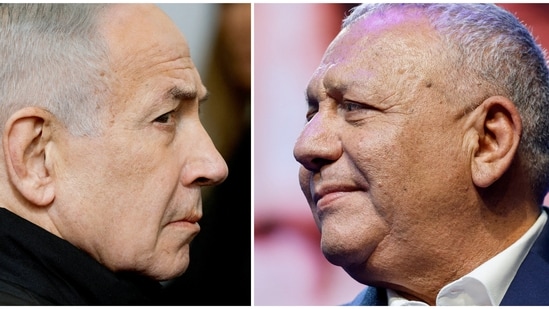
Eisenkot made the remarks during a recent closed-door meeting, the Jerusalem post reported, citing Israeli public broadcaster KAN News. This comes amid political uncertainty following the October 27 elections that left neither Netanyahu's bloc nor the Opposition with enough seats to secure a majority in the 120-member Knesset.
“I will not sit in a government led by Netanyahu,” Eisenkot was quoted as saying. The Yashar party chairman also indicated that he would agree to meet Trump if invited but would oppose any attempt by the US president to influence Israel's internal political decisions. “If Trump calls me, I will respect the president and come, but I will insist that this is an internal Israeli matter and will avoid interference,” he reportedly said.
Deep Dive
Will Gadi Eisenkot join a government led by Benjamin Netanyahu if Donald Trump asks him to?
Why are Trump’s representatives reportedly exploring a Netanyahu-Eisenkot unity government?
How can Israel form a government when neither election bloc has 61 Knesset seats?
Trump reportedly favours Netanyahu-Eisenkot unity government
{{/usCountry}}Trump reportedly favours Netanyahu-Eisenkot unity government
{{/usCountry}}Eisenkot's remarks come as Trump's representatives have reportedly explored the possibility of a national unity government bringing together Netanyahu and the opposition leader.
The Jerusalem Post reported last week that people associated with Trump had spoken to Israeli officials after the election about the possibility of such an arrangement. The reported proposal is aimed at ensuring political stability in Israel and facilitating the formation of a government without prolonged negotiations.
A Likud official, quoted by The Washington Post, said Trump's priority was to see a stable administration take shape quickly after the election. “What Trump wants is a stable and reliable Israeli government that can be formed as soon as possible after the election,” the official said.
The Washington Post also reported that Netanyahu had told US officials he considered Eisenkot the most suitable partner if hostilities between Israel and Iran resumed. Netanyahu reportedly suggested that an alliance with Eisenkot could lead to a more moderate coalition.
ALSO READ | No clear election majority, coalition talks, president's intervention: Where Israel stands
Israel election results leave both blocs short of majority
The election has produced a fragmented Knesset, with neither political camp securing the 61 seats needed to form a government independently. Netanyahu's bloc won 53 seats, while opposition parties secured 48. Arab parties collectively won 19 seats.
Opposition leaders Naftali Bennett, Yair Golan and Avigdor Liberman have reportedly agreed to recommend Eisenkot to President Isaac Herzog as the candidate best positioned to form the next government.
With the support of these parties and the backing of Arab lawmakers, Eisenkot could potentially secure the support of 67 members of the Knesset.
Under Israel's parliamentary system, the president consults political parties after an election before assigning a candidate the task of forming a government. The candidate must then negotiate with other parties to secure the parliamentary support required to establish a coalition.
ALSO READ | Israel deadlock: Veteran Arab leader says Joint List ready to help oust Netanyahu, but won't join govt
Liberman rules out coalition dependent on Arab parties
Avigdor Liberman has ruled out joining a government that relies on the support of Arab parties. He has also rejected the possibility of participating in a unity government led by Netanyahu.
Eisenkot, Bennett, Golan, Liberman and outgoing opposition leader Yair Lapid are scheduled to hold their first joint meeting since the election on Tuesday, according to The Jerusalem Post. The meeting is expected to focus on coordinating the opposition's position and discussing the next steps in the government formation process.