
 E-Paper



Israel-US joint strikes on Tehran after talks hit stalemate: Top points so far
Israel calls it “pre-emptive"; it pushes region into renewed military confrontation, dimming hopes for diplomatic solution to nuclear dispute with US-led West.

 Prefer HTon Google


After months of tensions between Iran and the US, American ally Israel apparently started striking the Islamic Republic on Saturday. The US later said these are joint strikes carried out by the Israeli and American military.
US President Donald Trump confirmed that the “US has begun major combat operations in Iran”.
The operation is called ‘Roar of the Lion’, as per officials in Israeli PM Benjamin Netanyahu's office. It comes as the United States has assembled a vast fleet of fighter jets and warships in the region to try to pressure Iran into a deal over its nuclear programme.
Here are the top points of info so far:
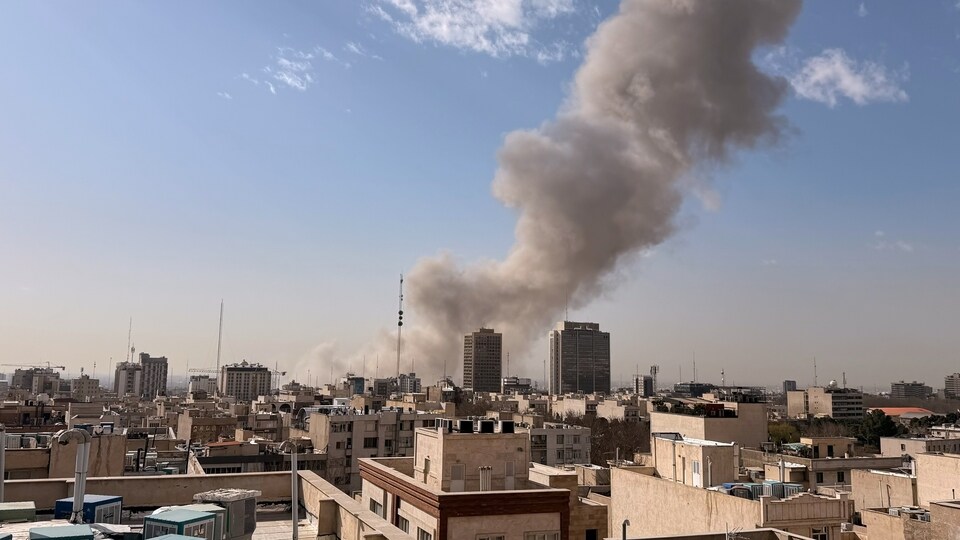
- What happened? There was an airstrike causing multiple explosions in Iran's capital Tehran, near the offices of Ayatollah Ali Hosseini Khamenei, the Supreme Leader of the Islamic Republic. The attack was claimed by Israel and later by the US as a joint operation. Israeli security officials reportedly said “the entire Iranian regime was a target, including Khamenei", adding that Iran was “very surprised by the daytime strike".
Track here: Live updates on Israel-US attack on Iran
- Where's Ali Hosseini Khamenei? It wasn’t immediately clear whether the 86-year-old Khamenei was in his offices at the time. He hasn’t been seen publicly in days as tensions with the United States and Israel have grown. Reports said the Supreme Leader of the cleric-led regime is reportedly not in Tehran. American officials told NYT and Reuters that Khamenei had been transferred to a secure location by the Iranians already.
- What Trump said: "Our objective is to defend the American people by eliminating imminent threats from the Iranian regime," Trump said in a video shared on social media. He had separate messages for the people of Iran and the country's armed forces. Directing his words at the common people of Iran, he said, “The hour of your freedom is at hand. Stay sheltered, don't leave your home.” Saying that "tonight, bombs will be dropping everywhere", he warned the Iran's army, the Islamic Revolution Guard: “You should lay down your arms. You will be treated fairly with total immunity, or you will face certain death.”
- What is Israel's stated reason? Israel called it a “pre-emptive" attack, pushing the Middle East into a renewed military confrontation and further dimming hopes for a diplomatic solution to Tehran's long-running nuclear dispute with the US-led West. "The State of Israel launched a pre-emptive attack against Iran to remove threats to the State of Israel," defence minister Israel Katz said.
- What next? The Israeli military issued a “proactive alert” to prepare the public for the possibility of missiles being launched towards the country. Israel has also closed its airspace to civilian flights. Multiple explosions were, meanwhile, heard in Tehran on Saturday, Iranian media reported.
- What's the context? The attack, coming after Israel and Iran engaged in a 12-day air war in June 2025, follows repeated US and Israeli warnings that they would strike again if Iran pressed ahead with its nuclear and ballistic missile programmes.
- Planned all along? The Israeli operation against Iran on Saturday was coordinated with the US, an Israeli defence official told Reuters. The operation was planned for months and the launch date was decided weeks ago, the official added.
- What happens to talks? That part is uncertain, and probably stalled now. The US and Iran renewed negotiations this month in a bid to resolve the decades-long dispute through diplomacy and avert the threat of a military confrontation that could destabilise the region.
- What is Tel Aviv's stake? Israel, which considers Iran one of its chief enemies, has insisted that any American deal with Tehran must include the dismantling of the latter's nuclear infrastructure, not just stopping the fuel enrichment process; and lobbied Washington to include restrictions on Iran's missile programme in the talks.
- What is Tehran's stance? Iran earlier said it was prepared to discuss curbs on its nuclear programme in exchange for lifting sanctions, but ruled out linking the issue to missiles. Tehran also said it would defend itself against any attack. It warned neighbouring countries hosting US troops that it would retaliate against American bases if Washington struck Iran.
War last year too
In June, the US joined an Israeli military campaign against Iranian nuclear installations, in the most direct American military action ever against the Islamic Republic.
Tehran retaliated by launching missiles toward the US air base in Al Udeid, Qatar, the largest in the Middle East.
Western powers have warned that Iran's ballistic missile project threatens regional stability and could deliver nuclear weapons if developed. Tehran denies seeking atomic bombs and says it's an energy programme.
(inputs from AP, AFP)


