A brazen attack on UAE diplomats in the Afghan city of Kandahar has triggered speculation of a possible link to the upcoming visit of UAE crown prince Shaikh Mohammad Bin Zayed Al Nahyan to India to be the chief guest at the Republic Day parade.
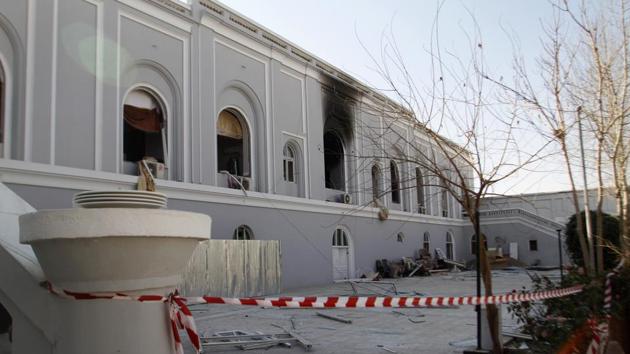
The attack on Tuesday night killed 11 people, including five diplomats from the United Arab Emirates, and injured the country’s envoy to Kabul, Juma Mohammed Abdullah Al Kaabi.
Afghan commentators were quick to note that the attack came days before Al Nahyan is scheduled to arrive in New Delhi to participate in the Republic Day celebrations. There is tremendous symbolism attached to the visit as a contingent from the UAE Armed Forces will march with Indian troops during the Republic Day parade.
The UAE has strengthened security and defence cooperation with India in recent years. Since late 2015, some 10 Indian supporters of the Islamic State have been deported by the UAE. This enhanced cooperation is believed to have caused heartburn in Islamabad.
The Taliban, which has a strong presence in Kandahar, a province that once served as the capital of the militant group, have told the Afghan media that they had no role in Tuesday night’s attack. Commentators also noted that the UAE was one of only three countries to recognise the Taliban government in the 1990s.
{{/usCountry}}The Taliban, which has a strong presence in Kandahar, a province that once served as the capital of the militant group, have told the Afghan media that they had no role in Tuesday night’s attack. Commentators also noted that the UAE was one of only three countries to recognise the Taliban government in the 1990s.
{{/usCountry}}Read | Attack on Indian consulate in Afghanistan’s Herat thwarted, all four gunmen killed
Kandahar’s police chief Gen Abdul Raziq on Wednesday accused the Pakistan-based Haqqani Network and the Inter-Services Intelligence (ISI) agency of plotting the deadly attack. Former National Directorate of Security (NDS) chief Amrullah Saleh said on Twitter that an investigation would show a Pakistani link to the attack.
“The possible involvement of the ISI in this attack cannot be ruled out. The ISI has often used attacks in Afghanistan as a sort of messaging towards India,” said an Indian security official who did not want to be named.
This would not be the first time that Pakistan-backed militants have targeted India or India-related interests in Afghanistan. In May 2014, militants attacked the
Indian consulate in Herat three days before the swearing-in of Prime Minister Narendra Modi.
Though the attackers, believed to be from the Lashkar-e-Taiba, were killed, officials later said they had intended to take hostages at the consulate in a bid to embarrass Modi and Pakistan Prime Minister Nawaz Sharif, who attended the inauguration in New Delhi.
In January last year, terrorists tried to storm the Indian consulate in Mazar-e-Sharif at about the same time that Jaish-e-Mohammed operatives struck the Indian airbase at Pathankot. The attackers in Mazar-e-Sharif left messages scrawled in blood before they were killed, one of which read “Revenge for Afzal Guru”.
Guru was convicted and executed for his role in the 2001 Parliament attack that too was blamed on JeM.
Even by the standards of a country that saw hundreds killed in terror attacks last year, Tuesday was a particularly brutal day for Afghanistan. Besides the attack in Kandahar, suicide attackers struck near a NDS office in Lashkargah and outside the Parliament in Kabul, killing a total of 45 people.
Read | ‘Revenge for Afzal’: Messages in blood link Mazar-e-Sharif to Pathankot